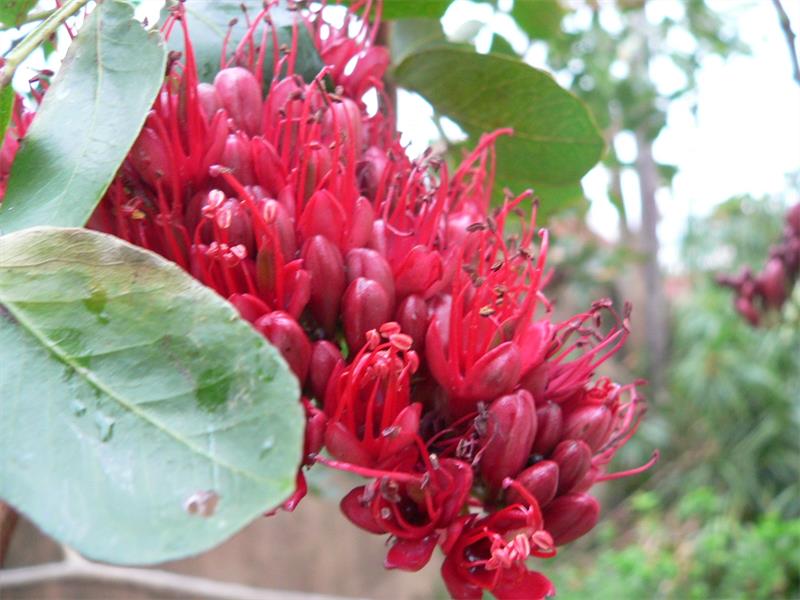
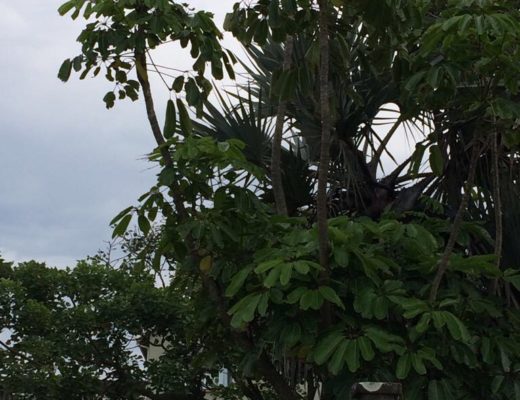
YOU see the Queensland umbrella trees (Schefflera actinophylla) everywhere as they seem to grow so easily; and that should sound a few warning bells.
So many potentially invasive aliens are easy to cultivate. It is stopping them from planting themselves that is the problem and this is true of the umbrella tree, an emerging weed that hails from Australia.
It is an attractive tree, with glossy compound leaves and spikes of crimson flowers, so it is easy to understand gardeners’ reluctance to get rid of this pest.
Fortunately there is a a wonderful indigenous tree that fits the bill perfectly as a replacement for the umbrella tree. Schotia brachypetala also has glossy green leaves but it is its showy red flowers that really make this medium to large tree the head turner it is.
In spring, when it flowers, its bare branches are completely covered in masses of brilliant red flowers. It goes by the much more descriptive common name of weeping boerebean, which describes perfectly how the flowers literally weep sweet, nourishing nectar.
As you can imagine, these trees are magnets for nectar-thirsty sunbirds so if you are interested in birding and find a flowering boerebean in a game reserve, stop and watch the avian action for a while.
In an amazingly short time you’ll probably tick off every sunbird that occurs in the area as well good selection of insect eaters. As can be imagined, the combination of brilliant crimson flowers and jewel-coloured birds makes a flowering boerebean a sight to behold.
YOU MIGHT ALSO BE INTERESTED IN: More Invasives and Natives
We’ve done some productive birding around flowering boerebeans in Ndumo and uMkhuze Game Reserves and there is a massive, bird-attracting tree near the swimming pool at Pretoriuskop in Kruger National Park.
We visited Pretoriuskop in August last year, when the park was in the grip of a terrible drought.
In spite of the lack of rain that tree was in full, glorious bloom and was just too lovely for words. We spent a wonderful afternoon on the lawn underneath that tree, watching the avian activity.
There are a couple of other lovely Schotia species that occur in the eastern section of our country. The Schotia afra or small boerebean is a daintier version of Schotia brachypetala and is the one that will enchant you when you visit Addo Elephant National Park during spring.
There is also the dwarf boerebean (Schotia capitata) and a forest or bush boerebean (Schotia latifolia). All have beautiful, nectar rich flowers.
After the blooms disappear, the weeping boerebean’s rounded crown, rough brown bark, broad brown pods and bright green leaves still make it a winner as a garden subject. I have a couple of these magical trees in my indigenous coastal garden. They have proved easy to cultivate and have grown into leggy teenagers very quickly.
Last spring I was thrilled to find them covered in flowers.
HAVE YOUR SAY
Like our Facebook page, follow us on Twitter and Instagram
For news straight to your phone, add us on BBM 58F3D7A7 or WhatsApp 082 421 6033