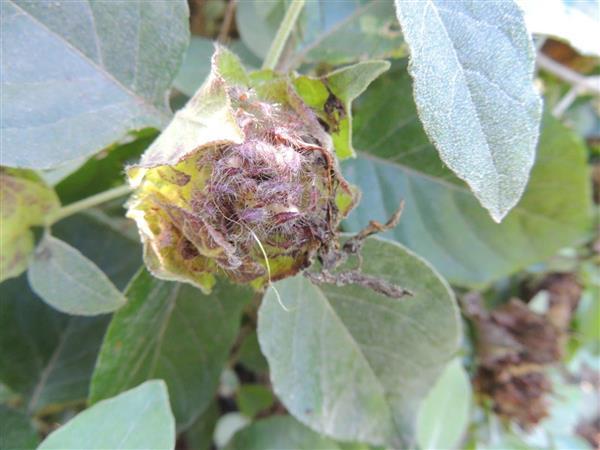
WITH its big, soft, velvety grey-green leaves and clusters of purple flowers, the bugweed (Solanum mauritianum) is an attractive plant and was brought to South Africa from South America because of its potential as an ornamental garden subject.
It happily put down roots in its new home but adapted just too well. It is now listed as an invasive weed and is a serious problem plant throughout KwaZulu-Natal. It grows almost anywhere and you will usually spot it multiplying vigorously at the edges of natural forests and alien plantations.
Unfortunately it really likes our forests and woodlands as this is a problem. Birds like rameron pigeons that usually eat the fruit of indigenous trees, thereby spreading the seeds and helping to keep the forest system in balance, prefer the easy pickings that the horrible bugweed offers, honing in on its plentiful supply of easy to access soft, yellow fruit.
Because of this the bugweed is seeded faster than the trees that are supposed to be there.
Conservationists weed out the smaller plants by hand but use herbicides on the bigger plants. However, in its Invasive Alien Plants in KwaZulu-Natal handbook, the Wildlife and Environmental society of society warns that his pest is showing signs of becoming resistant to herbicides.
Also, if you are clearing a bugweed-infested patch make sure it’s the alien invasive you are attacking. It has a cousin that looks rather like it, the Solanum giganteum, which has bright red berries. I had one in my garden but it has died off and I haven’t been able to find a replacement.
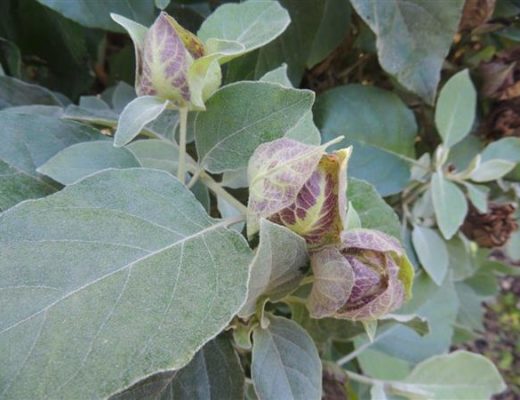
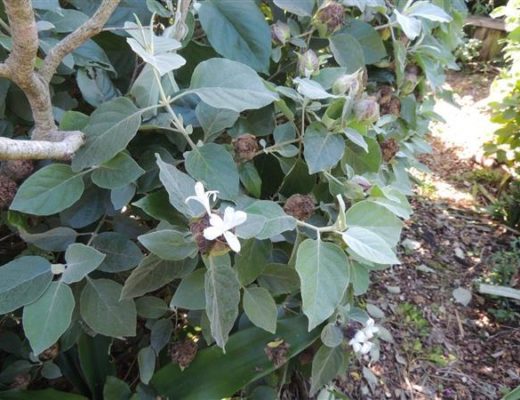
I do, though, have a lovely shrub that is a little similar to the bugweed, as it has pretty, large, grey leaves. I love grey foliage, particularly in our lush, evergreen coastal gardens as it makes a pleasant contrast to all the shades of green and Barleria albostellata fits the bill perfectly.
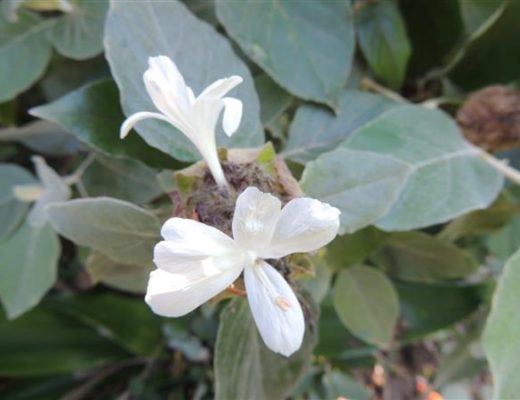
It has attractive white flowers and eye catching seed balls that look like miniature grey cabbages. Using this species in my garden is cheating a little as it doesn’t occur naturally in KwaZulu-Natal but hails from our more northerly region. Purist indigenous gardeners only grow plants that occur naturally in the areas where their properties are situated, which really makes good sense, but most of us cheat a bit.
There are some Barlearia species that do occur in KwaZulu-Natal.
According to Elsa Pooley’s field guide to wildlfowers in KwaZulu-Natal and the eastern region, the genetic name honours a Dominican monk and French botanist Jacques Barrelier, who was born in 1606. There are about 60 species in South Africa so wherever you garden you will probably find one to suit your environment.
Be warned, though, some Bartlaria species can be a bit pushy and need rigorous pruning and disciplining to keep them in check. I sometimes wage a bit of a Barleria war against my Barleria obtuse, probably the most commonly used Barleria garden subject, but I do forgive this so-called bush violet when it bursts into blue and pink flowers at the end of summer.
It is the same with Barleria elegans, a prickly customer that likes to seed itself in places where it is not really wanted then objects in its prickly way to being ejected. It hides away in various corners of my garden then announces itself so prettily, adding a flurry of white flowers to the greenery in autumn.
The best behaved is Barleria repens, a small scrambling bush that isn’t quite as vigorous as its cousins but still needs a little cutting back from time to time. It likes partial shade and is lovely mass-planted or used as the border of a garden bed. Its best attribute is its gorgeous coral flowers.
Some of the Barlerias might be hard to find, but most nurseries will stock at least a few of these interesting plants.
HAVE YOUR SAY
Like our Facebook page, follow us on Twitter and Instagram
For news straight to your phone, add us on BBM 58F3D7A7 or WhatsApp 082 421 6033