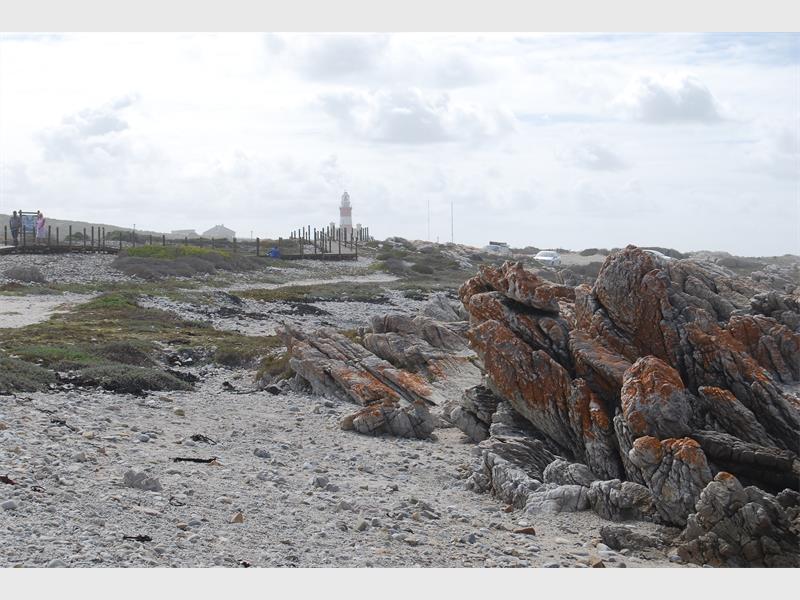
INCORPORATING the southern-most tip of Africa has to make Agulhas National Park very special but it has a rather haunting feel about it that makes it unique.
Situated in the Western Cape’s species-rich Cape Floristic it is a desolate, windswept place that, more than anywhere else along our shoreline, seems to emphasize the treacherous nature of our unpredictable seas.
YOU MIGHT ALSO BE INTERESTED IN : Tent Travels: Meet ‘the noisy one’
This rugged coastline is littered with the wrecks of ships that have come to grief on the needle-sharp rocks that give Cape L’Agulhas its name. Agulhas means needles and it also refers to the needle of a compass that shows no real deviation between true and magnetic north at this spot.
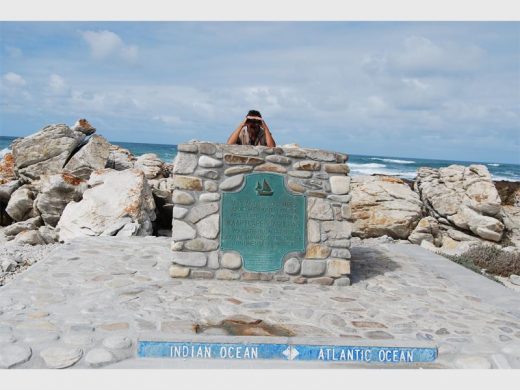
A boardwalk stretching across the scrubby fynbos and sugary sand follows the rocky coastline to a small cairn on the point.
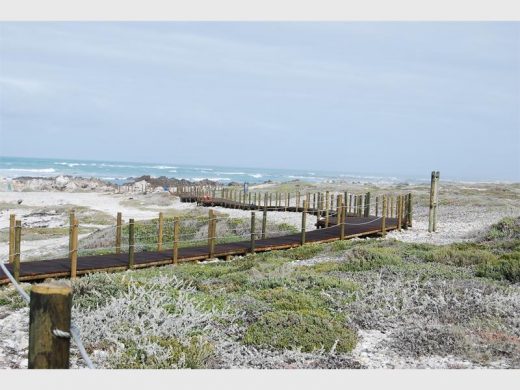
It is a strangely beautiful place that hints at the infinite power of Mother Nature and it is an awesome feeling to stand there, looking at the sea, with the whole of our magnificent continent behind you. You half expect
to see a line, snaking out from the point, separating the Indian and Atlantic Oceans.
There is, indeed, a line, although it is invisible. It is the meridian of 20 degrees east, from Cape L’Agulhas southward to the Antarctic, which the International Hydrographic
Organisation has decreed is the official boundary between our two mighty seas. Not that the ocean currents obey the official decree.
The Indian Ocean’s warm Mozambique or Agulhas current and the Atlantic’s cold Benguela meet and mingle here and often invade each other’s territories.
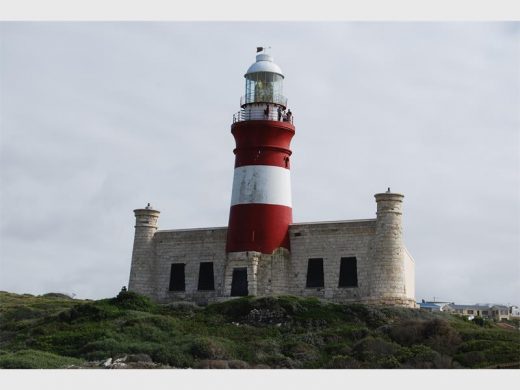
The nearby town of of L’Agulhas is South Africa’s most southerly town. It is a neat little seaside village and it boasts South Africa’s second oldest working lighthouse, a red
and white striped beacon flanked by stone towers. Built in 1848, it houses an interesting lighthouse museum, as well as a restaurant and curio shop.
You can climb to the top of the lighthouse. Which I did, much against my better judgement. I have no head for heights and the last, almost vertical ladder was terrifying.
The view was worth it. From aloft we could see Cape L’Agulhas and the expanse of the land around the point that has been conserved for future generations as the Agulhas.
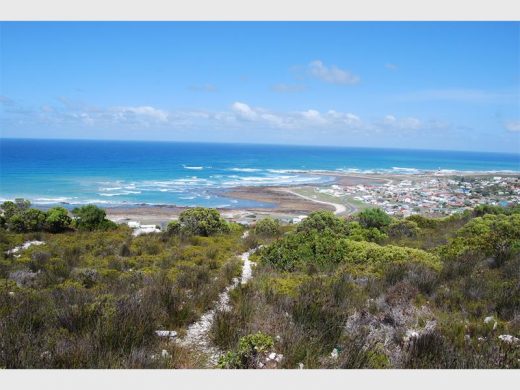
National Park. Situated in the Western Cape’s species-rich Cape Floristic Region, it was proclaimed to protect valuable wetland and the lowland fynbos
vegetation that is a feature of the Agulhas Plain. It supports an amazing 1 750 plant species. The rugged coastline provides a haven for a rich marine life and
the different habitats make it a good spot to look for wetlands, fynbos and coastal birds, including the rare African black oyster catcher, a striking black fellow with a bright red beak.
YOU MIGHT ALSO BE INTERESTED IN : Tent Travels: A park that distils the Karoo essence
This area also has a significant cultural heritage. Here are shell middens, stone hearths, pottery and the ancient fish-traps that were used by Late Stone-Age people. This
southern-most region of South Africa has long been inhabited. Now the latest inhabitants of L’Agulhas have stamped their presence on the southern African tip in the form of splashes of brightness to their washed-out natural environment.
From the lighthouse, the brightly coloured roofs of the town spread out beneath our feet to form a pretty contrast to the pastel shades of Africa’s windswept, desolate southerly tip. And the rocky place where two oceans meet.
HAVE YOUR SAY
Like our Facebook page, follow us on Twitter and Instagram
For news straight to your phone, add us on BBM 58F3D7A7 or WhatsApp 082 421 6033