SADLY, every now and then, a tragic natural disaster like the recent Garden Route fires highlights the fact that the laws pertaining to alien invasives and other environmental matters are there for a purpose.
Our excellent environmental management legislation is so often ignored although these laws are put in place not only to protect the environment but to protect lives and property from the environment.
YOU MIGHT ALSO BE INTERESTED IN : Invasives and Natives: Hello aloe
The Endangered Wildlife Trust (EWT) made this point in a press release regarding the recent devastating fires that wreaked havoc on huge areas of the Garden Route, and particularly in Knysna.
“The loss of life, property and habitat is tragic and our thoughts are with all those affected, as well as those who are working to stabilise the situation,” an EWT spokesman said .
However the trust made the point that the extreme nature of these fires and the extent of the damage had been in no small way exacerbated by the extensive and uncontrolled spread of alien plant species such as pine and wattle trees.
“The threat posed by alien invasive plants in the area was identified many years ago. An article written by Richard Cowling, Brian van Wilgen, Tineke Kraaij, and Jonathan Britton, titled ‘How no-man’s-land is now everyone’s problem’, was published in the September 2009 edition of Veld&Flora.
It was almost prophetic in the concerns it raised regarding the potential for abnormally intense fires to ravage the area, due to the replacement of indigenous fynbos with alien plant species such as pine trees,” the spokeman pointed out.
The authors of the Veld&Focus article had developed various scenarios for the Garden Route.
Based on the existence of uncontrolled alien spread and periods of lower rainfall, they had predicted that “… fires would rage with abnormal intensity, seriously threatening homes, crops, plantations and people. The high-intensity fires would damage the soil, resulting in erosion and silting up of dams, further exacerbating water problems.”
The EWT also pointed out that intense fires fuelled by alien vegetation had a far more damaging impact on the soil than would typical fynbos fires, resulting in extreme erosion.
This eroded soil and other debris now threatened to end up in the area’s water sources, with a potentially devastating effect on water quality and the ecosystems in rivers and estuaries.
“This brings home the importance of investment in ecosystem services, alien vegetation removal and catchment rehabilitation.
The National Department of Environmental Affairs Natural Resource Management Programme, as well as provincial agencies, such as CapeNature, need to continue and ramp up the valuable work they do on this front to get a handle on the invasions that threaten, not just our water resources but lives and habitats too,” the spokesman said.
He added that civil society needed to get behind these agencies and to work together to make sure this scale of disaster did not happen again.
Here on the South Coast we also have a huge, potentially dangerous invasive alien plant problem, the species highlighted in the Invasives and Natives blog being just the tip of the iceberg.
Perhaps it is time that individual members of our civil society did their bit to solve the problem. The first step would be educate ourselves about the problem plants most often encountered in local gardens and to check out our own properties to ensure that we are not harbouring any of these menaces.
YOU MIGHT ALSO BE INTERESTED IN : Invasives and Natives: Pretty pushy plants and a rare native
Every local gardener should have a copy of the excellent Wildlife and Environmental Society of south Africa (Wessa) handbook, ‘Invasive alien Plants in KwaZulu-Natal.
If you have a plant in your garden you think might be an invasive you can always take a couple of photographs of it and email it to Alex Skene, the chairman of the South Coast Conservancy Forum at skenea@gmail.com. He will gladly get the plant identified for you.
It is important that we make sure local authorities and National Government know that we care about the environment, so lobby politicians and councillors regarding the invasive alien problem.
You can also be part of the groundswell movement that is actively involved in solving environmental problems like the invasives by joining your local conservancy or conservation group. Alex would happily put you in touch with your local conservancy if you telephone him at 078 5087290.
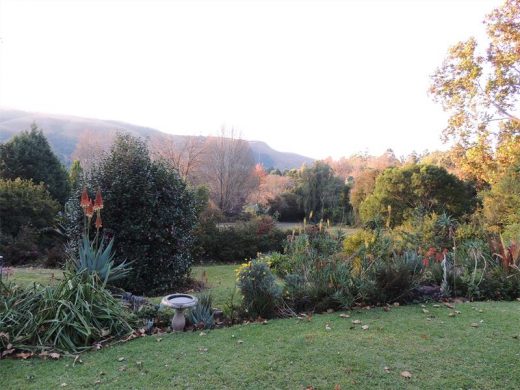
Finally, plant an indigenous garden that nourishes local wildlife, mitigating some of the consequences of the rampant invasions by alien problem plants and their disastrous effect on our natural environment.
A beautiful indigenous garden also highlights the wonderful native plants that flourish in our area. By showing them off, we will help to make civil society aware of the need to protect them.
HAVE YOUR SAY
Like our Facebook page, follow us on Twitter and Instagram
For news straight to your phone, add us on BBM 58F3D7A7 or WhatsApp 082 421 6033