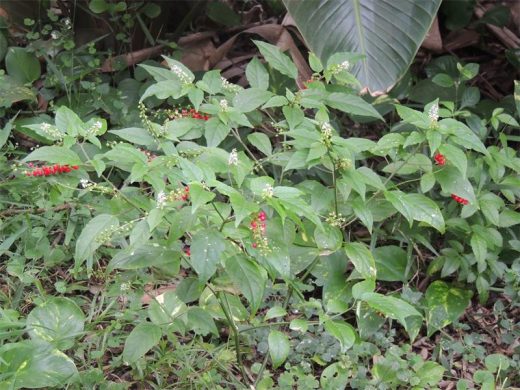
IT is a small, unassuming plant but once Rivina humilis finds its way into your garden, it is incredibly persistent.
Also known as baby pepper, coral berry or bloedbessie, this knee-high plant is often only noticed when the little white flowers die off and bright red peppercorn-sized berries appear.
These berries are, of course the problem. Once the seeds are dispersed, this species quickly spreads all over your property and it takes committed and regular weeding to get rind of it.In the wild, it is such a survivor that it soon starts out-competing and replacing the natural fauna.
YOU MIGHT ALSO BE INTERESTED IN : Invasives and Natives: Knysna fires and the alien connection
Hailing from North, Central and South America, it is not only a Nemba Category 1b invader but it also poses a threat as it is poisonous.
Going from this small invader to some big natives, I thought I might look at the indigenous palm trees that are so much a part of our beautiful KwaZulu-Natal coastal vegetation.
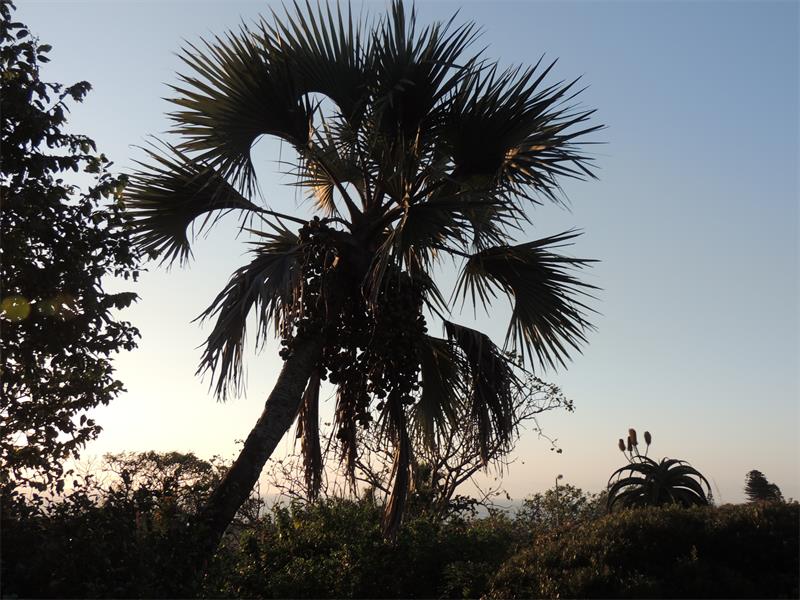
My favourite of these must be the Hyphaene coriacea, better known as the lala palm. I am lucky to have inherited a couple of theses magnificent palms when we bought our house and these mature specimens have always been the focal point of their section of the garden.
Their sinuous grey trunks, topped with clusters of spiky, grey-green fans of leaves make this lovely species a must-have in any self-respecting coastal garden.
Best of all, though, are the huge bunches of shiny-skinned fruit they regularly produce. According to Richard Boon’s tree guide, ‘Pooley’s Trees of Eastern South Africa’, these stay on the plant for about two years before they ripen, thereby offering a long-term ornamental bonus to their surrounds.
The ripe, oval fruit has a fibrous outer layer that is apparently tasty to elephants, monkeys and baboons and hidden inside these shells are small white kernels of vegetable ivory, which can be carved into small items. The leaves also have an ornamental use. They are harvested and used for making baskets.
There is yet another industry that makes use of this palm species. People in Maputaland tap the sap and use it to make an intoxicating drink.
If you would like to add this iconic coastal species to your garden, you will be pleased to know that Richard says these palms are possible to cultivate from seeds.
They produce huge bunches of fruit so friends who have them in their gardens are sure to let you have a few seeds. Batter the outer layers to soften them before planting them and they should germinate in about three weeks. Take care not to damage the roots when you plant them out.
Everywhere along the coast you see gardeners cutting down these palms – and often replacing them with far less interesting alien palms. Strange behaviour – and it is sad to think our developed coastal areas might one day be be bereft of these signature plants. If you care about ensuring they do not vanishing from our urban skyline, why not give a few lalas a home in your garden.
If you have plenty of space you might like to cultivate another of our coastal natives, the Phoenix reclinata or wild date palm. It is a bit untidy, particularly when it grows into thick, unruly clumps, and it is a spiky customer but it is such a useful plant from a wildlife and human point of view.
Humans and animals eat the fruit, bees visit the flowers and elephants are partial to their leaves. It is the food tree of the Palm-tree Night Fighter butterfly clubs and its also produced sap that can be turned into a potent brew.The leaf fibre and midribs are used to make brooms and for building huts, fish kraals, household implements and baskets.
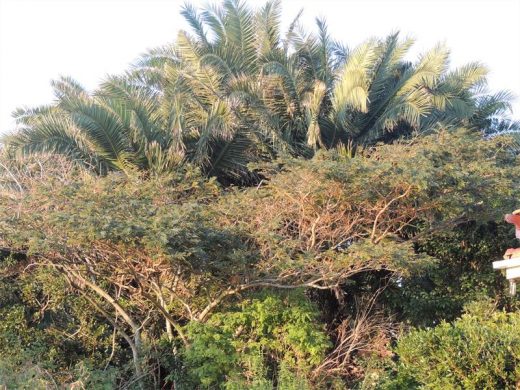
The big clump of mature wild dates in my garden provides a home to numerous small creatures, including palm swifts, weavers and bats.
These trees are also so much a part of KwaZulu-Natal’s natural landscape, particularly in our soggier grassland areas, so why not invite them into your garden if you have a nice big empty space that needs filling. Richard says they are easily grown from seeds and that they transplant well.
A particularly interesting palm tree that you won’t find in many gardens – or many wild places, either – is the endangered and very endemic Jubaeopsis caffra, known as the Pondo or Mkambati Palm.
In nature, these neat, attractive little palm trees are only found on forested sandstone cliffs on the northern banks of the Eastern Cape’s Msikaba and Mtentu Rivers, between the coast and about 5km inland.
Nowhere else in the world do they naturally occur so if you are in their area, look out for these special plants. They don’t seem easy to cultivate, but there are some South Coast gardeners who have succeeded in growing them and , according to Richard’s tree guide, they are used as a street trees in California.
Finally, KwaZulu-Natal boasts the gorgeous Raphia australis or Kosi palm, which grows as magnificent palm tree forests in swamp forests around the Kosi lakes.
They have also become naturalised in Mtunzini, where they are something of a tourist attraction. This species has huge, blue-green leaves and produces fruit from the crown, after which the tree slowly dies, scattering its seeds. Egyptian fruit bats roost in its crown but it is best known for the palmnut vultures it attracts.
It grows quickly and easily from seeds so birders looking to tick off a palmnut vulture or two might like to try and cultivate a Kosi palm.
HAVE YOUR SAY
Like our Facebook page, follow us on Twitter and Instagram
For news straight to your phone, add us on BBM 58F3D7A7 or WhatsApp 082 421 6033