Invasives and Natives: Yellow bells and a scarlet winter treat
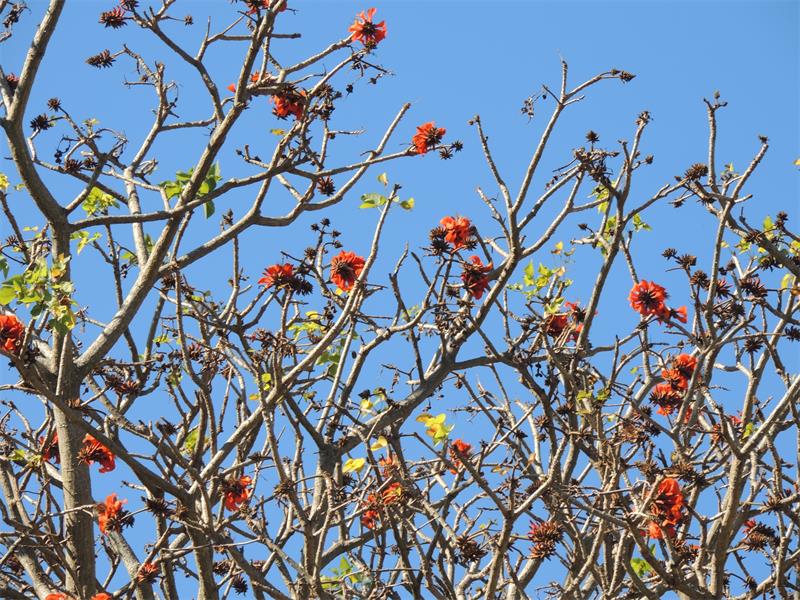
The flame-coloured flowers of our coral trees are lighting up our winter skies.
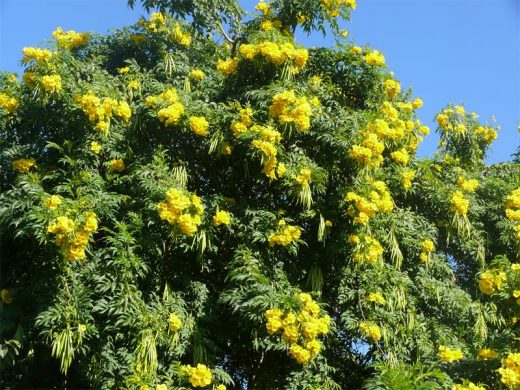
ALTHOUGH I have dealt with the alien invasive plant known as yellow bells (Tecoma stans) in a fairly recent blog, these plants are in glorious flower alongside the main South Coast road in the Southport area, so if you don’t know what this species looks like, take a drive to Southport to see them.
My colleague, Susan Cooke told me about them and handed over some excellent photographs of this striking but rapidly spreading invader.
YOU MIGHT ALSO BE INTERESTED IN : Invasives and Natives: A little pest and some iconic giants
“You can’t miss them,” she said.
So do take a look at them and check to see if you are harbouring any of these attractive but dangerous invaders in your garden.
Other flowers that you can’t miss at the moment are those of our wonderful coral trees that are now starting to bloom. What a winter celebration they offer us every year, their flame-coloured flowers held aloft on the trees’ bare branches, brightly etched against the perfectly blue winter sky.
These striking, much-loved trees belong to the Erythrina genus, which boasts more than 100 species worldwide. The generic name comes from the word Greek word, ‘erythros’, which means red and refers to their brilliant red to orange flowers.
They are also sometimes known as lucky bean trees because of their bright red and black seeds that are often used as beads.Nine Erythrina species occur in southern Africa, six of which are found in South Africa.
In his book ‘Pooley’s Trees of Eastern South Africa’, author Richard Boon discusses the four of these species that grace our Eastern regions, all of which occur naturally in KwaZulu-Natal.
Laymen like me find it extremely difficult to tell two of these species, Erythrina lysistemon and caffra, apart. They are both lovely trees that flourish here on the KwaZulu-Natal South Coast.
Erythrina Caffra is said to be bigger that Erythrina lysistemon and has a short, broad, standard petal, the lower half of which curves upward to expose the stamens, giving the flowers a bewhiskered appearance.
Erythrina lysistemon flowers have longer, narrower standard petals and are bright scarlet while Erythrina caffra tends to have more orange-scarlet flowers tinge with terracotta. There is also a form of this species that has cream-flowers.
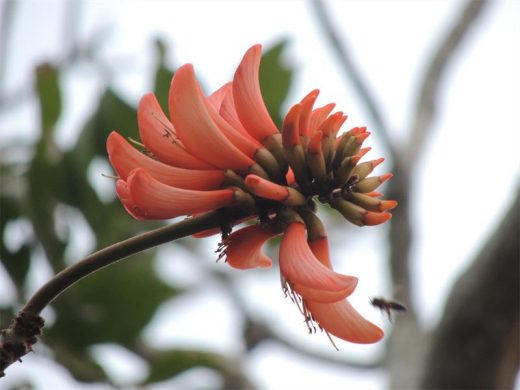
It is all rather confusing but both trees are gorgeous so if you are battling to tell them apart, don’t let it worry you. Just relax and enjoy their annual floral show.
YOU MIGHT ALSO BE INTERESTED IN : Invasives and Natives: Hello aloe
A particularly striking species is the Erythrina latissima, or the broad-leafed coral tree. I have battled without success to grow this eye-catching species in my coastal garden but I have seen it happily thriving in gardens just inland from where I live.
It is a stout, stocky tree with huge leaves and it makes a stunning garden subject so I am very jealous of gardeners who have succeeded in cultivating it.
I have managed to coax an Erythrina humeana or dwarf coral tree to take up residence in my garden. It is a slender shrub so it is a good choice for gardeners who would like an Erythrina but do not have the space for a larger tree.
These dainty plants produce their brilliant red flowers in spring, rather than late winter, so you can extend the Erythrina flowering time by giving a home to a few of these lovely little shrubs.
Even smaller that the dwarf coral tree is the tough, fire-resistant little shrub, Erythrina zeyheri. This charming grassland species is also known as the ploegbreker (plough breaker) as it has a huge tuber root that can easily damage ploughs. It is found in KwaZulu-Natal and the Free State.
I have yet to make acquaintance with the last of the magnificent South African coral trees, the Erythrina acanthocarpa or tamboekie thorn. It is endemic to the Queenstown area of the Eastern Cape.
Whichever species you invite into the garden, these plants are sure to reward you richly and the local wildlife will appreciated them as well.
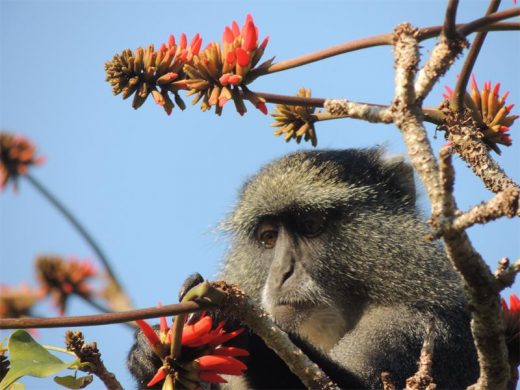
The nectar-rich flowers attract hosts of birds and insects and the insect-eating birds are not far behind. Monkeys snack on the flower buds and seed eating birds and beetles enjoy munching the red and black lucky beans.
Being soft wooded, these trees provide nesting opportunities for hole-nesting birds like barbets and woodpeckers and most of the species have traditional medical applications. In fact I have heard that Erythrina Caffra is considered a very magical tree and is much revered in Zulu culture.
This is not surprising for surely it is one of the most beautiful of all the trees that make KwaZulu-Natal such a tree-hugger’s paradise.
HAVE YOUR SAY
Like our Facebook page, follow us on Twitter and Instagram
For news straight to your phone, add us on BBM 58F3D7A7 or WhatsApp 082 421 6033