A FEW years ago my husband and I were in a hide overlooking a pan at Ndumo Game Reserve on KwaZulu-Natal’s northerly border with Mozambique.
We’d been there a short while when we were joined by a tour group of birders and their guide. They were staying in a luxury lodge outside Ndumo and were paying their guide, a top-notch birder, to show them the ‘specials’ of all the birding hot spots in that particularly bird-rich area.
YOU MIGHT ALSO BE INTERESTED IN : Invasives and Natives: Yellow bells and a scarlet winter treat
Between them, their expensive cameras, mega-lenses and top of the range birding scopes and binoculars were worth a not-so-small fortune and it was obvious that they spared no expense in the pursuit of their hobby.
While most of the party were enthralled by the water birds and waders that could be ticked off from the hide, one man was clearly not interested.
He’d added all the species on view to his life list and wasn’t particularly keen to see them again. He’d gone to the huge expense of joining the upmarket bird tour for just one reason, to enable him to tick off a single little bird called Neergaard’s sunbird.
While most birders are actually keen bird watchers who enjoy studying birds in the wild this particular super-twitcher personified a not- too-uncommon type who treats birding as a highly competitive sport.
Forget about cricket, rugby and soccer fanatics. They pale in comparison to the super-twitcher who will stop at almost nothing to tick off a ‘lifer’.
Which brings me, in a very round about way, to the fact that our Ray Nkonyeni Municipality is paying a consultant to draw up a management plan to control alien invasive plants in the municipal area.
Is the expense of this exercise justified, particularly when you consider that our main local industry is tourism, an industry that is very dependent on a sound infrastructure? Should the money rather be spent on fixing our potholes?
Well, for a start recent legislation means our municipality is now legally obliged to come up with the management plan. You see alien invasive species are an extremely serious problem throughout South Africa and as expensive as it is to tackle this problem it is one that will only get worse if we ignore it.
After habitat destruction, the global spread of invasive aliens it the biggest threat to the earth’s biodiversity, a term that is being bandied around quite a bit lately.
If you are not too sure what it means, take a look at an area that is heavily infested with invasive plants then compare it to healthy natural areas where there are few of these alien pests.
What do you see? Perhaps the infested area is swamped with rampant pinky-orange flowering lantana, pretty but obviously deadly to the plants that should be growing there.
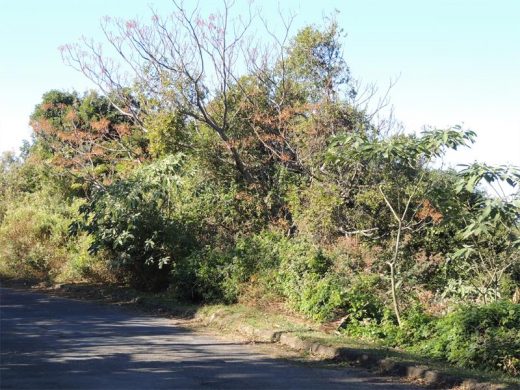
Perhaps you are looking at a hillside where the attractive natural bush is slowly being smothered by the relentless expansion of triffid weed. All along our South Coast roads it is possible to see pockets of remaining coastal bush where the natural vegetation is slowly being invaded, degraded and pushed aside by gums, syringa and pines – and every other baddy in the book.
Where once the coastal vegetation was amazingly diverse, representing so many different floral species from trees and shrubs to grassland herbs, open land is slowly being reduced to the home of a handful of species, all foreign and invasive that have the ability to out-compete the natives and to send them packing.
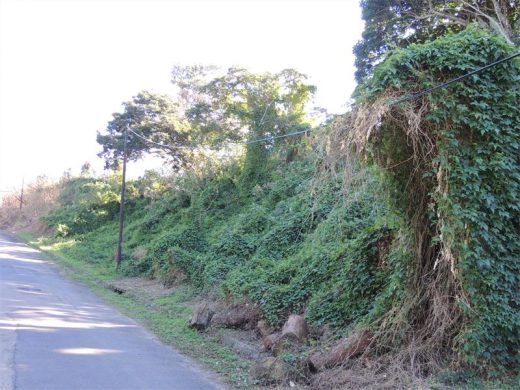
The balance maintained by Mother Nature is being horribly upset by the dominant invasives that have no natural enemies in their new home land – and often no uses for the indigenous fauna.
The huge, negative impact these plants have on our biodiversity, the economy, agriculture, food security, risk of fire and water supply has to be everyone’s concern, especially when we consider that biodioversity, so threatened by the rampant growth of alien invasives, is the engine that drives life on earth.
But what about the impact alien invasives have on our tourism industry? Even if you are not too knowledgeable about these plants, you will notice how a heavily infested area just looks ugly, degraded and lacking in floral diversity when compared to a healthier spot – and our visitors notice this, too.
YOU MIGHT ALSO BE INTERESTED IN : Invasives and Natives: Signature flatcrown has many cousins
A while back South Coast Herald reporters did a snap survey during our holiday season, visiting beaches and asking our visitors what brought them to our corner of the world. Almost everyone to whom we spoke mentioned our pretty, green, lush natural environment as a top attraction.
Then there is the recent exponential growth in eco-tourism. As anyone who visits our game and nature reserves regularly would have noticed, we are seeing massive increases in the numbers of domestic and foreign eco-tourists visiting the wilder corners of our wonderfully biodiverse country.
Even in the more built up areas, like the KwaZulu-Natal South Coast, our attractive little nature reserves and conserved areas are much more of an attraction than many people realise.
And, going back to the super-twitcher and his Neergaard’s sunbird, among the more accessible eco-activities are birding and bird photography. Thousands of people are taking up these hobbies and these forms of tourism have become incredibly lucrative industries.
Many of our visitors come to the South Coast to see our birds and, like the super-twitcher, will happily splash out huge sums of money to see all the South Coast’s specials.
If we don’t look after our biodiversity, however, our birds will go – and so will the well-heeled super-twitchers. They will be followed by the ordinary nature lovers who once came here because they appreciated all our other lovely natural attractions. People just don’t want to visit an ugly, degraded area that has no natural beauty to offer.
Luckily, the South Coast already boasts many local conservancies, made up of small bands of volunteer who give up much of their time and energy to guard our precious biodiversity by battling the invasives that threatened many of our green beauty spots.
They are already lining up to join forces with our municipality once it has drawn up its all-important management plan. We can all be part of this vital war against alien invaders by supporting the conservancies and by ensuring our own properties remain free of these troublesome plants.
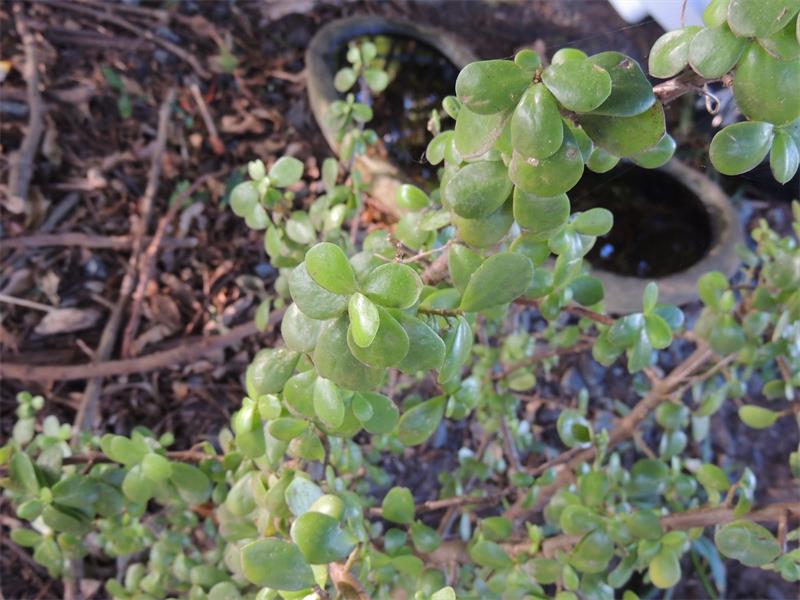
Alien invasives are always bad news but let’s take a look at a native plant that is always good news. Every garden should have at least one spekboom or porkbush (Portulacaria afra) flourishing somewhere.
For a start, this easy to grow, drought resistant shrub is most attractive with its brownish stems and small, round, bright green succulent leaves. It can be used as an attractive form plant, perhaps in a rockery or succulent garden, but it also makes a wonderful, fairly fast-growing hedge.
YOU MIGHT ALSO BE INTERESTED IN : Invasives and natives: Inkberry, indigo and a chameleon or two
In summer it covers itself with tiny, pink star-shaped flowers that attract bees and other insects. In fact, it is renowned as an excellent bee plant. The leaves are edible – humans find them tasty and some people even add them to salads – and they make good fodder for stock.
Anyone who has visited Addo Elephant National Park will have noticed how much the elephants enjoy munching on these plants (although you probably don’t have too many pachyderms available to eat the spekboom in your garden). These lovely plants also provide food for the caterpillar of a species of moth.
Most important of all, though, spekboom plant is an amazing absorber of carbon and is planted en masse to form carbon ‘banks’. So, still on the subject of tourism, next time you take a road trip or travel overseas by plane, why not plant a spekboom to offset the negative effect your travels have had on global warming.
Or you can plant a spekboom now, simply to enjoy its beauty.
HAVE YOUR SAY
Like our Facebook page, follow us on Twitter and Instagram
For news straight to your phone, add us on BBM 58F3D7A7 or WhatsApp 082 421 6033