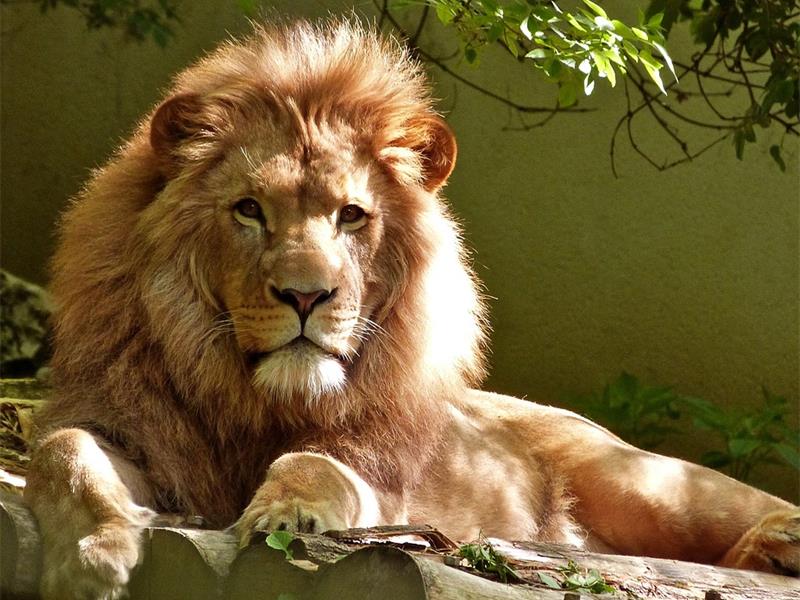
THE young lion raised his head and looked at us when we stopped next to him.
Karen thought he was so lovely and cuddly that she wanted to get out and pat him and had to be forcibly restrained. I must admit, he did look a bit like an animated fluffy toy, with a disarmingly benign expression.
The benignity was undoubtedly the result of the sumptuous breakfast of buffalo, which he and his two wives had just consumed.
Savuti camp is not much more civilised than Third Bridge.
It’s just an unfenced, sandy area, set aside for camping, through which the animals may – and usually do – roam at will. It does, however, have showers. After arriving in the mid-morning heat, pitching camp and fixing the spare wheel, we really appreciated those showers.
In the late afternoon, when the temperature had dropped a little, we went out for a game-viewing drive. The track out of camp was thick sand and dreadfully bumpy.
Even at 3km per hour in low ratio, you got the feeling that you were trapped in some monstrous cocktail shaker. We had shed the trailer, but taken from the roof rack only what we needed for the night.
That was a mistake, as we discovered when we hit a particularly bad bump. There was a resounding crash from the roof and the Land Rover was drenched in the contents of three two-litre flagons of wine.
There was one thing we had heard about Savuti which definitely proved true. There was no shortage of animals.
Elephant and buffalo wandered in and out of the camp at all times of the day and night, taking no notice of us whatsoever.
There was only one occasion on which the animals proved a nuisance and that was when a herd of buffalo took over the ablution block and the humans had to revert to using the bush.
Those were the days when the Savuti Marsh really was a marsh. The Selinda Spillway was running strongly into the Savuti Channel which disappeared into an almost impenetrable green jungle in the midst of the surrounding arid bush.
But northern Botswana is subject to frequent earthquakes. Not the big sort, that get into the newspapers, but big enough to alter the course of slow-moving waterways and change a whole ecosystem with one gentle shudder.
Which is what later happened to Savuti. After the tremor it could no longer support the vast herds, tens of thousands strong and all ecologists could do about it was to pray that another earthquake would one day reverse the effect of the last one.
HAVE YOUR SAY
Like our Facebook page, follow us on Twitter and Instagram
For news straight to your phone, add us on BBM 58F3D7A7 or WhatsApp 082 421 6033