I LOVE the way bulbs lie dormant, quietly biding their time until the right season rolls around and it’s time for them to shine.
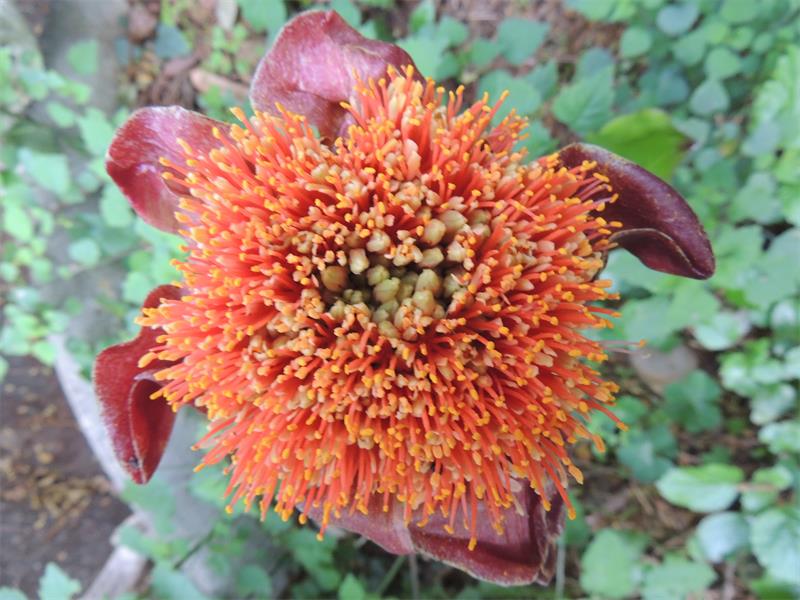
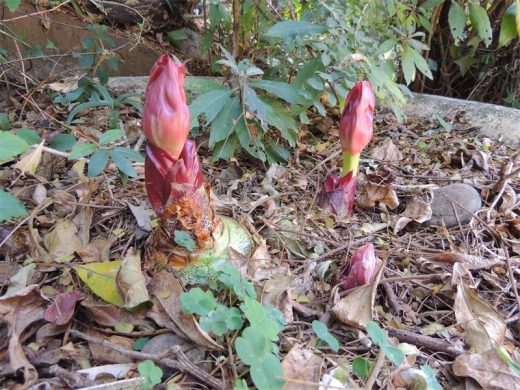
I was thrilled to see my Scadoxus puniceus – also known as blood lilies, snake lilies or paintbrushes – are already pushing their torch-shaped buds through the earth and preparing to show off.
YOU MIGHT ALSO BE INTERESTED IN : Invasives and Natives: Mellow yellow in the spring garden
In their indigenous gardening classic, ‘Bring Nature Back Into Your Garden’, Charles and Julia Botha give this lovely description of what happens when these beautiful bulbs flower:
“The solitary maroon bud, held on a thick sturdy stem, opens into a magnificent inflorescence made up of many densely-massed, small, dark orange to red flowers, speckled with golden-yellow pollen-laden anthers. Resembling a large, flat-topped brush dipped in magic colours, it buzzes with bees. Village weavers sometimes tear the flowers in their desire to get to the nectar while olive sunbirds tackle the food source rather more delicately.”
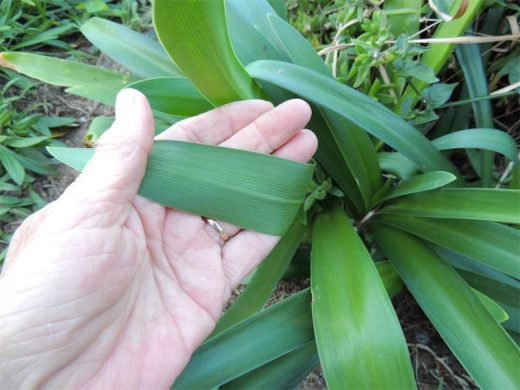
They point out that it is one of the few red-flowered species that is happy to grow in shade.
Gradually, as the flowers open, the bright, shiny leaves appear. Then the flowers turn to bright red fruit that are almost as eye-catching as the ‘paint brushes’.
Eventually the leaves die off and the plant take its winter nap in readiness for another spring explosion of colour.
Another Scadoxus to lookout for in KwaZulu-Natal as it does well in local gardens is Scadoxus multiflorus subsp katharinae. Known by the apt common name of Katharine wheel lily, this lovely plant’s flowers are bright red balls and are most attractive.
Alien invasives are not just plants and unfortunately our wild (and garden) Scadoxus and many other bulbs are threatened by a non-floral invasive, the horrible amaryllis caterpillar (Brythis crini), a troublesome creature that is found in many other counties and that has no natural enemies in South Africa.
Indigenous gardeners have to be on their guard or the worms will end up damaging their Scadoxus, Clivia, Crinum, Cyrtanthus and Agapanthas species.
According to Charles and Julia, the moth of this caterpillar goes about unnoticed, laying its eggs on the underside of leaves at night. The black and yellow caterpillars (also known as lily borers) chew their way through the leaf, working towards the centre of the plant. If they reach the bulb before they pupate they might well kill the plant.
Charles and Julia give good advice on controlling the insects manually. Check the back of the leaves of your bulbs frequently for tiny eggs the size of pinheads and remove them.
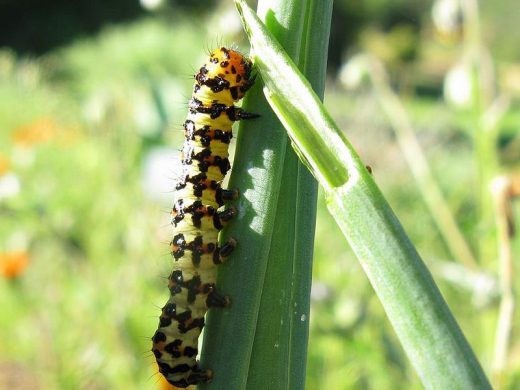
If the caterpillars are already present you will see them inside the leaves, just below the surface. Kill them by squashing them or put them into your pond for you indigenous fish to eat.
HAVE YOUR SAY
Like our Facebook page, follow us on Twitter and Instagram
For news straight to your phone, add us on BBM 58F3D7A7 or WhatsApp 082 421 6033