FOR various reasons our year so far had been one of smallish trips and gentle meanderings, mainly around KwaZulu-Natal, so in August, when we set off on a long-planned road trip, Bill and I looked forward to spreading our wings.
YOU MIGHT ALSO BE INTERESTED IN : Tent Travels: Completing parkruns
We had limited leave available – just under three weeks – but we decided to pack as much as possible into our camping holiday.
All in all, we would spend time in two of our favourite National Parks, hop over the border to pay a too-short visit to wonder-filled Botswana, revisit a North West park we’d long neglected and explore a section of South Africa’s largest inland flood plain.
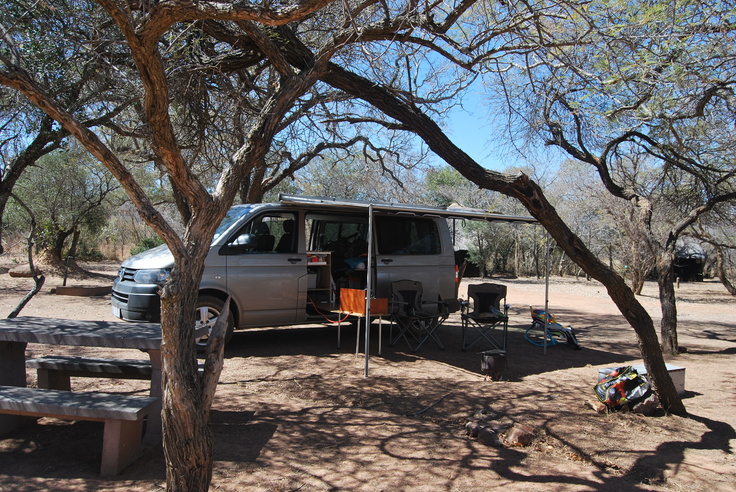
We really did make the most of the time at our disposal, thanks in part to the Kombi camper we’d recently acquired that offered us increased mobility, good off-road capabilities and great on-road cruising.
It was the first real holiday we’d had in it but by the end of the road trip we were thrilled with our vehicle and the camping system we’d devised.
After leaving the South Coast around noon, we made good time and spent a lovely evening and the first night of the holiday in Springs with my brother and sister-in-law.
We were up and away early the next morning, negotiating the heavy traffic through Gauteng’s frenetic metropolis.
Many years ago we often found ourselves meandering along the Great North Road through delightful small towns like Warmbaths, Nylstroom and Naboomspruit, whenever we travelled to Zimbabwe.
Then the freeway was built and the new N1 by-passed these little towns, so we hadn’t seen them for many years.
It was good to renew our acquaintances with them and to discover that what had been essentially small villages had mostly grown into substantial, attractive and prosperous-looking towns.
They had also changed their names to Bela-bela, Modimolle and Mookgopong.
We were soon on our way to the Nylsvly Nature Reserve where we had booked to camp for two nights. A large slice of conserved flood plain, the reserve is situated alongside the Nylstroom river, a waterway with an interesting story.
When the Voortrekkers first arrived in Limpopo Province, they found a river flowing northwards and decided that they must have discovered the source of the Nile. What convinced them further was finding a ruin of a pyramid alongside the river. And so they named the river Nylstroom, Afrikaans for Nile Stream.
History has proved incorrect the Voortrekkers’ theories about the source of the Nile, but they weren’t wrong about finding something rather special.
Their pyramid was the sacred hill, Modimolle, the `Place of Spirits’, and an ancient burial ground. As for the river they named Nylstroom, it boasts an incredible natural treasure, the largest inland floodplain in South Africa, covering 16 000 hectares when completely inundated.
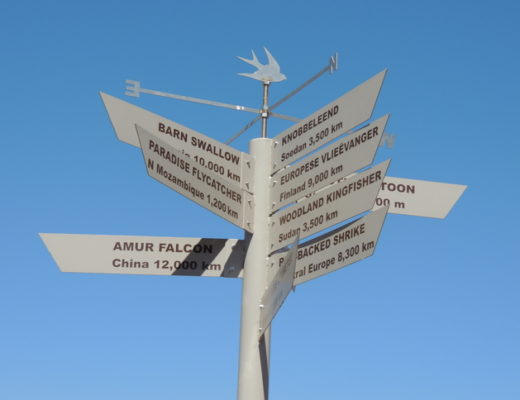
During times of good rains Nylsvlei Nature Reserve, incorporating a section of the floodplain and an adjoining slice of bushveld, is a birding hotspot deluxe. Some 370 species have been recorded in the reserve.
More than 100 of these, including 23 Red Data species, are waterfowl, 58 of which are known to breed there. At peak rush hour about 80 000 waterbirds congregate in the watery paradise that is this vast flood plain.
On a previous visit, some years ago we’d been fortunate to see it at its soggy best and I had been blown away by the sheer abundance of water birds. Now, at the end of a long, dry winter, I wasn’t expecting the same grand spectacle and, yes, the watery sections weren’t nearly as exciting as they had been.
However the abundance of bushveld birds more than made up for this. When the flood plains are inundated Nylsvly is too amazing for words but don’t let the drier weather put you off. The nature reserve is wonderful any time of year.
We had the whole of the camping area to ourselves and hardly saw anyone else in the reserve, except for the friendly staff, during our whole two-day stay there.
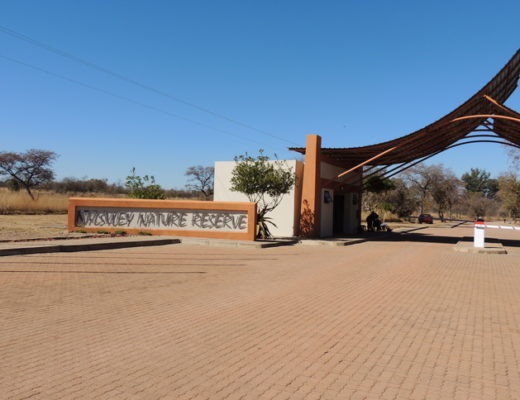
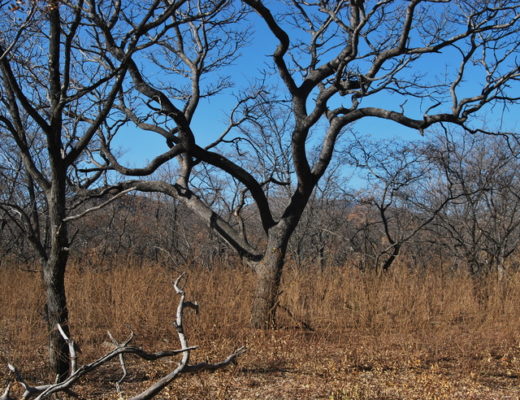
The wintry camping area, with its trees stripped of leaves, was all browns and golds and the in-camp birding was amazing. We lost count of the different species that visited our campsite that first evening.
After setting up camp, we did a leisurely game drive, seeing quite a bit of general game and some interesting birds, then left the reserve grounds to visit the nearby Vogelfontein hides.
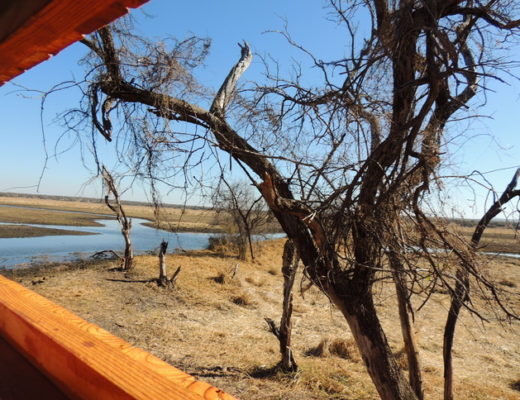
That area was so dry compared with the lush, green, swampy, bird-filled wetland it had been on our previous visit but there were still quite a few avian and four-footed visitors on the exposed mud flats and around the little silvery pools.
YOU MIGHT ALSO BE INTERESTED IN : Tent Travels: A short mountain meander
A host of raucous avian camp followers – babblers, crested francolins, crested barbets, starling and hornbills, to name a few – created a glorious dawn chorus and made sure we were wide awake soon after sun-up.
One of the advantages of staying in a smaller reserve like Nylsvly that does not have the big five is that you are allowed to walk so we set off for a long and lovely stroll through the brittle, wintry bushveld. You see, hear and even smell so much more on foot than you do in a car.
The path we followed took us to the hide nearest to camp and although it wasn’t too productive, it was pleasant sitting there watching at least a little bit of waterbird action. Walking back to camp we spotted an adult roan antelope and two babies, a single reedbuck plus the usual tsessebe, wildebeest and warthogs.
Back in camp we braved the (very) cold showers then, as we’d spent most of the morning on foot in the bush, enjoyed a lazy in-camp afternoon watching the amazing variety of birds that came to call. To round off a glorious bushveld day we drove to a little bench place strategically in a scenic spot near the hide and enjoyed a sundowner there, happily listening to all the bushveld sounds.
Once again, the dawn chorus had us up early the next morning so we had a quick breakfast, packed up and were soon on our way to our next destination, Marakele National Park, via the scenic Bakkers Pass.
It had been wonderful revisiting Nylsvly, a reserve for all seasons and a special little beauty spot that deserves greater recognition.
HAVE YOUR SAY
Like our Facebook page, follow us on Twitter and Instagram
For news straight to your phone, add us on BBM 58F3D7A7 or WhatsApp 082 421 6033