ENTERING Botswana via the Platjan Border Post was a fast, friendly, no-fuss process that, as always, left me feeling elated
I so adore visiting this big, bountiful country. It has so much to offer anyone who loves Africa and its wild places. Many tourists only associate main tourist areas like the Delta and Chobe with with a visit to Botswana, but there is so much more to this vast domain.
YOU MIGHT ALSO BE INTERESTED IN : Tent Travels: Revisiting a place of astounding beauty
Botswana has many lesser known but just as wonderful destinations including the one to which we were now heading, the rugged, rocky Tuli Block. Vastly different from much of the rest of the country, it is one of my favourite slightly-off-the-tourist-map places. It is situated in that eastern corner of Botswana where the Shashe and Limpopo rivers meet.
This confluence is also the meeting place of three modern-day countries, Botswana, South Africa and Zimbabwe, although in centuries past, no borders separated the early San hunter gatherers and the later inhabitants of the area, some of whom had links with Great Zimbabwe. No matter which sides of the rivers they called home, they shared a rich, common culture and heritage.
So much unwritten history seems to have imbued the whole region with an air or mystery. Like its South African neighbour, the Mapungubwe National Park, the Tuli has an ancient feel to it and seems to echo with the sounds of footsteps that passed this way so long ago.
The Tuli also has an interesting modern history that goes to the late 19th century when Cecil John Rhodes had his eye on what was then known as the British Protectorate of Bechuanaland before its independence in 1966 and the birth of the modern nation of Botswana.
He planned to acquire the country for his British South African Company, mainly to use it as part of the route for his planned railway line from the Cape colony to what was then called Rhodesia.
Three Tswana kings travelled all the way to London to plead their case and to keep out the British South African Company. The final nail in the coffin of Rhodes’s Botswana ambitions was the Jameson Raid, orchestrated by him from Bechuanaland territory, that earned him international disfavour.
He may not have succeeded in his Bechuanaland take-over bid but King Khama eventually gave him the Tuli block for his railway. However, it was found to be unsuitable for the line and it was never built there.
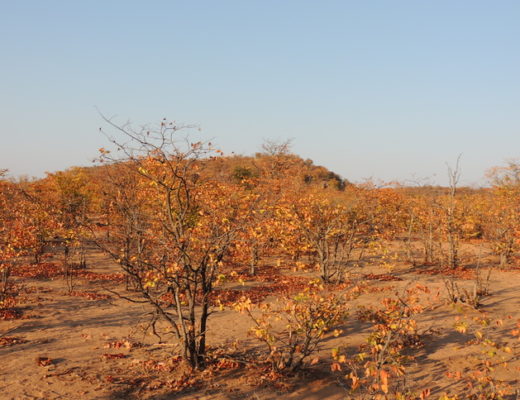
As well as having an interesting history, this lovely corner is a very special place, so different to most of Botswana. It has a wonderfully untamed feel to it, with its magnificent rocky outcrops and ridges, its sandy river beds, its lushly wooded areas and dry, stony mopane scrublands.
Although much of the Tuli is privately owned and falls outside formal conserved area, fences are few allowing wildlife free access to most of the properties.
These includes farms, lodges and game reserves on private reserves and concession areas in the conserved areas.
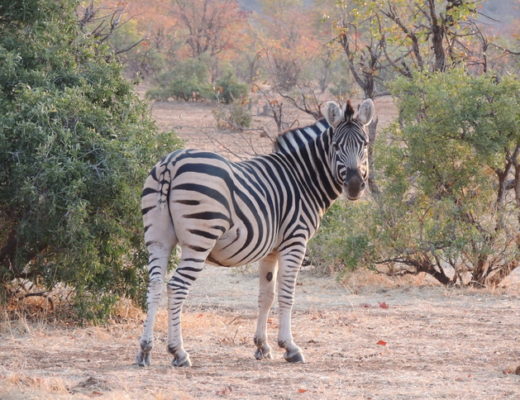
It is said that Tuli boasts the largest elephant population to be found on privately owned land. All sorts of other creatures, great and small, wander here, including the big cats, brown and spotted hyena, eland, zebra, wildebeest and other plains dwellers.
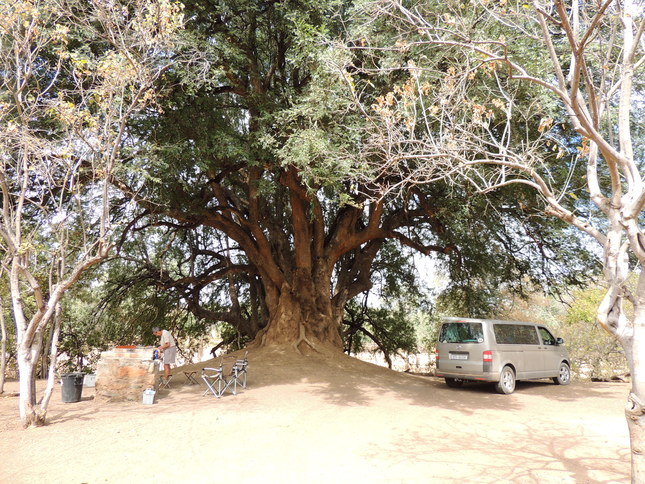
We spent three wonderful days in splendid isolation on the banks for the sandy Limpopo River beneath the giant mashatu or nyala trees that dominated our large, secluded site at Molema Bush Camp. Molema is just one of the camps and lodges, offering accommodation, facilities and levels of luxury to suite all tastes and pockets, in the Tuli Wilderness portfolio – and this rustic little paradise of a camp, perhaps the least sophisticated of them all, suited out tastes entirely. What a privilege it was to spend some time alone in the wilds.
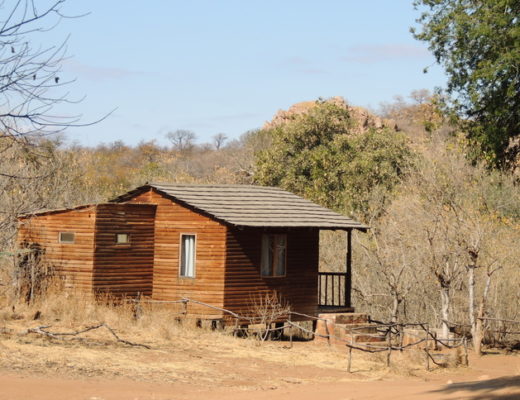
Molama comprised only about six secluded camp sites and four wooden cabins, each situated well away from the others, stretched out alongside the river. There was no electricity but each campsite had its own simple, open air, canvas walled ablution facilities (with hot water).
With no fences you had to be a bit careful about walking in the camp but you could do a bit of a cautious stroll along the sandy tracks adjacent to the sites or across the Limpopo’s sandy banks to the river.
Tuli Wilderness is an exclusive concession in the vast Northern Tuli Game Reserve, owned and managed by Stuart Quinn and his wife, Julie, formally a South Coast resident. We know Julie well. She was a neighbour of ours and is a very good friend of our daughter-in-law. In fact, we were delighted to inherit her dog, our beloved Bat (Julie’s name for him) when she left the South Coast and needed to find him a new home. Bat would have loved to have come along with us to say hello to Julie, who he still adores, but I think the lions would have scared him. Anyway he is a home body
Their Molema Bush Camp is an interesting project as it is pioneering a whole new concept in tourism and conservation, whereby local people are starting to benefit from eco-tourism, game reserves and other conservation enterprises.
Tuli Wilderness has entered into a 15-year joint venture agreement with the Molema Community Trust. While Tuli Wilderness is now overseeing the management and operation of the Molema Bush Camp and its associated activities it is training the community to take over this untamed jewel as a business of its own once the lease expires. From what we’ve seen the community members who have been employed must have had excellent training. And I think they are just naturally lovely people. From camp assistants to reception staff they were all so welcoming, friendly, efficient and helpful, as were the Tuli Wilderness guides who we were privileged to meet during our stay. There was also a wonderful atmosphere there. Guides and staff often told us just how much they loved being part of the Tuli Wilderness team.
All the activities offered by Tuli Wilderness – bush walks, game drives and bush dinners – are available to Molema guests (pre-booking is necessary) who are picked up in game viewing vehicles at their campsites or cabins.
Even in camp, though, the wildlife experiences were exceptional. The birdlife at Molema was amazing and one evening a solitary elephant strolled through our camping site, politely keeping his distance from us. We heard lions during the night and they sounded quite near at times.
YOU MIGHT ALSO BE INTERESTED IN : Tent Travels: A short visit to a special place
Molema the bushpig, a character-filled creature who had made the camp his home, often paid us evening or early morning visits.
On our first day there we arrived at Molema at around lunch time and spent a peaceful afternoon doing a spot of amazing armchair birding in camp, taking a riverside stroll (keeping our distance from the water and watching out for hippos and crocs) and doing a little exploration of the tracks closest to our campsite. It was heavenly being there. After an early evening braai we wandered off to our comfy camper bed and I must say, I was quite pleased to be safely inside our vehicle when our sleep was disturbed by the sounds of a lion’s roar.
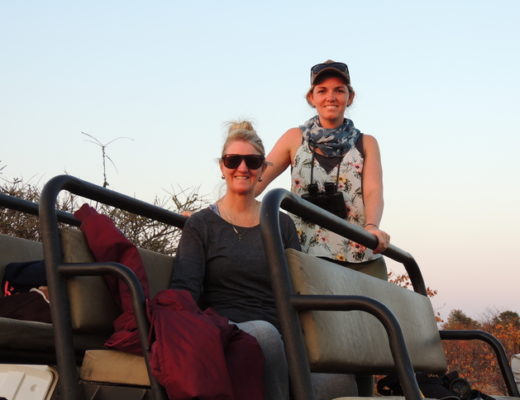
The lion was still doing a bit of people scaring the next morning when we made breakfast but it didn’t sound too close. We then enjoyed a visit from Julie and it was lovely catching up with all her news. Life had been particularly eventful for her and Stewart recently and she had so much to tell us.That afternoon, game guide Mark picked us up at our site for an afternoon drive. Already on board were members of the Krummicks family. They also hail from the South Coast and are as ‘bush happy’ as we are so we had plenty in common and thoroughly enjoyed their company.
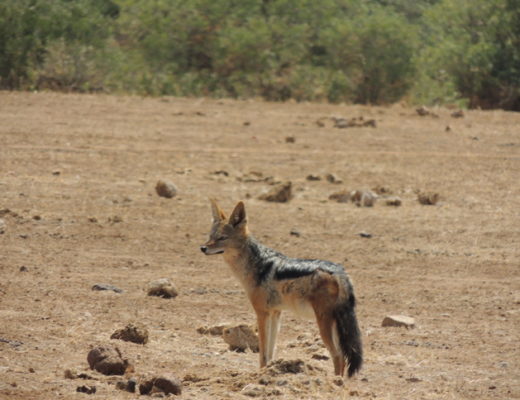
Mark found us an exquisite route that meandered through some rocky mopane scrub and pretty, well-treed area. The leaves of the scruffy little mopane bushes were sporting their spring colours, the reds and golds reflecting the dappled stony plains and surrounding rocky ridges. Quite a few elephants crossed our paths and there was a fair amount of plains animals around. Although we didn’t see any cats, Mark found lion and leopard spoor a couple of times and, reading them, told us the story of what these elusive cats had been up to when they’d left their marks in the soft sand for us to find. A fascinating game drive, with Mark contributing so much information, ended with a stunning sunset and convivial sundowners in the bush. Then it was time to meander back to camp as darkness fell.
We didn’t linger long around our braai fire that night. We planned to be up early the next day, for a game drive and a walk to the legendary Eagle Rock – but more about that very special place next week.
HAVE YOUR SAY
Like our Facebook page, follow us on Twitter and Instagram
For news straight to your phone, add us on BBM 58F3D7A7 or WhatsApp 082 421 6033