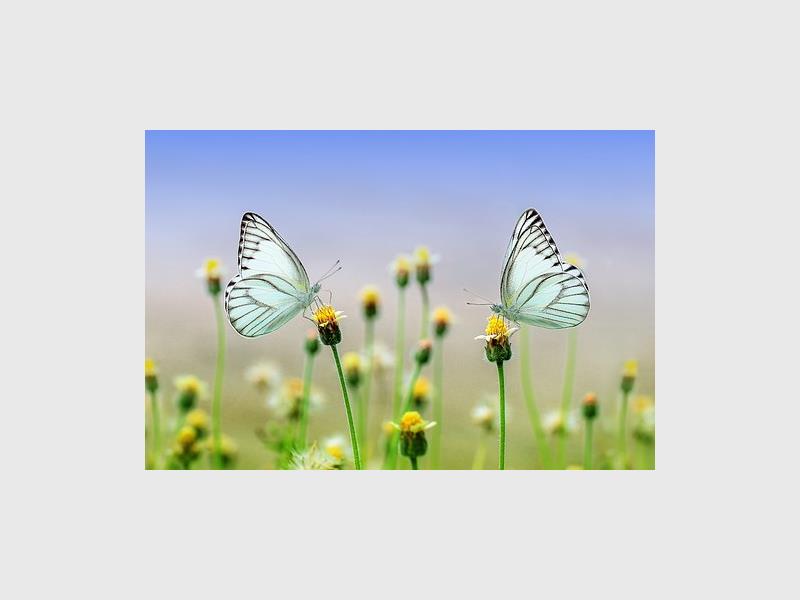
We’ve all heard of the ‘Big Five’ and many of us the ‘Little Five’ (elephant shrew, rhino beetle, red-billed buffalo weaver, ant lion and leopard tortoise), but now we have a ‘Very Little Five’. A new and very welcome book on invertebrates has arrived, covering all the very little guys that we normally overlook.
YOU MIGHT ALSO BE INTERESTED IN : From my Hide: From cold flies to Chile
The book looks at creatures such as butterflies, spiders, beetles, worms and scorpions, investigating their private lives and the evidence they leave behind them, the sort of evidence that may be all over your home and garden, but which you don’t normally notice.
We are introduced to invertebrate tracks, signs and other things they leave behind them, their distribution across the broad spectrum of southern African habitats, their favourite foods and their predatory behavior. We look at their homes, webs and other structures, their eggs, chrysalises and cocoons, their droppings, their exo-skeletons. And remember all these signs of invertebrate life are not just out there in the bush or your garden, but may well be found in your home.
There are literally hundreds of photographs (I haven’t counted them, but with over 400 pages there are up to five photographs on each page), some of them of habitat, but others of the tiniest little critters you are going to come across in your explorations of this new sphere of interest.
And if you must know just how little, there is a centimetre gauge on both the front and the back covers of the book (it’s a field guide, by the way, in paperback).*
Now for something completely different. This may ring a bell, or maybe a big brass gong, but certainly a feeling of déja vu – I’m assembling a Chinese braai.
It’s an ordinary looking braai, at least according to the picture on the box, but its assembly requires a calm atmosphere, a steady hand (in fact lots of them), a simple set of tools (a box knife, a screwdriver and a small monkey wrench should do it), and suitable music in the background (we chose The Little Sisters of the Grasslands).
The very basic instructions come in three languages, we chose English. There is also an exploded view plan of the bits you should find in the box, all numbered accordingly, and how they should fit together in theory.
I say in theory because something had been lost in the translation and Bit A, for example, simply refused to have anything to do with Bit B, and so on. Never mind, we persevered and it slowly began to take shape, although not necessarily the shape pictured on the box. It was what in modern parlance would be called a challenge and at the end we had what we think is a fine braai.
Remember, Christmas is coming and both this book and the braai would make fine presents.
NB: The Little Sisters of the Grassland is a modern piece of classical Chinese music for a Western orchestra and the pippa, a plucked four-stringed instrument. The Little Sisters are the young shepherdesses of Mongolia.
*Gutteridge, Lee, Invertebrates of Southern Africa and their Tracks and Signs, Jacana, Johannesburg, 2017.
HAVE YOUR SAY
Like our Facebook page, follow us on Twitter and Instagram
For news straight to your phone, add us on BBM 58F3D7A7 or WhatsApp 082 421 6033