SOMETIMES when you are travelling it’s the smallest incidents that make the biggest impressions, changing your perspective of a place and bringing different aspects of it into focus.
I experienced a moment like that on our recent road trip, on the last day we spent in Botswana.
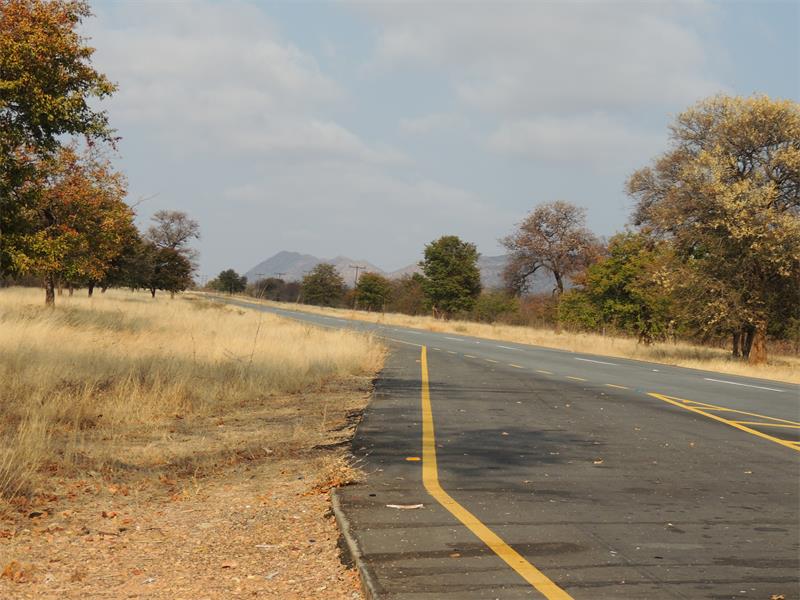
We had a fairly long day’s travelling ahead of us as well as the border crossing back into South Africa so we left Khama Rhino Sanctuary as soon as the gates opened.
YOU MIGHT ALSO BE INTERESTED IN : Tent Travels: Where rhinos walk in safety
At Serowe, while Bill was filling up our vehicle at the fuel station, I strolled over to a nearby supermarket to buy a few supplies. As I was paying for my purchases, the customer behind me in the queue, a young woman, slipped passed me, packed the items I had bought into my shopping bag then handed the bag to me with a smile.
It was a small act of kindness but it wasn’t an isolated incident. It reminded me how over the years, on our many visits to Botswana, Bill and I had often been the recipients of similar kind and helpful gestures.
The smiling woman handing me my shopping bag also offered me a light bulb moment. It was the people who made their country so successful, I decided.
They co-operated. They cared about each other. They worked together to make life a little easier for each other and, in the process, they made their country great.
It was perhaps a bit of an over-simplification but a culture of kindness, thoughtfulness and co-operation seemed to me to be one of the main features of a prosperous nation at peace with itself; a nation like Botswana,
Botswana’s culture of co-operation would again manifest itself a little later that day. As we approached Gabarone, we experienced a build-up of slow, heavy traffic, the delays caused by what was obviously a big cycle race.
As traffic came to a halt while traffic police allowed a stream of cyclists to cross the main road, Bill and I remarked on the patience of our fellow road users.
There was no aggressive pushing, shoving and lane hopping or any sort of impatient behaviour. When a driver needed to change lanes the other drivers would courteously make room for the vehicle. Again, everyone seemed to be working together to accommodate the cyclists and to make the race a success.
The traffic congestion cleared without too much of a delay, but traffic remained quite heavy all the way to Lobatse where we crossed back into South Africa, the border officials on both sides offering quick, efficient and polite service.
YOU MIGHT ALSO BE INTERESTED IN : Tent Travels: Communing with the ancient shades and the eagles of Eagle Rock
North West Province isn’t an area we know very well but it was a pleasant drive along the N4, through attractive countryside that seemed to boasts quite a thriving tourism industry.
We passed through Zeerust and Groot Marico – Herman Charles Bosman country – before turning off and heading north shortly before Rustenburg. It didn’t take us long to reach the Munyane camp entrance to Pilanesberg National Park. We had booked into Bakgatla and were planning to drive through the park to get there.
It had been a slow route to the park, though, and it was already around 3pm so we decided to take a fairly direct route to Bakgatla, travelling along the main roads via the Pilanesberg Centre.
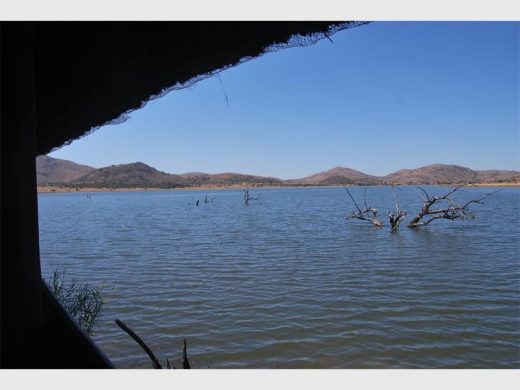
Approaching Makwe Dam, we couldn’t resist a little detour along Hippo Loop, overlooking the dam, and we were very glad we did. We found four lions sleeping in the grass. There was plenty of other game around and we thoroughly enjoyed the final section of the drive to attractive and almost empty Bakgatla Camp.
How different it was to our first and only other visit to Pilanesberg. We’d stayed at Munyane camp with a group of friends over a very busy weekend. In spite of the crowds we’d enjoyed our stay but, for a long time, had wanted to return to the park during a quieter period.
Pilanesberg, administered by North West Parks Board is interesting for a number of reasons including the fact that it was the first protected area in Africa to be developed not only for conservation purposes but also to encourage tourism and to bring socio-economic benefits to the surrounding area. Established in 1979 it was declared a national park of what was then the homeland of Bophuthatswana in 1984.
By factoring in benefits for the local economy and the need to make the park a viable and attractive eco-tourism destination, along with appropriate and sustainable ecological management, Pilanesberg was rather ahead of its time. Even by today’s standards, the visitor-friendly park caters extremely well for its guests who have access to its many excellent facilities.
Today, more and more people are realising that there needs to be a strong partnership between conservation agencies and communities. For conservation to work, communities surrounding parks and reserves need to benefit from them. And our first impressions were that Pilanesberg still seemed to be doing just this.
HAVE YOUR SAY
Like our Facebook page, follow us on Twitter and Instagram
For news straight to your phone, add us on BBM 58F3D7A7 or WhatsApp 082 421 6033