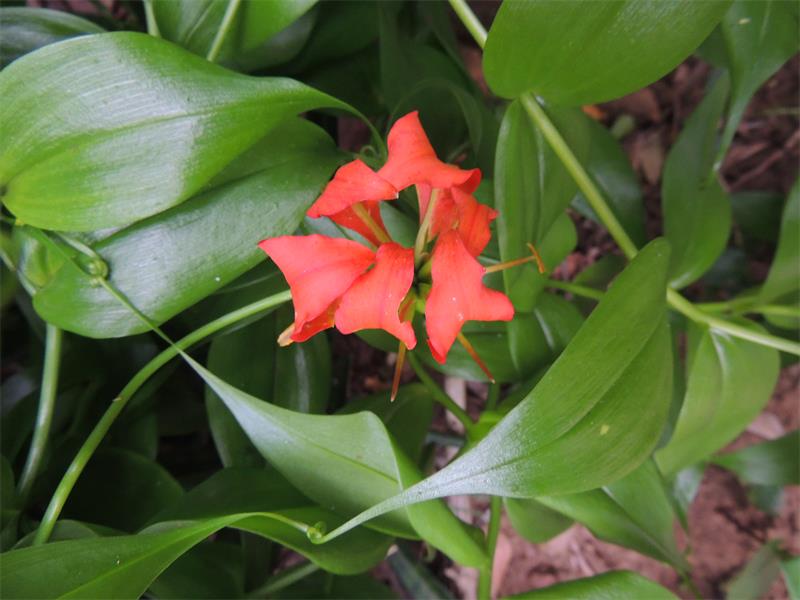
With the opening of the first flame lily bud, my garden has reminded me that Christmas is just around the corner.
For a while now I’ve notices the emergence of the plants’ bright green leaves, signalling that the corms had awoken from their long winter sleep.
If you look closely at the leaves you will notice the tips have little hooks or tendrils that help the plant to cling to neighbouring, stronger stemmed plants to help them to trail or scramble.
ALSO READ: Invasives and natives: Choose a native tree this Christmas
As Julia and Charles Botha point out in their book, ‘Bring Nature Back to your Garden’, these plant are not robust climbers and do not harbour any ambition to dominate their corner of the garden, even dying back in winter to give the other plants a chance to shine.
It is, however, their showy flame coloured flowers that really grabs your attention and that give the plant both its common name and Latin name.
A patch of dune vegetation ablaze with these brilliant crimson flowers will tell you why they are called flame lilies.
They are more formally addressed as Gloriosa superba, a descriptive name that sums up these beautiful flowering plants as gloriously superb.
A word of warning though. If you have children, grandchildren or pets, keep them away from these plants as all parts of the flame lily are poisonous.
These plants contain an alkaloid called colchicine, a name that would ring a bell for all gout sufferers. They are cultivated commercially for the pharmaceutical industry, colchicine being used to treat gout, amongst other disorders.
As can be imagined, colchicine users must be closely supervised by their doctors because of the substance’s toxicity.
In her KwaZulu-Natal wildflower guide, Elsa Pooley tells us that the flame lily is a scrambling plant found on coastal dunes, forest margins and in thickets.
ALSO READ: Invasives and natives: The low-down on confusing floral terms
Look out for them among the dune vegetation this summer when you stroll along the beach. They were particularly eye-catching after extreme tidal surges and storms battered our coastline, damaging the dune vegetation, in 2007.
Pioneer plants moved in quickly to cover up the dunes and to contain the damage – and the flame lilies flourished. That summer they truly lived up to their name, their floral show proving, well, gloriously superb.
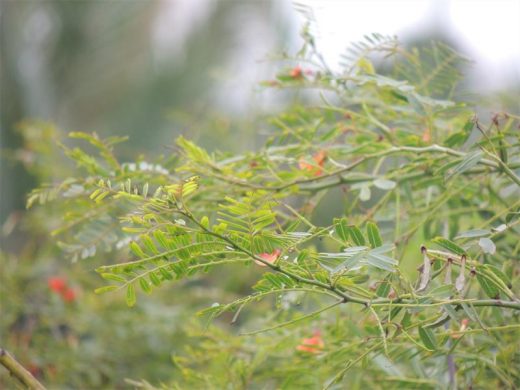
Other red-flowering plants blooming at the moment are a stand of Sesbania punicea or red sesbania, in a grassland near St Michaels beach. This deciduous shrub has slender branches, drooping leaves and, like the flame lily, showy flame-coloured flowers.
However the blooms are typical of those belonging to the pea family to which this plant is a member.
An ornamental import from South America, it has become a seriously problematic as an alien invader. It not only competes and replaces indigenous riverine and wetland species but it is poisonous.
The seeds are lethal to birds, mammals and reptiles, according to the Invasive Species South Africa website.
HAVE YOUR SAY
Like our Facebook page, follow us on Twitter and Instagram
For news straight to your phone, add us on BBM 58F3D7A7 or WhatsApp 082 421 6033