Turning the Tide on Lifestyle Diseases: Diabetes – the modern plague (part 1)
If you or a loved one suffers from diabetes, you don’t have to give up and just endure the relentless progress of the disease. It is possible to reverse the disease completely in many cases, or at least control the disease and limit its progress.

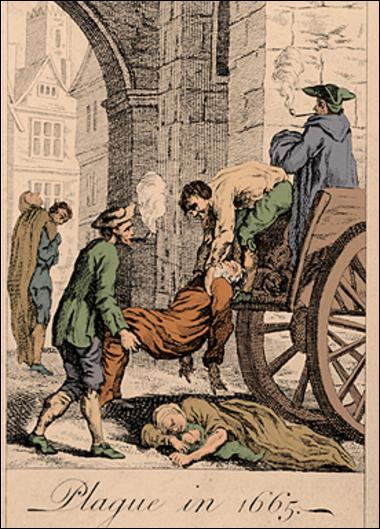
Back in the late 1300s the Black Death (bubonic plague) is estimated to have killed 25 million people throughout Europe. Approximately 30-50% of the population was infected. Whole towns were wiped out by this rat-borne, flea-transmitted bacterial infection. It had a devastating effect on the economy and social structure of the continent. As can be expected, its effects persisted for many years after.
YOU MIGHT ALSO BE INTERESTED IN: Turning the Tide on Lifestyle Diseases: The Blue Zones and what we can learn from them
Already in 2010, Professor David Matthews, the head of the Oxford Centre for Diabetes, Endocrinology and Metabolism, in the UK presented the Banting Memorial Lecture entitled “Type 2 diabetes as an ‘infectious’ disease: is this the Black Death of the 21st century?” (The Banting Memorial Lecture is in honour of Sir Frederick Banting, co discoverer of insulin – no relationship to the obese undertaker, William Banting after whom the Banting diet is named).
Below is an abstract of that presentation:
“We are currently facing a global pandemic of obesity and Type 2 diabetes. In some settings, the population prevalence of Type 2 diabetes is 50%, and half of those affected will die from diabetes-related complications. Eight centuries ago, an epidemic of bubonic plague swept across Europe, killing at least half of its victims. We here draw comparisons between these two pandemics, proposing close analogies between the ‘Black Death’ of the 14th century and the modern-day equivalent of Type 2 diabetes. Both diseases can be considered in terms of an aetiological agent, a reservoir, a vector and a predisposing toxic environment; populations can be considered as highly susceptible to the transmissible agents of Type 2 diabetes in the setting of calorie excess, inadequate food labelling, poorly regulated advertising and sedentary lifestyles. As for tackling a pandemic of a contagious microbial pathogen, we believe that breaking the cycle of transmission in the diabetes epidemic must be underpinned by political will and prompt, decisive legislation backed by the medical community. Far from fearing that such measures edge us towards a ‘nanny state’, we believe individuals should expect a responsible government to safeguard them from the toxic milieu that puts them at risk of obesity and its complications, and that communities and populations have the right to have their health.” https://www.ncbi.nlm.nih.gov/pubmed/2116684
YOU MIGHT ALSO BE INTERESTED IN: FREE lifestyle health seminars offered in Port Shepstone
Eight years after that lecture, the figures are even more frightening. It is estimated that 50% of the American population is either diabetic or pre-diabetic. I’m sure South Africa is not far behind. Many of the same predisposing factors are similar in our country: obesity; a highly processed diet – which is high in fats, refined sugars, and highly processed carbohydrates, and low in fibre, water and phytonutrients; and a sedentary lifestyle. For many people the question is not “are you at risk of getting diabetes”, but “when will you get it”. The resulting cost to individuals and to society as a whole – that includes the cost in terms of health care as well as loss of productivity and premature deaths – is likely to be astronomical. The country can ill afford it.
I don’t hear very much concern from the medical fraternity. It is almost accepted as a part of life. At least when HIV surfaced in South Africa, there was a mass campaign to inform people about the risks of unprotected sex, and the importance of limiting casual sex, and faithfulness in relationships. But there is precious little in addressing one of the most costly scourges of modern life.
In case you were not aware, diabetes is a major predisposing factor to heart attacks, strokes, kidney failure, blindness, amputations of legs, certain cancers (e.g. uterine cancer), peripheral neuropathy, and all cause mortality. It can cut off 10 years of your life.
It is not an innocuous disease, and is certainly not something to be proud of or to consider as a right of passage into affluence.
Diabetes Type 2 is almost unheard of in traditional cultures. As Dr Neal Barnard from the Physician’s Committee for Responsible Medicine says: “Up until 1980, only 1-5% of Japanese adults over age 40 had diabetes. Starting around that time, however, the rapid westernization of the diet meant that meat, milk, cheese, and sodas became fashionable. Waistlines expanded, and, by 1990, diabetes prevalence in Japan had climbed to 11-12%.” It is estimated that around 23% of 70+ year olds in Japan now have diabetes. It is very likely that the incidence in Japan now is not far behind the West. Interestingly, during the same time period, the consumption of rice went down, dispelling the myth that high carbohydrate intake is the cause of diabetes. Traditionally Japanese ate rice three times per day.

The cost of treating diabetes is astronomical. It is estimated that in the USA it will cost the equivalent of one third of the total health budget just to treat diabetes and its complications. In South Africa with the enormous strain upon the health budget, and a looming black hole of national health insurance, we can ill afford the financial burden of a rising incidence of diabetes. It is not just the cost of the medications and doctor’s visits.
It is also the time off work, the cost of management of complications, the shortened productive life and the loss to society of parents and loved ones from premature deaths.
There must be something we can do to turn the tide of diabetes. Surely if we can understand the causes, we can better address the process of reversing this black death of modern life. Over the next few weeks, we will be exploring the underlying causes of diabetes mellitus (type 2 diabetes) and what the different interventions are to combat this disease. Some of these interventions are controversial. Unfortunately there is a lot of heated debate over which dietary intervention is correct or not.
There may not be one right diet. Perhaps because of genetic differences, some people may do better with one diet compared to the other, but I do believe there are convincing arguments to promote one that is closest to the diet we were originally created to live on.
If you or a loved one suffers from diabetes, you don’t have to give up and just endure the relentless progress of the disease. It is possible to reverse the disease completely in many cases, or at least control the disease and limit its progress.
To a healthy life, and a chance to push back the tide of disease,
Dave Glass

Dr David Glass graduated from UCT in 1975. He spent the next 12 years working at a mission hospital in Lesotho, where much of his work involved health education and interventions to improve health, aside from the normal busy clinical work of an under-resourced mission hospital.
He returned to UCT in 1990 to specialise in obstetrics/gynaecology and then moved to the South Coast where he had the privilege of, amongst other things, ushering 7000 babies into the world. He no longer delivers babies but is still very clinically active in gynaecology.
An old passion, preventive health care, has now replaced the obstetrics side of his work. He is eager to share insights he has gathered over the years on how to prevent and reverse so many of the modern scourges of lifestyle – obesity, diabetes, ischaemic heart disease, high blood pressure, arthritis, common cancers, etc.
He is a family man, with a supportive wife, and two grown children, and four beautiful grandchildren. His hobbies include walking, cycling, vegetable gardening, bird-watching, travelling and writing. He is active in community health outreach and deeply involved in church activities. He enjoys teaching and sharing information.
HAVE YOUR SAY
Like the South Coast Herald’s Facebook page, follow us on Twitter and Instagram
For news straight to your phone, add us on WhatsApp 082 421 6033