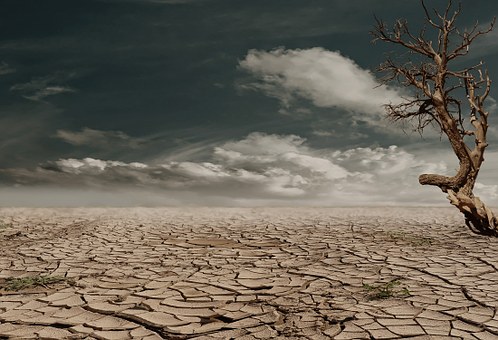
Today, June 14, is the UN Day for Desertification and Drought. We certainly know all about that in this country, with both issues being of immeasurable importance, but we’re not alone.
Disturbing new figures show that consumption of the Earth’s natural reserves has doubled over the past 30 years and a third of the planet’s land is now severely degraded. A report by the UN Convention to Combat Desertification says that each year we are losing 15-billion trees and 24-billion tons of fertile soil, clearly an unsustainable situation.
YOU MIGHT ALSO BE INTERESTED IN : From my Hide: Exploring the origins of Britain’s favourite tipple
The report says that the problem is the competition between the ever-increasing demand by an ever-increasing human population for goods and services, and the need to protect other eco-system services that regulate and support all life on Earth.
Adding to the problems of a burgeoning human population are the effects of global climate change leading to soil erosion, desertification and increasing water scarcity. Can the situation be changed for the better? Yes, says the report, if there is helpful input from all of us and if politicians would consider the real needs of their constituents rather than endlessly pursuing and promoting arms deals.*
Now, some good wildlife conservation news, the Abu Dhabi Environmental Agency has donated 54 captive-bred scimitar-horned oryxes to Chad, and they have been released in their natural habitat on the fringes of the Sahara Desert. The oryx became extinct in Chad during the civil unrest of the 1980s.
In Kazakhstan in Central Asia tigers have been released into a rehabilitated natural forest area under the supervision of the World-Wide Fund for Nature. Tigers became extinct there 70 years ago because of habitat loss and poaching.
And in the United States 12 eastern indigo snakes have been released into their natural habitat in the state of Florida. The eastern indigo snake is the longest snake in the US, measuring up to one-and-half metres.**
It seems that more and more Britons are taking up ‘plogging’, or picking up rubbish while walking on the beach. The concept was launched in Sweden, but has spread to many other countries.
Here on the lower South Coast many conservation-minded people do just that, they ‘plog’ our local beaches every time they go for a walk.*** Excellent!
When were you last asked to review something like a call to a bank or a visit to a particular website? It happens all the time, I usually ignore them, but many don’t.
YOU MIGHT ALSO BE INTERESTED IN : From my Hide – Celebrating our ‘proudly South African’ biodiversity
Now a delightful report comes from England, where a young journalist who posted online that he had created a new, fancy and by-appointment-only restaurant in London, complete with images of imaginative items on the menu – it was actually his garden shed and the menu items were created from shaving foam and bleach tablets.
He received immediate response. In no time at all he was getting e-requests for table bookings from eager foodies and the website had classed ‘The Shed’ as London’s top new restaurant.***
*Third World Resurgence, journal of the Malaysia-based Third World Network.
**Time Magazine.
***The Week: The Best of the British and the Foreign Media.
HAVE YOUR SAY
Like our Facebook page, follow us on Twitter and Instagram
For news straight to your phone, add us on WhatsApp 082 421 6033