IT had rained during the night and although the clouds were clearing, pockets of mist still wrapped themselves around the granite domes as we left Pretoriuskop.
Although it obscured the views the mist gave an ethereal touch to this hilly, verdant corner of Kruger. We wondered when we’d return to one of our best-loved South African beauty spots.
YOU MIGHT ALSO BE INTERESTED IN : Tent Travels: A rest camp steeped in history
However, we had much to look forward to that day. Although our Kruger adventure was coming to an end we would round it off with a visit to another stunning part of the park and one we had not spent much time in for quite a few years.
On our previous two visits to Kruger we’d tried in vain to book camping sites at Lower Sabie and Crocodile Bridge, two rest camps that have become immensely popular in recent year. Accommodation, even camping, is booked out very quickly at both these camps so we were been thrilled when we’d been able to have a night camping in each of them this time around. We were now looking forward to re-acquainting ourselves with this interesting and attractive south eastern corner of our great national park.
First, though, we were planning to tick off another parkrun, one of those free-timed 5km runs or walks held all over South Arica – and in about 20 other countries – every Saturday morning. As enthusiastic parkrunners we are keen to try out as many of South Africa’s parkruns as possible – and the Hazyview parkrun course was conveniently close to nearby Numbi Gate.
Actually, to be honest, we’d planned our southern Kruger itinerary to enable us to do this parkrun, about which we’d received good reports. Call us obsessive if you like!
We really enjoyed trying out the pretty, slightly undulating route around the Sabie Sands Hotel golf course. What was particularly gratifying was the enthusiastic support afforded by the hotel management and staff for the weekly run and for the parkrun movement in general.
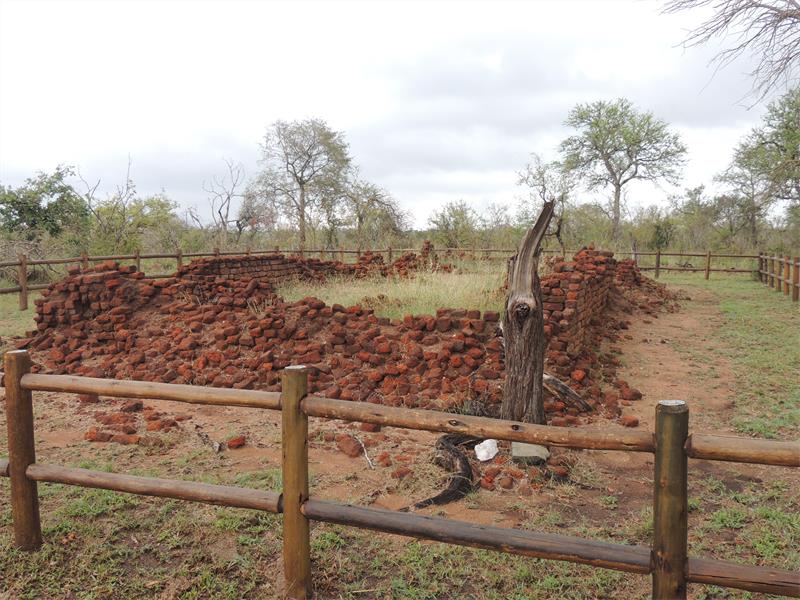
A new parkrun ticked off we were soon driving back into the park via Phabeni Gate. The S1 leading from the gate to Skukuza was one of the few Kruger roads we did not know so we were happy to try it out. Although a busy thoroughfare it was well worth doing and it also gave us a chance to take a look at the Albasini Ruins.
Joao Albasini was one of the earliest of the intrepid traders who crisscrossed the untamed Lowveld long before Kruger National Park was born. TV Bulpin tells his story in his fascinating book, ‘Lost Trails on the Lowveld’, first published in 1950.
The son of an Italian seafarer, Joao Albasini set up a trading post at this historical Kruger site, on land granted to him by the Sotho-speaking Kutswe chief, in 1845. It was then conveniently situated on an important trading route. “There Albasini himself took up residence, controlling his enterprise from this halfway house, a low reddish, burnt brick, thatched shack, surrounded by circles of huts and miles of bush,” writes Bulpin.
YOU MIGHT ALSO BE INTERESTED IN : Tent Travels: Satara lives up to its promise
He goes on to tell how Albasini loved the acacia wilderness, happily living there for seven years before romance sought out this solitary figure. He met and married his Voortrekker maiden, Gertina Maria van Rensburg, and quit his home in the bush for her, moving to Ohrigstad, where he set up shop.
Later he commissioned a German builder to build a fort, about 25 miles east of the Town.
“This fort of the hospitable trader, Albasini, known as Die Skans, became the protective mainstay of the district and the famed resort of all passing travellers.”
Today all that is left of his original Kruger trading post is a pile of sunburnt bricks, but as the interpretive material at the site points out, it is historically significant in that it represents the early encounters between the local communities and first European traders, hunters and settlers.
The Albasini site is one of more than 500 sites of historical importance within Kruger National Park, although not all of them are accessible to visitors. There is a lively variety, including old trading posts and trade routes, battle fields, ancient mines, iron smelting sites and places of spiritual importance like well-preserved rock art galleries.
Together, they remind us that, culturally speaking Kruger, as part of the Lowveld, has an intriguing, colourful and ancient history. Of course, conservation isn’t only about caring for the environment. We need to safeguard our cultural heritage, too. Each preserved historical site is yet another strand that of the immense and intricate tapestry that is South Africa’s story.
The S1 took us through groves of tambotie trees and bright grasslands liberally sprinkled with the brick red blooms of the Pride of De Kaap, a scrambler that grew in profusion there.
After all the rain, the vegetation was a lush emerald green and everywhere there were pools of standing water.
After stopping for a tea break at the attractive Skukuza day visitors’ centre we turned onto the H4-1, that stunning and well-known riverine drive that followed the Sabie all the way to Lower Sabie Rest Camp. En route we enjoyed another lion sighting, a glimpse of a wild dog in a river bed, generally excellent game viewing and incredible natural beauty. It really is one of the most impressive of all Kruger’s game drives. It was good to see the Sabie and various other waterways flowing well, containing much more water than when we’d been in the area at the start of our Kruger trips.
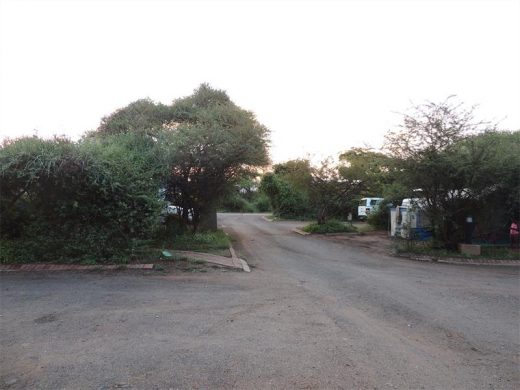
Arriving at Lower Sabie, we found that the camping area, although not full, was busier than at any of the other rest camps where we’d stayed on that trip. There were also plenty of day visitors and tour groups milling around the shop and restaurant area and the parking area was jam-packed with commercial game viewing vehicles. It was amazing how popular Lower Sabie had become.
It was good to be back there, though. Situated on the Sabie River, it is a pleasant rest camp, with lush green lawns, large shady trees, wonderful river views and bright, modern visitor facilities. At one stage the camping area was rather stark and unattractive, but over the years, trees and bushes have grown to provide privacy, shade and a more natural environment.
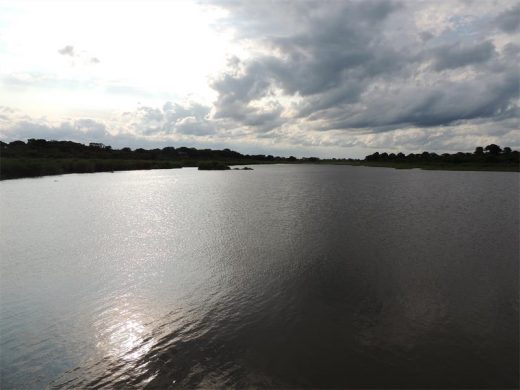
Lower Sabie also has another big attraction. After setting up camp we followed the time-honoured Kruger tradition of ending a Lower Sabie day just outside camp, quietly observing the comings and goings of various birds and animals at the well-named Sunset Dam, one of Kruger’s best known waterholes. It was the perfect end to yet another fascinating Kruger day.
HAVE YOUR SAY
Like our Facebook page, follow us on Twitter and Instagram
For news straight to your phone, add us on WhatsApp 082 421 6033