Few would argue the need for the pace of economic reform to be increased. But doing so under the constant refrain of radical economic transformation is, to my mind doing the process a disservice.
YOU MIGHT ALSO BE INTERESTED IN : Good Business Basics: Why service delivery is poor
While the interpretation of the term to refer to ‘fundamental’ change in the economic structure of the economy is acceptable, the interpretation that imputes ‘extreme measures’ to achieve the same, is one that is causing affected business owners some consternation.
My experience is that unless some measured and considered dialogue is undertaken by all stakeholders, the use of ‘extreme measures’ to achieve the ‘fundamental’ change sought by the excluded parties is going to become the norm.
Frustration
It must be acknowledged that the use of extreme measures by those seeking change is a result of frustration with the slow pace of meaningful change. If one were to be honest, these delays can be laid at the feet of a few stakeholders.
Firstly, government has created an expectation by its 30% set-aside imperatives on local government procurement.
This expectation has not been met because local and district governments are unwilling or unable to incorporate it into their supply chain processes.
Further, there was not enough clarity as to the exercising of this provision: for example, the expectation was that the potential beneficiaries of the set- aside would still need to participate in some sort of competitive bidding process, in other words the application was not automatic.
Honest assessment
Secondly, on the part of the affected business sectors, there has been evidence of intransigence and/or arrogance when approached to engage in discussions with potential new entrants.
Thirdly, on the part of new entrants, there needs to be an honest assessment of their capacity to enter certain markets e.g. transport and logistics.
So how do we achieve ‘fundamental change’, without the ‘extreme measures’?
Government needs to codify and explicitly set out its expectations for the set-aside programme. Local government needs to be held to account for meeting or missing these targets and procurement policies must explicitly incorporate them. Outside of municipal procurement, departments such as Public Works need to ensure that emerging contractor development schemes are strictly enforced on successful mainstream contractors to ensure the upskilling of new entrants.
Free enterprise
Established business needs to acknowledge that it cannot be ‘business as usual’. While the fundamentals of free enterprise need not be compromised entirely, there is much that can be done in terms of outsourcing a fixed percentage of some functions e.g. transport.
Potential new entrants need to ensure they have the knowledge and infrastructure to deliver in their desired field. For example, if they want a portion of logistics from a business doing it in-house, they must ensure they can meet the requirements of the entity in terms of brand management, delivery times and so on.
Achieving meaningful and fundamental transformation of the economy is a process that needs honest and realistic engagement from all stakeholders.
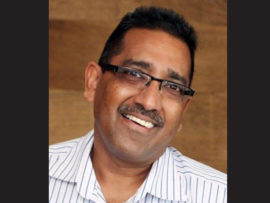
After matriculating, Vijay Naidoo studied Economics in the UK. Upon his return, hejoined the family construction business as MD for 10 years.
He subsequently joined his sister in their furniture manufacturing business as director for quality assurance and operations. He was responsible for all quality aspects of their products, and led the project to the business achieving an ISO 9000 quality accreditation. As an export focused business, this was important for our international competitiveness.
Mr Naidoo has an abiding interest in quality management and productivity improvement, particularly in manufacturing.
More recently, he has focused a lot of his time on giving back to the community by way of mentorship of small businesses and sitting on the executive of the South Coast Chamber of Commerce. He also sits on the Board of the Ugu South Coast Development Agency.
HAVE YOUR SAY
Like our Facebook page, follow us on Twitter and Instagram
For news straight to your phone, add us on WhatsApp 082 421 6033