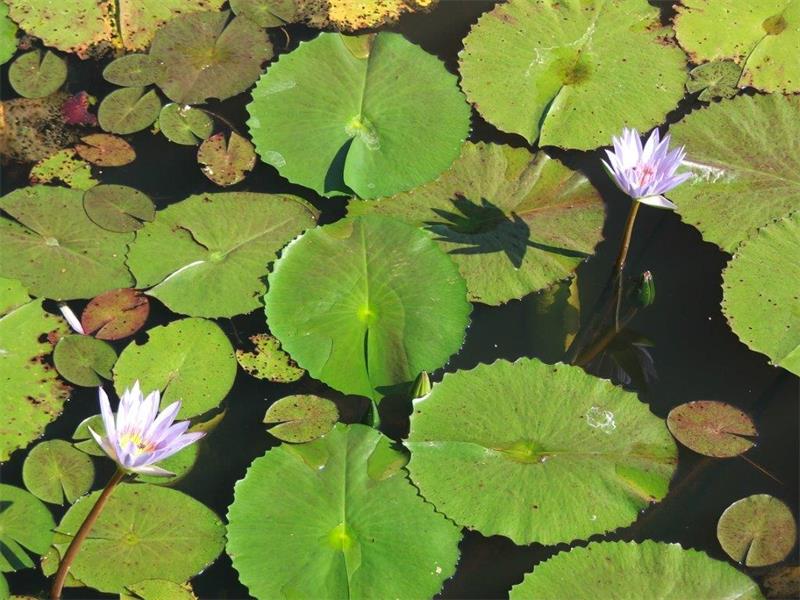
We recently spent a few days at a nearby game reserve. It was good to take leisurely game drives and spend some what is now known as ‘quality time’ watching plains game, particularly giraffe, and to notch up some birds on our list. Grass birds are notoriously difficult to identify, but we did see some specials like the Cape rock thrush. There are some spectacular views of the Oribi Gorge, one of our local natural wonders, and drives around and through it.
ALSO READ: From my Hide: The tale of ‘Zulu’ – an African stallion
At the same time, it was good to stay exactly where we were. Our digs were half built out over the water, so we had water lilies all around us and under us – and the ‘beasties’ that enjoy such an environment, including water fowl and lots of frogs.
The nights were particularly enjoyable, the clarity of the stars, especially Orion and Scorpio, and the Southern Cross of course, as well as the reflection of the moon on the water. It was all good and we’ll go again soon.
Terrible news about accidents at rural school pit latrines seems to stay in the headlines. There is nothing wrong with a properly constructed pit latrine, in fact it is probably the most common form of primitive sanitation in the world, however, are they the only option for so many schools? Perhaps not. Many years ago I remember being on assignment in Zululand and being introduced to what was then known as the VIP latrine (Ventilation Improved Pit, but do not Google VIP loos today).
In its simplest form it consists of a pit (naturally), a concrete slab with the appropriate hole and seat, but then most importantly, a vent pipe from the pit, behind and outside the latrine, reaching right up to roof height. A gap is left at the top of the door to the latrine, which has no other source of light, and there is a more or less constant flow of air from that gap, down and then up the vent pipe. It all works very well.
The one I was introduced to was in its own hut, with a hand basin and shower supplied by a tank on the roof, easily fillable from a bucket. But there are other, equally as good versions of a safe latrine, also waterless and chemical-less. So, the question is, why are these properly designed and constructed latrines not available to rural schools?
Now, we were watching that superb series ‘Blue Planet’ the other night, and listening to the joy of David Attenborough’s presentation. He was talking about whales, specifically Bryde’s whale and he gave it a very odd pronunciation. We laughed and said “Ah, ha!”, because we thought we had caught out the great man. How very silly of us. Most of us pronounce the Bryde as ‘Bridie’, but we are wrong, it is indeed ‘Broo-dus whale’. I’ll never doubt Sir David again. Don’t forget that the whales are still with us, so get out there and see if you can spot a Bryde’s (named after Norwegian whaling pioneer Johan Bryde).
HAVE YOUR SAY
Like our Facebook page, follow us on Twitter and Instagram
For news straight to your phone, add us on BBM 58F3D7A7 or WhatsApp 082 421 6033