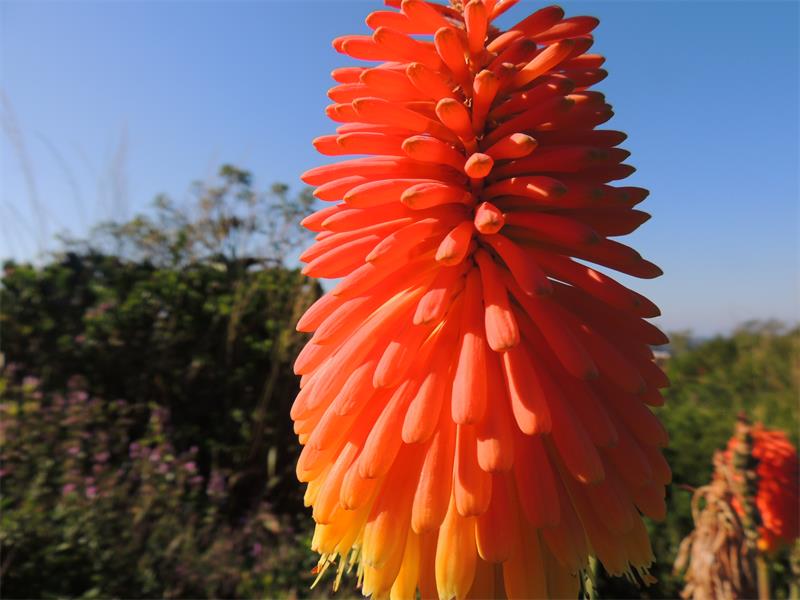
WHEN my Kniphofias are flowering visitors sometimes ask me if they are aloes.
It is not surprising. Kniphofias, commonly known as red hot pokers, are closely related to aloes and their flowers are often very similar. Both these genera belong to the Asphodelaceae family. According to Elsa Pooley’s Field Guide to the Wild Flowers of KwaZulu-Natal, this plant family includes 17 genera (10 occurring in South Africa), containing about 750 species.
ALSO READ: The July indigenous garden
Awkward to pronounce and difficult to remember how to spell, the Kniphofia genus is named after J H Kniphof, professor of medicine at Erfurt University. Whereas aloes usually have succulent leaves arranged in rosettes, Kniphofias have soft, strappy, often grasslike leaves. This is a mostly African genus that contains about 70 species, 47 of which occur in the eastern section of South Africa.
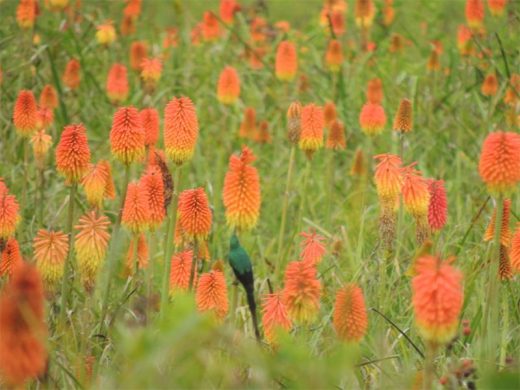
Kniphofia species tend to be grassland dwellers. Many of them like to have wet feet, preferring moist grasslands, wetlands, mountain seeps, and banks of streams although some of the many lovely species flourish on rocky slopes.
One of the best places to study Kniphofias is the KwaZulu-Natal National Botanical Garden in Pietermaritzburg where there is a fine collection of different species of this genus, along with other interesting collections of flowering eastern grasslands plant.
You could also take a stroll along Lilliecrona Boulevard, the coastal road between Uvongo and Margate, or the Saints Walk pathway between St Michaels dn Uvongo, where the winter flowering pokers in the grasslands adjacent to the beach are looking quite magnificent at the moment.
Kniphofias make fine garden subjects, not just because of their bright flowers. With their emerald green, strappy leaves, they make good form plants. While many of the flowers are orangy red, there are yellow pokers and even white ones. As there are so many pokers from which to choose, you should chat to your nurseryman to find out which species would best suit your garden.
HAVE YOUR SAY
Like our Facebook page, follow us on Twitter and Instagram
For news straight to your phone, add us on BBM 58F3D7A7 or WhatsApp 082 421 6033