FOR most of the year Euclea natalensis is an unassuming tree, blending in as just another shade of green in my garden and in our dense and diverse KwaZulu-Natal coastal vegetation.
ALSO READ: The July indigenous garden
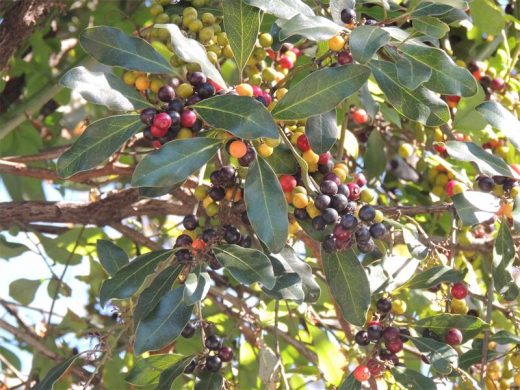
Even when it blooms the small, creamy rather inconspicuous flowers do not call attention to themselves. However, as a garden ornamental or in the wilds, the tree really comes into its own when it starts to bear fruit. You can’t help noticing it then. Sometimes the trees are literally covered in bright yellow, red and black berries, each about 7mm in diameter.
What a feast the fruit provides for birds, monkeys and even people. The flowers also attract bees so all in all this sometimes overlooked tree is an excellent choice for a wildlife friendly garden or as a street tree in a green neighbourhood.
I have a few in my garden and the interesting thing is, none of them were planted by me. They have all been planted by Mother Nature, probably with the assistance of the neighbourhood birds and monkeys. Take a look around your garden. You might well find one or two happily established in quiet corner.
This tree, commonly known as the hairy guarri, belongs to an interesting genus that contains about 20 species, all occurring in Africa, with 16 in southern Africa. In Richard Boon’s field guide, ‘Pooley’s trees of Eastern South Africa’, he lists seven different Euclea or guarri trees that occur in our region.
Common names of these species are descriptive and poetic. They include mountain guarri, blue guarri, sea guarri and my favourite – magic guarri. Generally they have leathery, sometimes wavy, usually rather dull green leaves. The Euclea natalensis has spiraled leathery, dark green leaves that vary in size, shape and hairiness.
According to Richard, the name, guarri, is of Khoi origin. He also points out to gardeners who wish to grow a guarri tree from seed that the seed coat must be cracked first.
So, if your garden hasn’t been blessed by Mother Nature with a gift of a hairy guarri tree, take a walk round your neighbourhood now.
You are sure to find a few of these trees bearing their beautiful fruit and waiting for birds, monkeys or wildlife-friendly gardeners to plant the seeds.
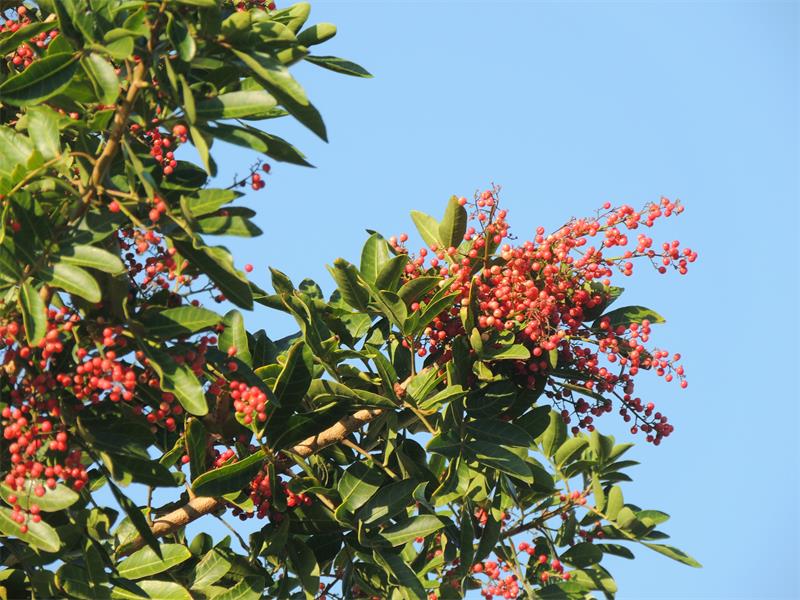
Another attractive tree in fruit at the moment is the Brazilian pepper tree (Schinus terebinthifolius) but be warned. Unfortunately this attractive tree, which is covered in small bright red peppercorn-like berries, is an invasive alien. You don’t want the birds to scatter these seeds around the neighbourhood so if you have one in your garden, get rid of it as quickly as possible. Then plant a hairy guarri tree – its fruit is even more attractive than the fruit of this foreign pest.
HAVE YOUR SAY
Like our Facebook page, follow us on Twitter and Instagram
For news straight to your phone, add us on WhatsApp 082 421 6033