
For many years now, it has been widely acknowledged that leveraging the huge procurement budget of government and state owned entities was a potent weapon to effect the meaningful transformation of the economy, particularly to the benefit of the previously disadvantaged sectors.
YOU MIGHT ALSO BE INTERESTED IN : Good Business Basics: Execution is key
In my view, the initiatives taken to achieve this have been rather inadequate. Many reasons can be put forward to explain these failures:
Manipulation of the system by connected and powerful players
A very narrow view of the outcomes to be achieved
Lack of co-ordination between the three spheres of government
Lack of capacity and will be SCM departments
I believe that well designed, executed and managed programmes can achieve more than just awarding a larger number of tenders to the previously disadvantaged.
Well-designed projects can become instruments to contribute to the achievement of multiple goals:
Development of youth and women-owned enterprises
Building sustainability in SMMEs
Revitalisation of township and rural economies
Creation of black industrialists
Little value
With the focus of current programmes purely on the awarding of tenders to the previously disadvantaged, it is not surprising that the ‘tenderpreneur class’ has flourished. There is little need for these individuals to build internal capacity or specialise – they flit from sector to sector trading on their status of being previously disadvantaged. Little value add is achieved to local communities or economies.
Some of the modifications that need to be made (or enforced where they exist) include:
Enterprise development clauses (mainstream businesses must partner with emerging ones to promote enterprise development)
Skills transfer clauses – particularly in the construction sector – must be enforced
Procurement must be localised – goods and services used in townships must be sourced locally if at all possible
The design and publication of tenders must be simplified and more widely disseminated
Most importantly, national government needs to take the lead in ensuring that all other spheres, provincial, district and local, are actively and aggressively pursuing a set of universal outcomes through their procurement.
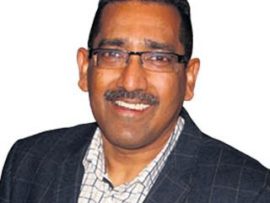
After matriculating, Vijay Naidoo studied Economics in the UK. Upon his return, hejoined the family construction business as MD for 10 years.
He subsequently joined his sister in their furniture manufacturing business as director for quality assurance and operations. He was responsible for all quality aspects of their products, and led the project to the business achieving an ISO 9000 quality accreditation. As an export focused business, this was important for our international competitiveness.
Mr Naidoo has an abiding interest in quality management and productivity improvement, particularly in manufacturing.
More recently, he has focused a lot of his time on giving back to the community by way of mentorship of small businesses and sitting on the executive of the South Coast Chamber of Commerce. He also sits on the Board of the Ugu South Coast Development Agency.
HAVE YOUR SAY
Like our Facebook page, follow us on Twitter and Instagram
For news straight to your phone, add us on WhatsApp 082 421 6033