
To many people the first successful circumnavigation of the African continent was by the Portuguese navigator and explorer, Vasco da Gama, from 1497 to 1499, although he started from Portugal, leaving out the Mediterranean, and didn’t actually make it to the Red Sea, but headed for India instead. However, there is growing evidence that Phoenician seamen did circumnavigate the continent over 2 000 years earlier.
ALSO READ : From my Hide: National parks open for mining and other sad news from Africa
The Phoenicians appeared on the scene on the eastern coast of the Mediterranean about 3000BC and almost from the beginning were noted as exceptional seamen and traders. Phoenicia was from more or less what is now Syria’s seascape in the north down through modern Lebanon and into northern Israel. One of the capitals over the centuries was Tyre, now in southern Lebanon. In about 950BC King Hiram of Tyre entered into a trade partnership with King Solomon of Israel. King Solomon gave the Phoenicians access to the northern end of the Red Sea, which in turn gave them access to the Arabian Sea and the Western coast of India, where they conducted their trade. As evidence of this early trading adventure, there are words in Phoenician and ancient Hebrew that come from the Sanskrit and Tamil languages of India. This was by no means their only remarkable feat. It is known, too, that they also traded along the west coast of Africa and up as far as Britain.

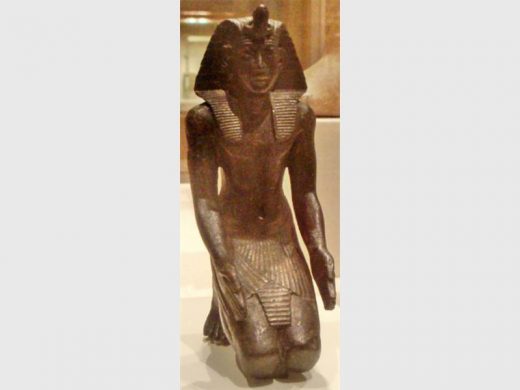
The biggest adventure, however, came in 600BC when Pharaoh Necho the Second of Egypt asked the Phoenicians to attempt a circumnavigation of the Africa continent. They sailed down the Red Sea, along the east coast of Africa, around the Cape, up the west coast and into the Mediterranean through the Pillars of Hercules (the Straits of Gibraltar), and so home. It took them three years because they only sailed when the weather was favourable and during their long stops they planted and harvested food crops to sustain their voyage.
There are those that doubt the veracity of this story, but it was very carefully recorded by Herodotus, a Greek historian, and from 2009 to 2011 a replica of a Phoenician ship successfully achieved the same voyage.*
And staying well in the past, the discovery of what could well be hominin (our ancestors) footprints in Crete threatens to upset traditional thinking about the origins of Homo sapiens. The prints are estimated to have belonged to something, or someone, who lived 5.7 million years ago, while the world’s palaeo-anthropologists firmly believe that the homonin line of descent was based in Africa until about 1.5 million years ago. The Creten footprints will be getting a lot of scientific attention before any one arrives at any definite conclusions, if there is ever any such thing in paleo-anthropology.**
Back to the present, a report from Britain says black cats are struggling to find new homes – why? Because they don’t show up well in selfies posted on the Internet. Other coloured cats go like hot cakes, but not black ones. I have no comment.**
*The Digging Stick, journal of the South African Archaeological Society.
**The Week: the Best of the British and Foreign Media.
HAVE YOUR SAY
Like our Facebook page, follow us on Twitter and Instagram
For news straight to your phone, add us on WhatsApp 082 421 6033