Last week in part 4 of this series on smoking cessation, we discussed 4 interventions: 1. Strengthening our mind power; 2. Exercise to enhance resolve; 3. The use of spiritual power; 4. Replacing the smoking habit with positive habits.
Addictions are not easy to overcome. This whole process in this series is aimed at understanding what causes our addiction from a physiology perspective; we have also touched on some psychological contributors and finally social contributors.
ALSO READ : Turning the Tide on Lifestyle Diseases: How to kick the smoking habit
Today we will discuss common excuses for either not trying in the first place, or that are presented when we revert back to smoking. As you are working on strategies to conquer smoking, it is helpful to be aware of these excuses counteract them firmly.
Excuse: “I’ll gain weight if I stop smoking!”
Response: You may gain weight, but the benefits of smoking cessation far outweigh the small weight gain, and we will deal with how to maintain a healthy weight shortly.
Excuse: “It’s not a good time to stop!”
Response: There is no better time. Now that you have started, don’t give up. You have already gone through some of the pain of stopping, and you are already half way there. Keep pressing on and it will get easier.
Excuse: “Just one won’t hurt!”
Response: Hey! That’s how you started smoking! And look where that got you!
Excuse: “This is a crisis!”
Response: Smoking doesn’t solve problems. It only postpones dealing with them, and creates more problems in the long run – like health issues.

How to avoid weight gain after smoking cessation
- Lose weight gradually. Those crash weight-loss diets don’t work in the long term.
- Eat less fat – fat has more than double the kilojoule value of proteins or carbs.
- Have a wide variety of foods – but mostly unrefined foods which are less energy dense.
- Eat mostly fruit, vegetables, whole grains and legumes (bean/pea family).
- Eat a good wholesome breakfast.
- Eat a small meal in the evening, not less than 2 hours before going to bed.
- Avoid junk (highly processed or refined) foods rich in salt, fats and refined flours.
- Have regular meal times.
- Exercise regularly. Balance food energy intake with physical activity energy expenditure.
Act like a non-smoker
Before you can live as a non-smoker, you have to learn to think like a non-smoker. What happens in your consciousness affects your unconscious behaviour.
- Practice visualisation.
- Imagine yourself as a non-smoker in various situations of your daily life.
- Imagine how you are going to deal with daily cravings and the steps you will go through in denying the craving.
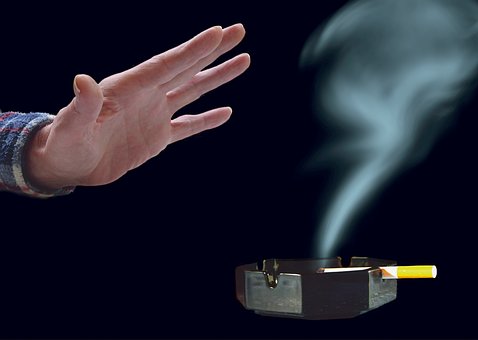
- In your imagination, practice saying “No” when offered a cigarette, so it becomes automatic. Give a reason each time why you are no longer smoking. But don’t hang around to be tempted. And stay away from people who are smoking – passive smoking will get you hooked again.
- Believe that you can be successful through Divine help.
- Remember you don’t need a cigarette to enjoy life – why would you allow a silly little thing like a cigarette to rule your life and rob you of your health?
- You unlearn bad habits – it just takes time. You just have to keep repeating the steps.
- Use positive self-talk. Remind yourself that you are OK; that you have conquered challenges in the past; that every day you stay smoke-free, is a day closer to freedom from slavery.
- Keep reminding yourself by saying out loud the benefits of quitting.
- Say to yourself repeatedly “It’s great being free from smoking!”
What are some of the benefits that you have already obtained by stopping?
Physical benefits: _______________________________________________________________________
Emotional benefits: _____________________________________________________________________
Family benefits: ________________________________________________________________________
Social benefits: ________________________________________________________________________
Financial benefits: _____________________________________________________________________
Here are some ideas to help
- Don’t allow yourself to get bored – keep active with various projects.
- Start a hobby – painting, or knitting or gardening or wood turning on a lathe, etc.
- Spend time with non-smoking friends.
- Keep drinking plenty of water.
- Eat a balanced diet, with especially plenty of fruit and vegetables.
- Avoid in-between snacks of junk foods – if you get peckish eat fruit or crunchy vegetable pieces.
- Continue your exercise programme, and try new exercise activities.
- Use regular positive self-talk.
- Keep visualising being a non-smoker.
It is useful to read all this information over a few times and study it. Work out how you are going to implement the various points.
If you think it is too hard, remember that millions of people have done it. You can too.
To a week ahead with challenge, but also successes. Hang in there.
Dave Glass

Dr David Glass graduated from UCT in 1975. He spent the next 12 years working at a mission hospital in Lesotho, where much of his work involved health education and interventions to improve health, aside from the normal busy clinical work of an under-resourced mission hospital.
He returned to UCT in 1990 to specialise in obstetrics/gynaecology and then moved to the South Coast where he had the privilege of, amongst other things, ushering 7000 babies into the world. He no longer delivers babies but is still very clinically active in gynaecology.
An old passion, preventive health care, has now replaced the obstetrics side of his work. He is eager to share insights he has gathered over the years on how to prevent and reverse so many of the modern scourges of lifestyle – obesity, diabetes, ischaemic heart disease, high blood pressure, arthritis, common cancers, etc.
He is a family man, with a supportive wife, and two grown children, and four beautiful grandchildren. His hobbies include walking, cycling, vegetable gardening, bird-watching, travelling and writing. He is active in community health outreach and deeply involved in church activities. He enjoys teaching and sharing information.
HAVE YOUR SAY
Like our Facebook page, follow us on Twitter and Instagram
For news straight to your phone, add us on WhatsApp 082 421 6033