Last week we discussed the classification of Alzheimer’s disease according to pathophysiology (causes and underlying pathological changes). Dr Dale Bredesen, an internationally acclaimed neurologist and researcher has developed both this classification system as well as protocols for managing the differing types.
YOU MIGHT ALSO BE INTERESTED IN: FREE lifestyle health seminars offered in Port Shepstone
Today we will touch on management of each of the different types and a bit more information about Alzheimer’s itself.
Type 1 AD. This type is mostly caused by inflammation – both from foods that are pro-inflammatory as well as chronic infections.
One might ask how foods can cause inflammation. The concept of a leaky gut is controversial in medical circles, but certainly explains some of the causes of many chronic diseases, including aspects of Alzheimer’s pathogenesis. The bowel acts as a permeable membrane to nutrients, but not bacterial or larger protein molecules. However when the integrity of the gut wall has been damaged by certain bacteria, processed foods, refined sugar, and allergens, these larger substances are said to enter the blood stream and set up chronic inflammation. Two of the common proteins identified are gluten and casein. We know for sure gluten can damage the intestinal wall in coeliac disease, and there is some evidence some people are sensitive to it even though they don’t have coeliac disease. Many authorities deny that gluten is a problem in normal healthy people. See the following articles for a more detailed description:
https://www.ncbi.nlm.nih.gov/pmc/articles/PMC3458511/
https://www.health.harvard.edu/blog/leaky-gut-what-is-it-and-what-does-it-mean-for-you-2017092212451
Basically a refined-food diet with processed carbohydrates and trans fats, and high intake of animal proteins can affect inflammatory markers, and increase inflammation systemically, which will also affect the risk of Alzheimer’s. Thus a simple diet of whole foods is best to prevent all sorts of chronic diseases. The best way to increase your risk of Alzheimer’s is to eat the typical Western diet of junk and highly processed foods, with little fresh fruit and vegetables.

The gut/blood barrier is the first barrier to inflammation-producing substances. The blood/brain barrier is a second line of defence. Amyloid plaques are thought to be the body’s response to failure in this second barrier.
We mentioned last time the role of pathogens. Those that have been identified include herpes simplex virus, Lyme disease (not uncommon in North America, Europe and Asia), specific fungi and moulds, and certain bacteria such as porphyromonas gingivalis which is a common cause of ginigivitis. Diagnosis may involve various blood tests, following a detailed history and examination. Obviously the way to treat these will depend upon the specific organisms.
If one eats correctly and lives correctly, Alzheimer’s disease should be rare.
Type 2 AD. This type of AD comes from the inability of the the body to support the delicate, complex network of the brain. It is estimated that there are something like 10 to the power of 15 synapses in the brain. Some of the factors that are supportive of good brain activity include hormones, nerve growth factors such as brain derived neurotrophic factor (BDNF). These trophic (life-supporting) factors allow support, survival and differentiation of neural cells, and help with the intercellular connections between cells.
Hormones involved include oestrogen, testosterone, pregnenolone, DHEA and thyroxine. A study done at the Mayo Clinic in 2007 showed that women who had a hysterectomy with removal of the ovaries early in their lives and no hormonal replacement thereafter had double the incidence of women who had the same type of hysterectomy later in life.
Nutrients include vitamin D, vitamins in the B group, and certain free fatty acids, like omega 3. Minerals like zinc, magnesium, copper and iron are essential for good brain function.

Dr Bredesen talks about two types of cells that modify the nerve functions – synaptoclastic cells which break down connections between cells, and synaptoblastic cells, which build up connections. This is a similar type of balance between osteoblasts and osteoclasts which build up or break down bone cells. When the synaptoblastic cells are lazy, there is general brain degeneration. Both nutrient support as well as hormonal support is needed to maintain function and neuroplasticity – regeneration.
Type 3 AD. In this condition the defect typically occurs during the late 40s and early 50s. Patients have difficulty with organising – can’t pack, can’t follow directions or put things together. They have difficulty calculating, for instance, how to work out how much to pay for a tip. But they may remember what they had for breakfast or recent events quite well. The effect is more on the cortex of the brain rather than the hippocampus, where memory is stored. Patients are often treated for depression by their doctors who don’t realise that the problem is Alzheimer’s.
ALSO READ: Turning the Tide on Lifestyle Diseases: What Alzheimer’s is, and 5 ways to help prevent it
The main cause is exposure to toxins – chemical or biotoxins. Common chemical toxins include high levels of zinc or mercury (from seafoods, environmental mercury or from dental fillings), insecticides like DDT and DDE and aluminium is once again being fingered. Biological toxins include mycotoxins (such as stachybotris, penicillium, aspergillis, aflatoxin, gliotoxins) as found on moulds.
Other symptoms related to exposure to moulds in younger people include asthma and fibromyalgia
Alzheimer’s Disease is associated with genetic predisposition as well. The ApoE4 gene is associated with increased risk of particularly types 1 and 2 AD, but not so much with type 3. Having only one copy of the ApoE4 gene increases the risk by 30% according to Dr Bredesen. Having two copies of the ApoE4 gene increases the risk by 50%. Some authorities believe ApoE4 gene testing should only be done in a research setting, but other clinicians involved in AD suggest that it should be part of the screening for the disease.
I believe a term coined by Dr Bredesen, a clinical assessment called a cognoscopy, is being increasingly used in the USA. It is basically a detailed history and laboratory assessment of risk factors to identify those at risk or already with early mental decline and institute therapy before too much damage is done. But I gather it is not something done routinely in South Africa or even in other parts of the world.
It would be interesting to hear the South African experience with this approach to neurodegenerative diseases, including Alzheimer’s. Anyone out there in the field of psychiatry or neurology that would care to comment?
Next week we will present the dietary advice in Dr Bredesen’s programme, as elucidated by a dietician involved in this programme.
To a week caring for your brain!
Dave Glass
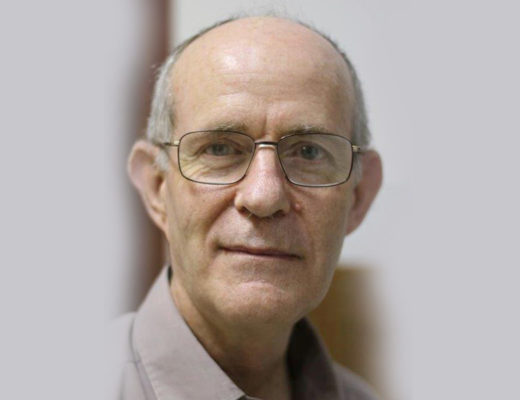
Dr David Glass graduated from UCT in 1975. He spent the next 12 years working at a mission hospital in Lesotho, where much of his work involved health education and interventions to improve health, aside from the normal busy clinical work of an under-resourced mission hospital.
He returned to UCT in 1990 to specialise in obstetrics/gynaecology and then moved to the South Coast where he had the privilege of, amongst other things, ushering 7000 babies into the world. He no longer delivers babies but is still very clinically active in gynaecology.
An old passion, preventive health care, has now replaced the obstetrics side of his work. He is eager to share insights he has gathered over the years on how to prevent and reverse so many of the modern scourges of lifestyle – obesity, diabetes, ischaemic heart disease, high blood pressure, arthritis, common cancers, etc.
He is a family man, with a supportive wife, and two grown children, and four beautiful grandchildren. His hobbies include walking, cycling, vegetable gardening, bird-watching, travelling and writing. He is active in community health outreach and deeply involved in church activities. He enjoys teaching and sharing information.