Today, Sunday, November 11, is not just any day, it is Remembrance Day and coincidentally Armistice Day, the day on which at the eleventh hour of the eleventh day of the eleventh month of 1918 the guns fell silent and the Great War ended.
At least 20 million were dead, roughly half military and half civilians.
ALSO READ: Remembering the fallen war heroes
It was billed as the war to end all wars, and yet barely 20 years later the world was plunged into another conflict which saw that casualty figure perhaps quadrupled to 80 million.
And the world hasn’t really seen a day of peace since.
Both Remembrance Day and Armistice Day are observed by the MOTHS, the Memorable Order of Tin Hats, established in South Africa in 1927 as a brotherhood of former frontline soldiers.
Throughout South Africa this coming Sunday there will be services and ceremonies to note the day.
Such orders as the MOTHS exist worldwide and it’s interesting to note that they have set up a new trail marking the Western Front in the Great War from the Swiss border with France in the south to the Belgian frontier in the north and onwards to the English Channel.
The trail takes in battlefields, war cemeteries and museums.
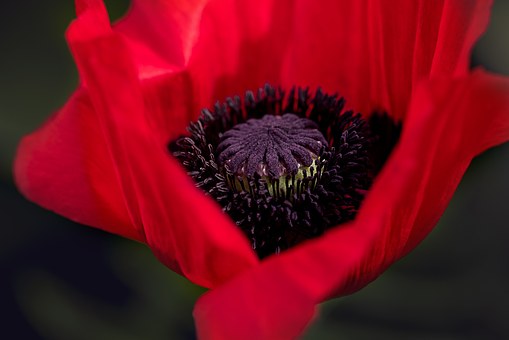
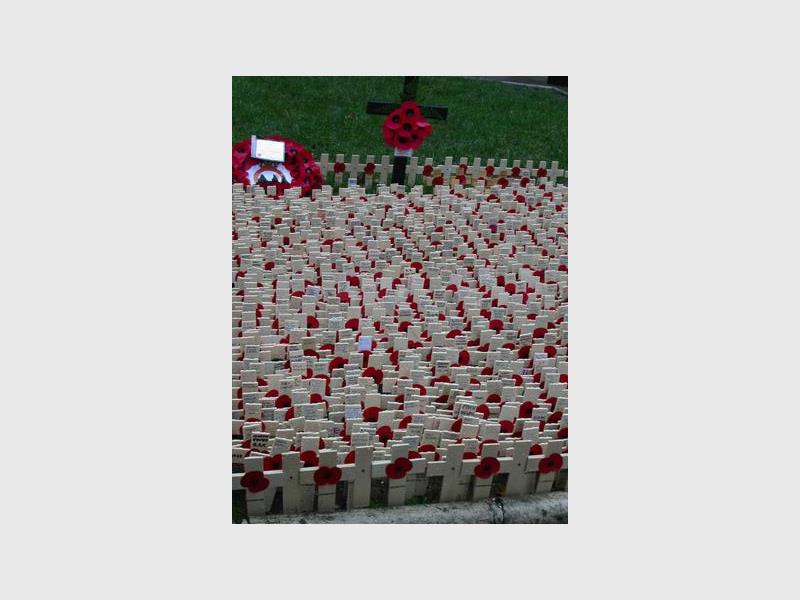
The mark of MOTHS and other such organisations is the red poppy, a flower that bloomed in profusion on those fields of horror – Flanders Fields.
A most interesting twist is that today there is now a purple poppy for the animals in war. Most of us would probably think of horses (an estimated eight million horses and donkeys were killed in the Great War) and even elephants (they have been used by man in peace and war for five thousand years), but what about dogs, pigeons, even rats (cane rats are still being used in former war zones in southern Africa to sniff out mines)?*
I was in eastern France on assignment years ago and had to drive past war cemetery after war cemetery, incredibly disciplined ranks of white crosses and central ossuaries, huge marble sarcophagi containing the bones of unidentified battlefield dead.
It was a very sobering experience.
At the same time, the wheat was ripe in the fields and growing among the wheat were lavender and, yes, red poppies.
It wasn’t why I was in France, but it left an indelible impression.
And then an invasion of another kind.
An island in the Kara Sea in Russia’s far northern Siberia is being invaded by polar bears.
Apparently the pack ice that usually gives the bears access to their hunting grounds is retreating far earlier than is normal because of global warming and increased human activity in the Arctic, such as exploration for energy sources, the attempted opening up of a much-sought after north east passage across to China and military activity.
The bears are unable to migrate to the north, so they are increasingly invading human settlements as a source of food found in rubbish tips.**
*Sources: Various, including local MOTHS.
**The Daily Telegraph, London.
HAVE YOUR SAY
Like the South Coast Herald’s Facebook page, follow us on Twitter and Instagram
For news straight to your phone, add us on WhatsApp 082 421 6033