Last week we discussed the high incidence of high blood pressure and the dramatic effect this has on health universally. One of the most common screening tests done is blood pressure measurement. This is performed by doctors, clinic nurses and even pharmacists. Of course it is possible to buy a blood pressure measuring device and check it yourself.
ALSO READ : Turning the Tide – Conquering the scourge of high blood pressure part 1
For most practitioners, a diagnosis of high blood pressure causes a reflex reaching for pen and script pad to prescribe medication. For most of my professional life, I did the same. One would normally start with a diuretic, and then add a whole range of medications that work at different sites. A glance at MIMS (Monthly Index of Medical Specialties) will reveal over 200 different original and especially generic products used for the management of mild to severe hypertension. It is a multi-billion Rand industry, and obviously business interests dictate that medicines are first-line therapy.
At least 10 classes of pharmaceuticals have been developed – all the way from diuretics (water tablets) to centrally acting sympathetic nervous system inhibitors; alpha-receptor, beta-receptor and combination blockers; vasodilators; calcium-channel blockers; ACE inhibitors, etc. I will not go into the patho-physiology of hypertension, and at which location each of these medicines intervenes, but there is good scientific reasons for their development and use.
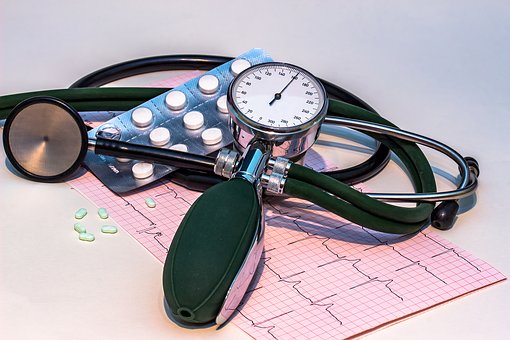
Here are some useful articles about when to use different medicines and their indications and contra-indications:
https://medlineplus.gov/ency/article/007484.htm
https://www.ncbi.nlm.nih.gov/pmc/articles/PMC4327181/ for the South African national guidelines on management of hypertension.
Here is a practical algorithm for pharmaceutical management of hypertension in South Africa:
There is no doubt that medicines are often very effective at bringing down blood pressure, and reducing dangerous consequences of hypertension, like stroke and heart failure. However one has to balance the side effects of medicines. Just these last few weeks I have received e-mails from various pharmaceutical companies warning of the recent discovery of a statistically significant connection between thiazide diuretics (a common initiating medication used for blood pressure control) and skin cancers – basal and squamous cell carcinoma. Although it is not common, it illustrates that medicines are not without risk, and it behoves the medical fraternity, as well as patients to explore all the possible interventions to improve health – and that especially includes lifestyle interventions. Very often it is necessary to use a combination of pharmaceutical as well as lifestyle interventions, but as we embrace a healthy approach to life, it may be possible to reduce or relinquish pharmaceuticals (under the guidance of your doctor). This will result in multiple health benefits beyond just the blood pressure reduction, as well as reducing the high cost of medical interventions.
We have a tendency to want to live the high life, to carry on enjoying our lives according to societal norms without any thought to the consequences of our actions.
Then when we suffer the results of those choices – high blood pressure, obesity, diabetes, arthritis, cancer etc., we expect modern medicine to fix it – whether it is through pharmaceuticals or supplements, surgery, or radiotherapy. But true health comes not from a bottle or a knife. It is the result of lifestyle choices. It is an incredible gift that we need to value and nurture. It is not our right, but our privilege. It behoves us to become intelligent about health and healthy lifestyles if we want to get the most out of life. It has been said that the “health” industry should be renamed the “disease” industry, because it concentrates on managing diseases, rather than reversing diseases.
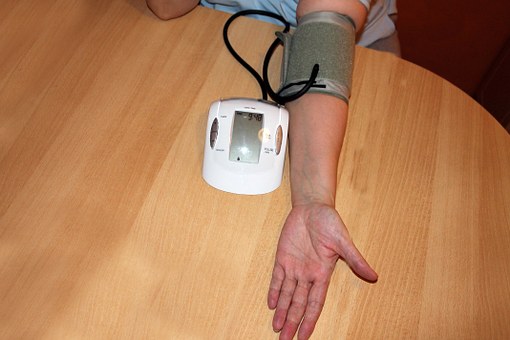
It is important to know that high blood pressure is not a deficiency syndrome. It is not due to a deficiency of diuretics, or beta-blockers, or ACE-inhibitors. It is caused by lifestyle choices – a diet deficient in anti-oxidants, excess sodium, lack of exercise, obesity, excess refined foods, alcohol, tobacco and stress. The best way is to deal with the causes and reverse those.
In the next few articles, we will explore those interventions, and make them as practical as possible.
As mentioned above, each of these interventions is not just about control of high blood pressure in isolation. Adopting these interventions results in multiple benefits to our health and well-being. It is by far the most powerful therapy – but unfortunately “traditional” allopathic medicine and big Pharma don’t benefit, so many doctors and pharmacists downplay its value – or perhaps to put it more kindly, doctors are not trained in lifestyle interventions nearly as much as they are in allopathic interventions. (Allopathy is the practice of medicine using drugs or surgery).
Here is to a week ahead contemplating what you want to get out of life – whether you are happy with the status quo, or if you want to thrive and have a spring in your step – a new zest for living.
Dave Glass

Dr David Glass graduated from UCT in 1975. He spent the next 12 years working at a mission hospital in Lesotho, where much of his work involved health education and interventions to improve health, aside from the normal busy clinical work of an under-resourced mission hospital.
He returned to UCT in 1990 to specialise in obstetrics/gynaecology and then moved to the South Coast where he had the privilege of, amongst other things, ushering 7000 babies into the world. He no longer delivers babies but is still very clinically active in gynaecology.
An old passion, preventive health care, has now replaced the obstetrics side of his work. He is eager to share insights he has gathered over the years on how to prevent and reverse so many of the modern scourges of lifestyle – obesity, diabetes, ischaemic heart disease, high blood pressure, arthritis, common cancers, etc.
He is a family man, with a supportive wife, and two grown children, and four beautiful grandchildren. His hobbies include walking, cycling, vegetable gardening, bird-watching, travelling and writing. He is active in community health outreach and deeply involved in church activities. He enjoys teaching and sharing information.
HAVE YOUR SAY
Like our Facebook page, follow us on Twitter and Instagram
For news straight to your phone, add us on WhatsApp 082 421 6033