In the last two articles in this series, we first discussed what causes high blood pressure, and the devastating effect this disease has on health and well-being around the world, but particularly in South Africa. The next article spoke about various forms of management, and in particular medical pharmaceutical intervention. We pointed out that although there are sound scientific reasons for scripting medications, these do not deal with the basic cause, and can have some unwanted side effects.
ALSO READ : Turning the Tide – Conquering the scourge of high blood pressure part 2
Amongst a number of options, he two most effective lifestyle interventions are exercise and diet. Today we will look at exercise.
Humans were created for movement. Most of our senses, our design features, our physiology is designed for us to be active. We see the world around us and are attracted to things and places and experiences by what we see and hear. We feel the earth beneath us as we walk, the water that engulfs us as we swim, the air blowing in our faces as we run or cycle. Our muscles and joints give us freedom to explore new areas, and to climb mountains and to run races; our imaginations excite us with new possibilities of places to see and activities to enjoy. Our physiology is designed to adapt to physical exertion – our heart speeds up, our blood vessels open up, our lungs expand and we breathe more frequently and deeply. Our minds are energised and our “happy hormones” (endorphins) are stimulated. People actually get addicted to exercise because it makes them feel so good!
Here is an article providing a South African perspective on lifestyle management relating to hypertension from which I obtained much of the information for this presentation:
Here is another article on American lifestyle recommendations with managing hypertension:https://www.mdedge.com/jfponline/article/62004/cardiology/how-effective-are-lifestyle-changes-controlling-hypertension
Even as little exercise as only one 40 minute session of moderate aerobic exercise per week has been shown to reduce systolic blood pressure by 5 mm Hg, and diastolic BP by 4 mm Hg. Imagine how much more could be achieved by increasing that exercise to daily or at least 5 days per week – even just 15-30 minutes per day.
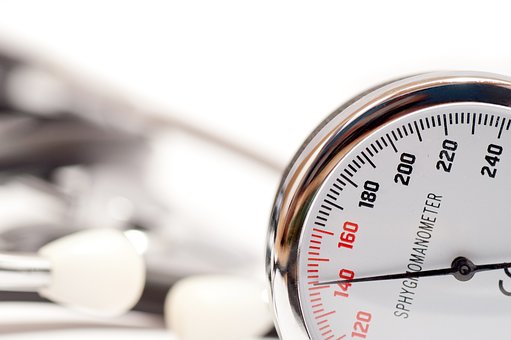
According to the guidelines produced by the Seventh American Joint National Committee (JNC7) on hypertension management, reduction in systolic blood pressure of 5 mm Hg has been associated in observational studies with reductions of 14 percent in mortality caused by stroke, 9 percent in mortality caused by heart disease, and 7 percent in all-cause mortality. In addition, a weight loss of 4.5 kg (10 lbs), a realistic goal for most individuals who are overweight, can reduce or prevent hypertension.
https://www.aafp.org/afp/2006/0601/p1953.html
Prof Derman of the UCT Department of Sports Medicine says it is well established that participation in regular physical exercise leads to a lower risk of all-cause morbidity and mortality. What that means in plain English is that regular physical exercise reduces all causes of illness and premature death – that includes blood pressure, heart disease, diabetes and cancer. Inactivity doubles the risks of heart disease and high blood pressure. So, couch potatoes, take a break from your really tough choice of lolling on the couch, and get active!! The ideal is to do some moderate to vigorous physical activity for at least 30 minutes most days of the week.
Because there are so many different forms and intensities of exercise, it is difficult to compare scientific studies to come up with definitive recommendations, but the more exercise you do the more benefits you accrue.
Aim to get your heart rate up to 40-70% of your age-predicted maximal heart rate. The simple way to calculate that is subtract your age from 220, then multiply by 40% and 70% and you will get the range. E.g. if you are 50 years old, 220-50 = 170 x 40% = 68. 170×70%=120. Thus for a 50 year old you should aim to get your heart rate between 70-120 beats per minute when you are exercising.
Who benefits most from exercise?
Actually everyone benefits from exercise for all sorts of reasons, but it has been found that there are certain subgroups of hypertensive patients that gain the most benefit: a) females, b) patients with high diastolic blood pressures (the bottom figure of your BP reading), c) thinner hypertensive patients, d) couch potatoes (my choice of term not the scientists term), e) and patients who have made a long term commitment to regular exercise – in other words those who stick with the programme.
It has also been found that regular exercise can significantly minimise side effects of some of the medicines used for treating high blood pressure, if they are still needed after embarking on an exercise programme. One of these side effects is rising blood cholesterol levels, which can be brought down by exercise.
How does exercise affect blood pressure?
It inhibits the sympathetic nervous system – the fight or flight reaction, thus reducing blood pressure, slowing heart rate, reducing production of adrenalin, and improving blood supply to the intestines. It reduces peripheral resistance of the blood vessels, which opens up more blood vessels, dropping the blood pressure. It increases metabolism of fat within muscle and liver cells, making those cells more sensitive to insulin, and allowing energy in the form of glucose to flow into the cells (one of the most important ways one can control pre-diabetes and diabetes). It also modifies the balance between vasodilator and vasoconstrictor chemicals. This is a simplified explanation of a complex system.
How do we ensure the exercise is safe?
It is recommended that you should visit your doctor to undergo medical evaluation, which includes a stress electrocardiogram (ECG) before embarking on a vigorous exercise programme if you are: a male over the age of 45 years, or a female over the age of 55 years. Anyone who is hypertensive and has one other risk factor for coronary heart disease (e.g.high cholesterol, obese, smoker, diabetic). Anyone who is hypertensive with symptoms of cardiopulmonary disease (shortness of breath with mild exercise, angina (chest pains on exertion), swelling of the ankles, pain in the leg muscles on exertion – relieved by stopping and resting (intermittent claudication).
Know when danger signs are presenting – chest pains – central compression, pain radiating up into the jaw and down the left arm is suggestive of coronary vascular insufficiency and could indicate a heart attack. Other symptoms include palpitations (irregular or pounding heart out of proportion to the amount of exercise you have done) and dizziness. These symptoms are more serious in situations of dehydration, high heat, prolonged exertion or after recent viral illnesses.
If you have known heart disease, it is best to exercise under medical supervision.
The best policy is to start gradually – you are not going to do yourself any favours by killing yourself (literally) by pushing yourself too hard, too soon.
What are some exercise guidelines recommended for patients with hypertension?
- The best form of exercise is endurance physical activity which includes walking, jogging, cycling, swimming, hiking, horse riding or dancing. It can be supplemented with resistance exercise – lifting light weights or using exercise machines with repetitive activities. Do not do heavy weight lifting or pushing or pulling heavy weights if your blood pressure is high.
- Frequency – should be on as many days of the week as possible.
- Moderate or light intensity with heart rate 40-70% of age-predicted maximal heart rate (see above).
- Duration should be at least 30 minutes per day, or 60 minutes on alternate days.
- If blood pressure is uncontrolled avoid exercise until blood pressure is better controlled with medication – particularly if systolic BP higher than 200 mmHg, or diastolic higher than 115 mmHg.
- Overweight patients need combination of both exercise as well as dietary changes to reduce weight.
Why you need medical supervision if you are on anti-hypertensives.
Certain medications can cause complications with exercise. For instance beta-blockers can inhibit your heart’s ability to adapt to the demands of exercise; some anti-hypertensives (alpha-blockers, vasodilators and calcium-channel blockers) can cause hypotension (low blood pressure) and fainting if the exercise is stopped abruptly. (For more details see the above first article reference).
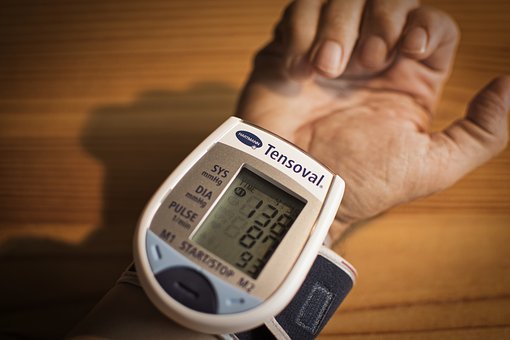
Secondly, as you increase your fitness and you begin to lose weight and improve your general health, you may well find that you can reduce your dosages of anti-hypertensives. But this is a decision that should be made in collaboration with your doctor.
All in all exercise is a wonderful way of reducing hypertension, improving the quality and quantity of your life, improving the blood supply to your heart muscles as well as other organs, and reducing stress – which also contributes to hypertension.
What are some of the excuses we present for not exercising?
I’m too busy – If you are too busy to do even 15-30 minutes exercise per day, then perhaps it is time you seriously reviewed your priorities in life. For instance, how much time do you sit and watch TV, or play on your computer or cell-phone, or chat to your friends? Is your health not more important than watching TV, or keeping up on WhatsApp?
It is not safe to be out walking – it is true we live in a violent society. But there are ways to get around that. Walking with a group is a safer option. Some places are more safe than others. For instance, Lilliecrona Drive between Uvongo and Margate is a popular safe exercise route; walking up and down the Mall or around the Mall parking lot is pretty safe; exercising in the Gym is safe, if not a bit more expensive, but then you have the option of supervised training. For those who have self-discipline, a treadmill may be a safe option, if not a bit boring, but you can make it more interesting by playing some music or watching your favourite TV show while exercising.
The weather is bad – too windy, or too cold, or too hot. Yes, weather can be an obstruction to enjoyment of exercise. One clothing company has an ad: “There is no such thing as bad weather, just inadequate clothing!” For me the best time to exercise is in the cool of the morning, before the wind and heat start. You will feel so much better and more energetic for the rest of the day. It will even help your moods, and clear your mind. At that time of the day the air is so fresh and invigorating; the birds are singing and the flowers are beautiful with their dewdrops.
How do you get motivated to start exercising?
Start with a plan on paper. Write down your ideas, and how you will implement them.
Invite a friend or spouse to join you. It provides incentive to keep going if someone is depending on your company, and makes it more enjoyable if you can chat to someone while you are exercising.
Provide variety – do walking, jogging, swimming, cycling on different days. Do different routes.
Start gradually. You don’t want to make yourself so stiff and sore, that it is difficult to get out again the next day.
Another way to increase your exercise each day is to use the stairs rather than the escalator or lift when you are at the Malls; park far away from the entrance so you are forced to walk more; move at home – don’t lie down and expect your children or spouse to run errands for you while you are watching TV.
But hey, you are intelligent enough to think of ways of moving more – I don’t have to spell it all out.
Remember, exercising to reduce hypertension has so many other benefits as well – a sense of well-being, greater fitness, stronger muscles, better sleeping at night, good appetite, better performance sexually, better relationships, etc.
To a week ahead enthused for an exercise-full life.
Dave Glass

Dr David Glass graduated from UCT in 1975. He spent the next 12 years working at a mission hospital in Lesotho, where much of his work involved health education and interventions to improve health, aside from the normal busy clinical work of an under-resourced mission hospital.
He returned to UCT in 1990 to specialise in obstetrics/gynaecology and then moved to the South Coast where he had the privilege of, amongst other things, ushering 7000 babies into the world. He no longer delivers babies but is still very clinically active in gynaecology.
An old passion, preventive health care, has now replaced the obstetrics side of his work. He is eager to share insights he has gathered over the years on how to prevent and reverse so many of the modern scourges of lifestyle – obesity, diabetes, ischaemic heart disease, high blood pressure, arthritis, common cancers, etc.
He is a family man, with a supportive wife, and two grown children, and four beautiful grandchildren. His hobbies include walking, cycling, vegetable gardening, bird-watching, travelling and writing. He is active in community health outreach and deeply involved in church activities. He enjoys teaching and sharing information.
HAVE YOUR SAY
Like our Facebook page, follow us on Twitter and Instagram
For news straight to your phone, add us on WhatsApp 082 421 6033