This is the fourth article in a series about lifestyle management of high blood pressure. There is no doubt that medications can reduce high blood pressure, but medications don’t deal with the underlying causes. Because the most common cause of hypertension is dietary indiscretion – excessive fat, especially saturated fats, refined carbohydrates like sugar and refined flour and animal proteins, the way to reverse hypertension is also through changing our diet.
ALSO READ : Turning the Tide – Conquering the scourge of High Blood Pressure (Part 3)
But this is a very controversial subject. There are so many conflicting ideas about what is the best diet. Not only do we have our own strong preferences, and we are normally eager to protect our own turf, but even the medical fraternity seem at times confused about the advice they give us. Add to that vested interests by big business and agro-business, who are strong influencers of dietary recommendations, especially in the USA.
Years of research by many different scientists have given fairly consistent information. It is only a few outliers who try to promote diets that are very different from that which has been the general recommendation. And they are rewarded by dramatic press headlines. Such headlines as “butter is good for you!”, or “eggs are a health food!”, tend to attract much media coverage. But careful assessment of the actual research often shows up flaws in the methodology and conclusions.
It has been well documented now for more than 80 years that a plant-rich diet, as well as whole grains and beans, and minimal animal proteins and fats provide the best outcomes with cardio-vascular disease – lower incidence of high blood pressure, heart-attacks, strokes, peripheral vascular disease and aneurysms.
This dietary advice has been formalised in the so called DASH (Dietary Approaches to Stop Hypertension) which is recommended by the American Heart Association.
Prof Frank Sacks, is head of Harvard University’s TH Chan School of Public health’s Cardiovascular Research department and a highly respected researcher. He has over 2000 publications to his name and is actively involved in cholesterol research. Dr. Sacks was Chair of the Design Committee of the DASH study, and Chair of the Steering Committee for the DASH-Sodium trial. These multi-centre National Heart, Lung, and Blood Institute trials found major beneficial additive effects of low salt and a dietary pattern rich in fruits and vegetables on blood pressure.
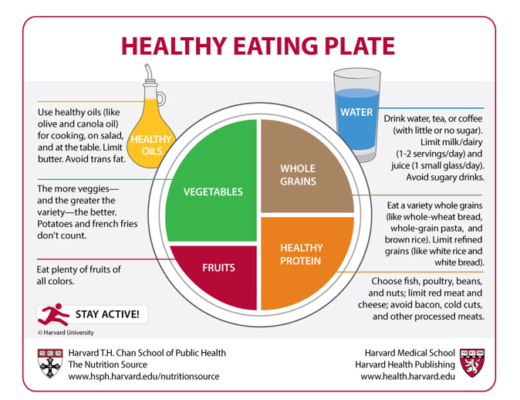
Although the committee emphasised the role of fruits, vegetables, whole grains and legumes as the basis of a blood-pressure preventive diet, they did allow small amounts of fish, poultry and mono- and poly-unsaturated oils from plant sources. Dr Sacks himself has researched the .benefits of a whole-food plant-based diet, and found it to be superior to one that includes animal products.
Here is an article coming out of the Harvard T Chan School of Public Health about a healthier heart-friendly diet. The reason for including some animal products in the DASH diet, was to make it more acceptable to the general population. It was felt that if the diet was too restrictive, less people would be willing to adopt it.
We do know from the research that the communities that have the lowest blood pressure and lowest risk of heart disease are predominantly plant-based. Here is the result of a large meta-analysis comparing vegetarian diets versus omnivorous diets in their effect on blood pressure management. The vegetarian diet showed a reduction of up to 7 mmHg systolic and up to 5 mmHg diastolic compared to the omnivorous diet. That may not seem like a lot, but it is equivalent to the benefit of taking medications. The added benefits are in reducing all sorts of other lifestyle-related problems – like heart attacks, strokes, Alzheimer’s, cancer, diabetes, obesity and auto-immune diseases. So going onto that whole-food plant-based diet to control blood pressure has multiple other benefits.
According to the Adventist Health Study 2 which has been following more than 89,000 people over many years, those eating meat-free diets appear to cut their risk of high blood pressure in half (ovo-lacto vegetarians) compared to omnivores (those eating meat as well). But those eating meat-free, egg-free, and dairy-free may have 75% lower risk. Of course the whole-food, plant based diet advantage is not only the actual food itself on hypertension, but also the reduced obesity, lower LDL and total cholesterol, and thus lower levels of atherosclerosis. Another confounding factor is that people who are likely to eat a healthy diet are also more likely to be healthy in other ways – like exercise, having positive outlooks to their lives, dealing with stress in appropriate ways, better social support and purpose for living. These long-term studies of large populations are probably some of the best sources of useful information.
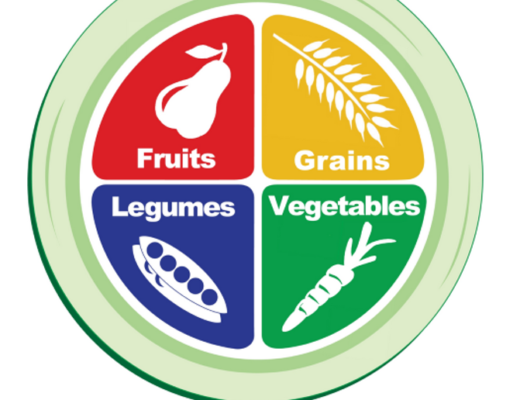
Here is the best option if you really want the healthiest lifestyle: See the image below of the healthy food plate from Physician’s Committee for Responsible Medicine. Most of their information is copyright free so one can use their information freely. Here is another source of helpful information:
A short but informative video from Dr Michael Greger of NutritionFacts.org covers the field of dietary intervention very well. In this video he shows how that taking just 2 tablespoons of ground flaxseed (linseed) per day can be more effective even than having a daily vigorous workout with aerobic exercises. Other food interventions bringing down blood pressure include 1 kg of watermelon per day!, and drinking red wine without the alcohol (I think that is called grape juice). The last intervention is eating plenty of raw or cooked vegetables.
ALSO READ : Turning the Tide – Conquering the scourge of high blood pressure part 2
So in summary, a diet that is effective at both preventing as well as reversing high blood pressure is rich in fruits and vegetables (many different kinds, of all colours of the rainbow), whole grains (like brown rice, oats, maize, barley, whole-wheat bread and whole-wheat pasta), legumes (beans, peas, lentils, chick-peas, etc) and a few seeds and nuts (like chia seeds, linseeds, walnuts). If you must have your fat, it should be plant-based like olive oil or canola oil, and if you must have animal products, then better options include fatty fish, skinless chicken and low fat dairy. But the benefits of dietary interventions diminish the more animal products you ingest.
In our next article we will explore the role of Nitric Oxide in the control of blood pressure, and discuss ways to boost our Nitric Oxide levels in the endothelium ( the lining of the blood vessels). Also in a future article we will discuss the research which impacts recommendations about the use of oil in our diet, and how this impacts cardio-vascular disease, including hypertension.
We hear contradictory advice about the use of oil – good oils vs bad oils, and whether to use medium amounts or low amounts.
At this time of the year, most people put healthful living out of mind, and indulge in all sorts of goodies. Remember prevention is better than cure, and even if you increase your fruit consumption and water consumption and reduce sweets and fizzy drinks, it will help a lot. Remember also the more you care for your body, the more your body cares for you!
Have a blessed and peaceful and love-filled Christmas.
Dave Glass

Dr David Glass graduated from UCT in 1975. He spent the next 12 years working at a mission hospital in Lesotho, where much of his work involved health education and interventions to improve health, aside from the normal busy clinical work of an under-resourced mission hospital.
He returned to UCT in 1990 to specialise in obstetrics/gynaecology and then moved to the South Coast where he had the privilege of, amongst other things, ushering 7000 babies into the world. He no longer delivers babies but is still very clinically active in gynaecology.
An old passion, preventive health care, has now replaced the obstetrics side of his work. He is eager to share insights he has gathered over the years on how to prevent and reverse so many of the modern scourges of lifestyle – obesity, diabetes, ischaemic heart disease, high blood pressure, arthritis, common cancers, etc.
He is a family man, with a supportive wife, and two grown children, and four beautiful grandchildren. His hobbies include walking, cycling, vegetable gardening, bird-watching, travelling and writing. He is active in community health outreach and deeply involved in church activities. He enjoys teaching and sharing information.
HAVE YOUR SAY
Like our Facebook page, follow us on Twitter and Instagram
For news straight to your phone, add us on WhatsApp 082 421 6033