Since my early teens, I’ve been a fan of country music. Then my liking expanded to include folk (remember the music from the ‘60s?) and bluegrass. Today I have about 300 CDs. They are NOT just stuff. They are stuff (WDR). What’s that? That’s stuff, with due respect. With due respect to the relationship I have with them, spanning over 50 years. Nearly every CD is full of memories. Some are even copies of music I had on vinyl records, which I transferred in the early 2000s! Am I likely to listen to all 250 hours of music in the time I have left? I’m not answering that.
ALSO READ : R.I.P. Jay Pillay – Back to life: From 3 kilograms to 1.54 square metres
Are there other things in my life that can be defined as stuff (WDR)? My books, my clothing, my shoes, my household hardware? Yes, I concede that they are all my stuff (WDR). In the time I have left, am I likely to use all my stuff (WDR)? I’m not answering that.
At first, I acquired stuff because I needed stuff. As I used stuff, I bonded with stuff. Unknowingly, what was merely stuff was turning into stuff (WDR). When I no longer need the stuff, how can you ask me to get rid of it? It’s mine. I paid for it. I need it. (I did not use it for 8 years? Don’t bring that into the discussion.) Don’t you understand – it’s not just stuff. It’s stuff (WDR).
I like the idea behind bridal showers and baby showers. Friends and family get together, and shower the soon-to-be bride or the expectant mother with gifts. Celebrating, giving, receiving – they make life beautiful.
I’ve daydreamed about having something similar. I get family and friends together, serve briyani (or biryani – we don’t agree on the spelling), and set out all my stuff (WDR), in the manner of a garage sale. You like it? Take it, please. I don’t have enough time left to use it. Just take it. What will I call this celebration? You guessed right: a passing shower. (Follow the black balloons to my residence.)
That’s a daydream. Don’t you dare pursue it. This is my stuff (WDR). When I’m gone, those left can decide what they want to do with it. Just please lay off my case my cases.
“But – at the end, all you need is food, shelter, clothing, and love.” You say.
“Oh. And what about all this?” I ask.
“That’s just stuff,” you say.
“That’s where you’re wrong. That’s stuff (WDR),” I reply.
“You can’t take it with you,” you smile.
I make no reply.
You have not succeeded in persuading me. And that makes this whole matter your problem, and not mine. End of story.
*********************************************************
I ended last week’s blog by promising to cover six difficult questions. I repeat the questions here:
- Why do so many couples, like us, live in houses far larger than we need?
- Why are our over-sized houses filled with things we’re unlikely to use in the time that we probably have left?
- Why don’t we slim down what we have, to match our needs?
- Is there a difference between me owning things, and things owning me?
- Is our sentimental and emotional attachment to things (which is very real) sufficient reason to hold on to them, right until death parts us?
- Could we actually enjoy ‘freeing’ ourselves from stuff we are unlikely to need?
Here is an admission. No, I have not answered these questions. But you have something to work on, as you answer them for yourself. And in the end, we have to answer some questions for ourselves – with due respect.
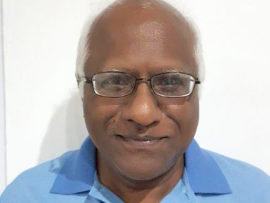 Jay Pillay’s first two critical decades were spent where his first decade began – in Pietermaritzburg. After studying at ML Sultan Technikon in Durban (anyone remember that place?), he then joined the sugar industry, working in Tongaat, Durban, and Xinavane – a sugar mill village 120km north of Maputo. Oh yes – there was a brief period of unfaithfulness, when he flirted with aluminium in Richard’s Bay. Upon retirement, he and his wife Dorothy – settled in Southport.
HAVE YOUR SAY
Like our Facebook page, follow us on Twitter and Instagram