
There has been much written lately about the possibility of the Fourth Industrial Revolution (4IR) allowing countries to ‘leapfrog’ deficiencies in their economies by harnessing the power of the internet of things (IOT) and artificial intelligence (AI), amongst other components of 4IR.
ALSO READ : Good Business Basics: Career counselling is key
This view has become particularly strident in the state education sector, with President Cyril Ramaphosa especially punting his one pupil/one tablet vision as a possible cure-all to the ills that plague this sphere.
Priorities
I remain unconvinced, and firmly believe that without the basics in place, this will remain but a pipe dream. As NGO Equal Education points out, there are still over 4 000 pit toilets to be eradicated in public schools, and thousands of schools without a reliable water and electricity supply.
Added to this is the issue of connectivity, particularly in the rural schools the president believes will most benefit from the introduction of e-learning platforms.
Then there is the issue of re-training of teachers to deliver using the new platforms-and it is common knowledge that the South African Democratic Teachers Union (SADTU), which exercises an iron grip over the sector, is perhaps the least enthusiastic stakeholder toward anything that could possibly upset the status quo.
Strategic
Another major concern is safety and security of learners in possession of these devices, and also protection of the devices while on school property. There have been incidents of new computer labs being stripped bare of all equipment literally a day after being commissioned at schools.
There is absolutely no argument against the introduction of more technology into our education sector. However, this needs to be done in a strategic and measured way to ensure that the maximum benefit is derived. There needs to be exhaustive cost/benefit analyses done so that the limited budgets are well deployed for maximum results.
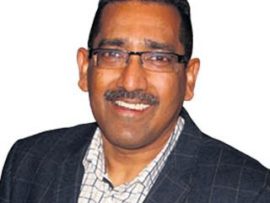
After matriculating, Vijay Naidoo studied Economics in the UK. Upon his return, he joined the family construction business as MD for 10 years.
He subsequently joined his sister in their furniture manufacturing business as director for quality assurance and operations. He was responsible for all quality aspects of their products, and led the project to the business achieving an ISO 9000 quality accreditation. As an export focused business, this was important for our international competitiveness.
Mr Naidoo has an abiding interest in quality management and productivity improvement, particularly in manufacturing.
More recently, he has focused a lot of his time on giving back to the community by way of mentorship of small businesses and sitting on the executive of the South Coast Chamber of Commerce. He also sits on the Board of the Ugu South Coast Development Agency.
HAVE YOUR SAY
Like our Facebook page, follow us on Twitter and Instagram