What drives the abhorrent behaviour that has become the norm during industrial action by union members?
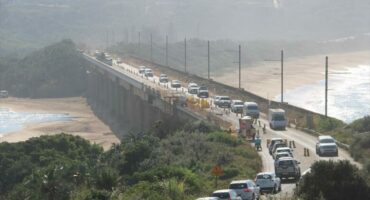
Violent intimidation, destruction of infrastructure, blockades and killings have become the default actions of striking workers from the outset of wage negotiations, rather than an outlet for frustration and impatience when talks become deadlocked.
ALSO READ : Good Business Basics: SMMEs are our lifeblood
There appears to be nothing out of bounds to the perpetrators, least of all the safety of the general public caught in the middle.
Challenged
This course of action is all the more dismaying, in light of the fact that the Labour Relations Act (LRA) provides a comprehensive framework to ensure that striking workers can exercise pressure on the employer in many legal ways, such as picketing and sit-ins at work premises. So who is to blame for the situation we find ourselves in?
In the first instance, union management and top officials need to be more accountable for the actions of their members. The stock response that they do not ‘condone’ violence and destruction of property, or that the actions are those of ‘rogue or criminal’ elements must be challenged.
Making them personally liable for prosecution and or restitution for damaged property will go a long way towards reining in such behaviour.
Impunity
Secondly, law enforcement agencies, through their ‘kid-gloved’ reaction to violent acts have emboldened the perpetrators, who act with a measure of impunity.
Incidents need to be thoroughly investigated and the guilty (or their superiors) prosecuted without fear.
A case in point: almost five years after nearly 50 people were killed during the strikes in the private security industry, not a single arrest or prosecution has been made. Finally, the workers themselves need to be more circumspect in the way they express their anger and unhappiness.
Destruction of public infrastructure that exacerbates poor service delivery or actions that alienate them from the support of the general public (such as blockades of public roads) will in the long term serve to undermine their (often legitimate) demands.
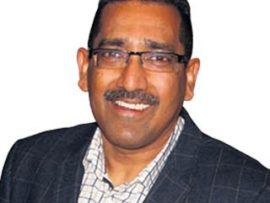
 After matriculating, Vijay Naidoo studied Economics in the UK. Upon his return, he joined the family construction business as MD for 10 years.
He subsequently joined his sister in their furniture manufacturing business as director for quality assurance and operations. He was responsible for all quality aspects of their products, and led the project to the business achieving an ISO 9000 quality accreditation. As an export focused business, this was important for our international competitiveness.
Mr Naidoo has an abiding interest in quality management and productivity improvement, particularly in manufacturing.
More recently, he has focused a lot of his time on giving back to the community by way of mentorship of small businesses and sitting on the executive of the South Coast Chamber of Commerce. He also sits on the Board of the Ugu South Coast Development Agency.
HAVE YOUR SAY
Like our Facebook page, follow us on Twitter and Instagram