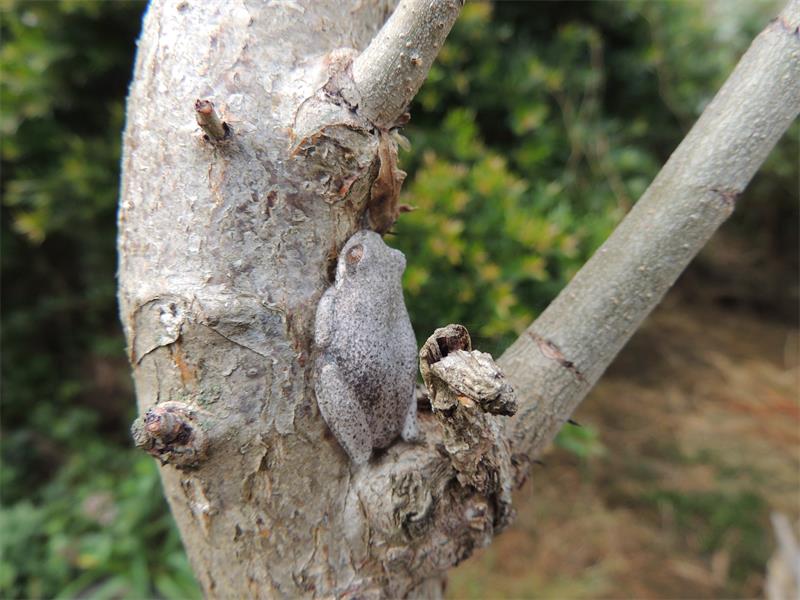
WE only had a few small showers but my winter-dry garden really appreciated the recent bit of rain after a very thirsty spell.
YOU MIGHT ALSO BE INTERESTED IN : Invasives and natives: Fabulous forest facts
The soil between the stepping stones along pathways is so sandy and dry, making a walk around the garden a dusty experience. Fortunately the leaves dropped by the trees and shrubs during summer and autumn have been swept into the beds and left as mulch. Dry spells like this certainly highlight the benefits of mulching as the garden beds are coping well with the rainless winter.
I hardly need to water my garden at all. Only my pot plants and raised herb beds need a regular sprinkle of stored rain water.
In spite of the dryness and the cooler weather the garden is ablaze with warm, bright colour. The different aloe species are providing a display of flame-coloured flowers and my orange and yellow winter-flowering kniphofias are starting to bloom. The sunbirds so enjoy collecting nectar from the aloes, knophofias and the flowering Leonotis leonuris, which the Zulus aptly call ‘bird beer’. Also starting to provide a nectar feast for the winter-hungry birds are the bright orange blooms that are beginning to appear on my Halleria lucida tree.
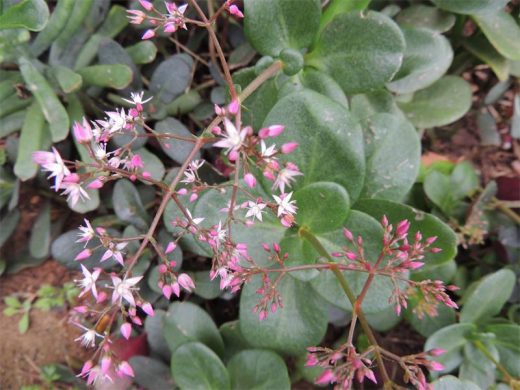
Making a real show at the moment is a small but useful ground cover, Crassula multicava, better known as fairy crassula. The tiny flowers look like minute pink stars and light up many of my shady corners during the winter months. Even when they are not flowering their fleshy leaves look most attractive as a shade area ground cover. What’s more, they are particularly easy to propagate. Plant them and leave them to spread out quickly to cover bare ground.
Mixed in with these plants is a close, very similar but rarer relation called Crassula streyi, also known as Pondoland or maroon-leaved fairy crassula.
Its flowers and shape of leaf are similar to the ordinary fairy crassula but the leaves are a gorgeous purple below so this plant adds colour to my garden even when not in flower. It is particularly welcome in my garden as it is one of those interesting ‘Pondoland Specials’ found in our magical Pondoland Centre of Endemism floral hotspots.
Another pink-flowering Crassula that is putting on a show at the moment is the Crassula ovata or kerky bush, an attractive succulent shrub and one of not too many indigenous plants that have become popular garden subjects.
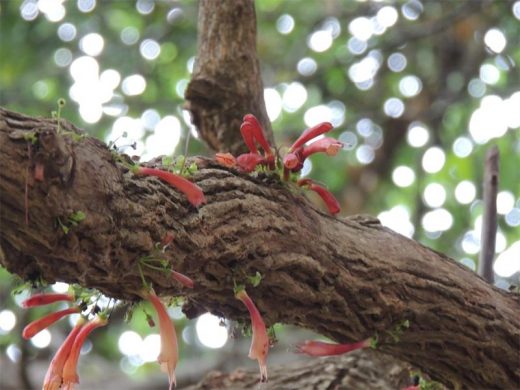
A reminder that we are well into winter now is the fact that the coral trees are budding and some of them are even starting to flower. Soon the scarlet and orange flowers will be putting on their winter show.
I have to admit that my garden is looking bright but a little tatty at the moment as I have been putting the dry, rather dormant time to good use, pruning, cutting back and reshaping and replanting areas that are too overgrown. There is never a quiet time in a garden.
HAVE YOUR SAY
Like our Facebook page, follow us on Twitter and Instagram
For news straight to your phone, add us on WhatsApp 082 421 6033