DR DAVE GLASS: Lifestyle Medicine -Tick-tock
A more recent discovery is that almost every tissue and organ in our body has its own internal clock.
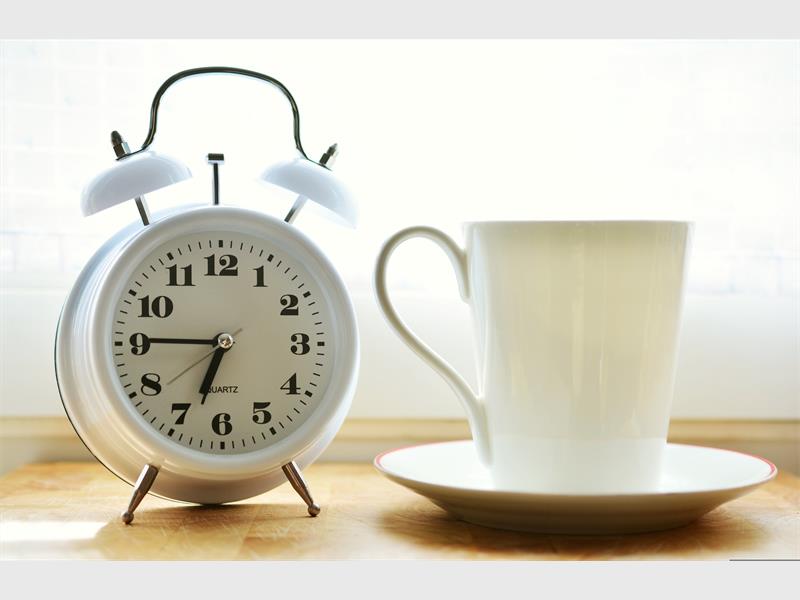
No, this has nothing to do with the App that allows you to view thousands of videos.
What does time, and clocks have to do with health? Of course we have heard the adage “early to bed, early to rise, makes a man healthy, wealthy and wise”.
Scientific research has certainly investigated biological rhythms. In fact, there is a whole field of study on the subject, called Chronobiology. It examines the relationship of mental, physical, and emotional rhythms as they relate to the sun, moon and seasons. The field is vast, so I will only summarise some of the most relevant findings connected to our nutrition.
The best known cycle is the circadian rhythm which is based upon the 24 hour day/night cycle.
Light entering the eyes influences the production of melatonin, and other neurotransmitters in the pineal gland, a small structure deep in the middle of the brain.
The setting of this internal clock is best influenced by bright morning light, exercise, soft evening light, and night-time darkness. This circadian rhythm influences our sleep patterns, hormonal cycles, moods, mental function – and a whole host of other bodily functions.
A more recent discovery is that almost every tissue and organ in our body has its own internal clock. This also affects our digestion, blood pressure, cholesterol levels, hormone production including insulin, body temperature, brain function, and immune activity. Even the expression of our genes follows a daily rhythm. Studies done on our gut micro-organisms also show that they vary their behaviour according to daily cycles.
Surprisingly, research has shown that food is metabolised differently in the morning compared to the evening. In the morning, food is converted into glycogen far more than in the evenings and this conversion process also burns up kilojoules – called thermogenesis.
However, in the evenings more of the kilojoules are put away for storage in the form of fat. Thus the ideal ratio of intake of energy to maintain a healthy weight is 50% for breakfast, 30% for lunch and 20% for supper.
According to expert, Dr Greger, in the mornings, our muscles are more sensitive to insulin, allowing blood sugar to provide energy in the form of glycogen storage in the muscles for the anticipated work ahead. In contrast, these same muscles are more insulin resistant.
This difference in metabolism over the day may be one explanation why obesity is increasing with a rushed morning snack for breakfast, a light meal for lunch, and then a large, energy-rich main meal in the evenings.
Although one may be taking in the same number of kilojoules with either habit, those who eat most of their energy at night, compared to in the morning, are more likely to gain weight or struggle to lose it.
Next time we will explore further this fascinating subject of chronobiology.
Dr Dave Glass
MBChB, FCOG(SA), DipIBLM