Call of African fish eagle returns to Crocworld
The African fish eagle is a good indicator of the quality of local water systems with their presence ensuring the lower levels of the ecosystem are healthy.
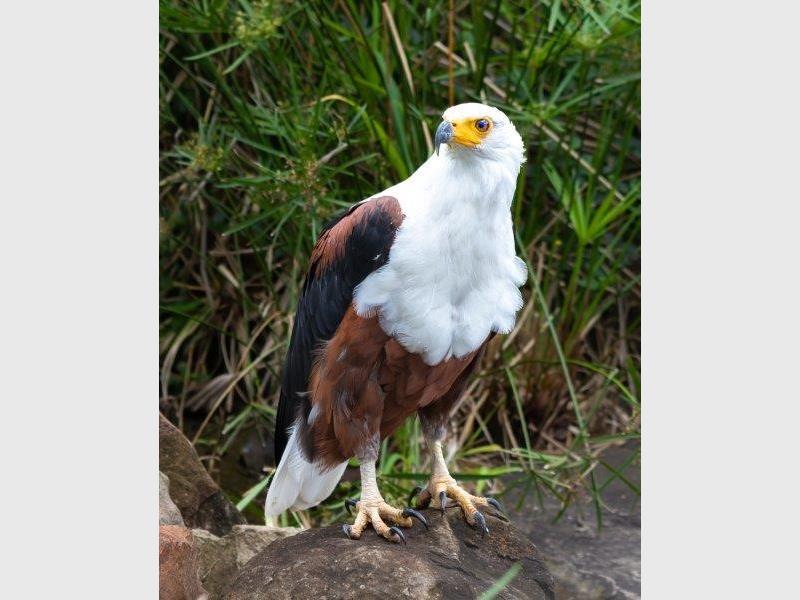
For 34 years, the iconic call of the African fish eagle welcomed visitors to Crocworld Conservation Centre in Scottburgh, but after the beloved Isis died earlier this year, she left a massive void.
And while she can never be replaced, the sounds of the African fish eagle will once again be heard around the centre as Sekhuru finds his new home at Crocworld.
Crocworld Conservation Centre bird curator, Ryne Ferguson said: “We are so happy to be welcoming Sekhuru who will be arriving from the African Bird of Prey Centre in Pietermaritzburg. His right wing was badly injured when he collided with an aerial cable and had to be partially removed – including the wing tip with the primary feathers. Just like Isis, he is unable to fly again but he will find a very happy home at Crocworld, taking up his spot in the enclosure once home to Isis.”
Ferguson said that the African fish eagle is found throughout Southern Africa and is the national bird of both Zimbabwe and Zambia, adding that they have an extensive wingspan reaching two metres which is perfect for swooping down to catch fish from freshwater with their sharp talons.
He added that as apex species, the African fish eagle is a good indicator of the quality of local water systems with their presence ensuring the lower levels of the ecosystem are healthy.
“Sekhuru will join some 200 resident bird species at Crocworld including the Cape vultures and booted eagles. The centre is also home to a variety of indigenous and exotic reptile species, with the on-site animal farm a great place for youngsters to pet bunnies, guinea pigs and more! There are daily crocodile feedings and talks at 11am and 3pm from Tuesdays to Sundays. Crocworld is committed to conservation in all its efforts. The centre is a member of Species360, an international organisation which facilitates information collection from some 1 200 aquarium, zoo, university, research and governmental facilities worldwide across 99 countries on six continents,” he said, adding that Species360 members curate the Zoological Information Management System (ZIMS), the world’s most comprehensive database of knowledge on more than 22 000 species.
“Through its Species360 membership, Crocworld forms part of the global fight against extinction using optimal animal husbandry standards and practices,” said Ferguson.
HAVE YOUR SAY
Like the South Coast Fever’s Facebook page