Manta rays in the spotlight
Research in iSimangaliso Wetland Park and other areas like Aliwal Shoal has shown significant connectivity to Mozambique.
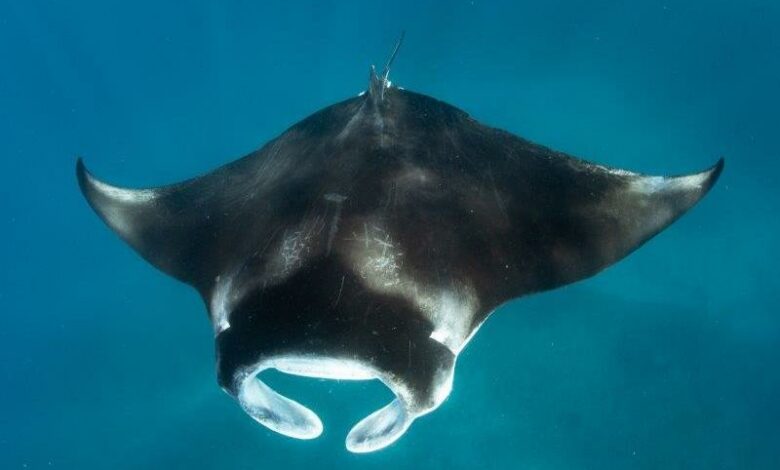
A nationwide collaborative study by marine biologists has uncovered some of the mysteries of South Africa’s manta rays.
Dr Michelle Carpenter, a collaborator of the Marine Megafauna Foundation (MMF), Clansthal Conservancy and Manta Trust, said that the country is home to the reef manta ray (Mobula alfredi) and the oceanic manta ray (Mobula birostris), the latter reaching an impressive eight metres wingtip to wingtip, making it the largest ray in the world.
Human impact has resulted in significant population declines, making this the most threatened population of this species in the world.
Being listed on the IUCN RedList indicates that this species is globally threatened.
Dr Carpenter worked with a number of dedicated marine biologists on the study. Among them are Dr Ryan Daly (Oceanographic Research Institute), Nakia Cullain (MMF), Dr Andrea Marshall (MMF), Vivienne Dames (South Aquatic Institute for Aquatic Biodiversity), Dr Charles Griffiths (UCT), Grant Smith (SharkLife) and Dr Matt Dicken (Nelson Mandela University).
Oceanic manta rays have a widespread offshore distribution, while reef mantas are more coastal. The study has revealed unique characteristics of South Africa’s mantas, including highly mobile reef mantas, rare black oceanic mantas, newfound feeding aggregations and potential baby manta nurseries.
In iSimangaliso Wetland Park in northern KZN, researchers discovered manta ray feeding aggregations in a marine sanctuary protected from fishing and recreational diving for over 50 years. Here, 89% of South Africa’s reef manta sightings have been recorded, where mantas feed and also have parasites removed by cleaner fish.
Research in iSimangaliso Wetland Park and other areas like Aliwal Shoal has shown significant connectivity to Mozambique.
Some key findings include:
* One manta travelled 1,305km multiple times between Zavora, Mozambique, and iSimangaliso.
* Another travelled over 600km from Pondoland MPA to iSimangaliso.
* A juvenile seen in Pondoland MPA in 2016 was later resighted as a pregnant adult in iSimangaliso.
* Two mantas made repeat trips between Zavora and iSimangaliso (870km round trip).
* 28 mantas were identified in Mozambique, with most linked to Zavora.
“These movements are potentially driven by the availability of zooplankton abundances, which are transient along the coastline and with seasonal patterns,” explains Dr Carpenter.
“While mantas have been officially documented in South Africa since the 1950s, shifts in their movements could be linked to climate change, with rising water temperatures affecting currents and food availability.”
Dr Ryan Daly, a specialist in shark and ray movement patterns, emphasised the importance of cross-border conservation efforts.
“Because these animals cross borders, conservation management plans need to be aligned between South Africa and Mozambique to protect their populations,” he said.
Oceanic mantas are infrequent in South Africa, with sightings concentrated in Ballito, Aliwal Shoal MPA and Pondoland MPA.
Researchers were even more thrilled to discover rare melanistic (black) oceanic manta rays in Aliwal Shoal MPA (February 2020) and Ballito (November 2021).
Despite their ecological importance, mantas face threats from fishing, seismic testing and climate change. Collaborative research and effective marine sanctuaries like the iSimangaliso Wetland Park provide hope for their future.
“There is no shortage of work to do with sharks and rays along South Africa’s coastline. I encourage South Africans and international students eager to make a difference to join us. It’s hard work but immensely rewarding.” – Dr Carpenter.
HAVE YOUR SAY
Like the South Coast Fever’s Facebook page