Jockey training on the Tuesday Rostrum menu
Guests were fascinated to hear about the South African Jockey Academy.
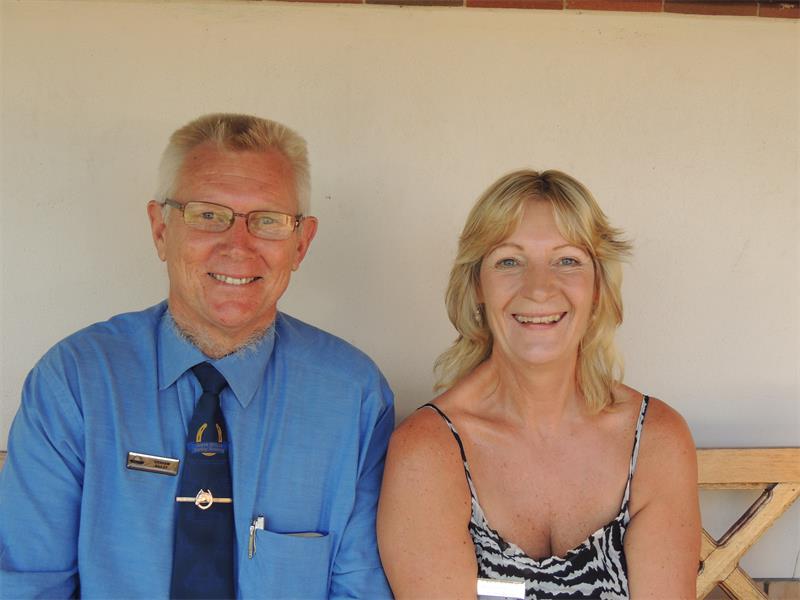
TUESDAY Rostrum committee members pride themselves on the diversity of interesting topics they dish up, along with a delicious lunch, at their regular monthly meetings.
By inviting charming Graham Bailey to the April lunch they really outdid themselves. Graham, a passionate educationalist and sports coach, is the principal of the South African Jockey Academy. His excellent talk on this globally unique institution was something completely different – and it proved to be utterly fascinating. His listeners had so many questions to ask him after the lunchtime talk that they could have kept him there until supper time.
Setting the tone, Graham started with a stirring video clip of S’manga Khumalo, on Heavy Metal, winning the 2013 Durban July. One of the academy’s many successful proteges, S’manga was the first black jockey to achieve a Durban July win. Many of his schoolmates have earned their champion’s laurels here and and on race courses all over the world.
Graham chatted about the history of the academy, which had seen the training of apprentices move from a haphazard, exploitative affair to the highly professional programme the academy offered today. Some formality, in the form of regulations, had been introduced to the training of jockeys in 1926. In 1960, the Natal Jockey Academy had been established, on land obtained from Marianhill Monastery. In 1972 it had become the South African Jockey Academy, a section 21 company, and had moved to its present Summerveld home.
An integral part of the academy’s five-year jockey apprentice training was the academic programme. Graham said the curriculum maintained a balance between horsemanship and academic training. Students who, for some reason, were not able to go on and become jockeys would thus be adequately educated and equipped to follow other careers. Last year all six academy matric candidates earned university entrance passes.
It was most interesting to hear about the intensive and highly scientific selection process aspiring academy pupils undergo. They needed to be 15 years old, to have passed grade 9, to be well-proportioned, sporty and athletically talented and to have good reflexes, Graham said. As a great deal of money would be wasted by training a jockey who would grow too big, selectors carefully considered a candidate’s height, weight and shoe size and took various bone measurements. X-rays were examined to check growth plates, a complete family history would be assessed and the candidate would be screened by an endocrinologist, he explained.
He pointed out that the training programme was geared to producing elite sportsmen. It therefore made use of cutting edge sports science to ensure the trainee’s health and condition were constantly monitored. The programme was run by a multi-disciplinary team that included a former Springbok doctor, a biokineticist, a sports psychologist and a trained professional nurse. The academy had developed a comprehensive concussion protocol, Graham added.
Training was intensive and the life of the aspiring jockey was not easy.The apprentices worked through the school holidays and they made up for the shorter academic day by doing school work on Saturdays. Their day started at 4.30am when they went off to the stables to work at grooming, riding and training until 10.20am, when the school bell rang. At 2.30pm school was out and it was back to horsemanship training then an hour of prep before bedtime, at 8.30pm. As for actually riding and winning races, a slow, carefully graded programme ensured that they only advanced to the next levels as and when they were ready.
As Graham spoke about the academy it became more and more apparent that the boys – and a handful of girls – who were lucky enough to be accepted would not only gain training in a satisfying and exciting career, but would acquire life-skills that would stand them in good stead whatever direction their future careers would take. Graham concluded his well-delivered talk with another video clip, one with a message set to music. To find your greatness you needed to rise and shine. Like jockeys, no sportsman could succeed without putting in the training, Graham said.