Tuesday Rostrum hears ozone hole might be the key
We humans are overstepping the (planetary) boundaries.
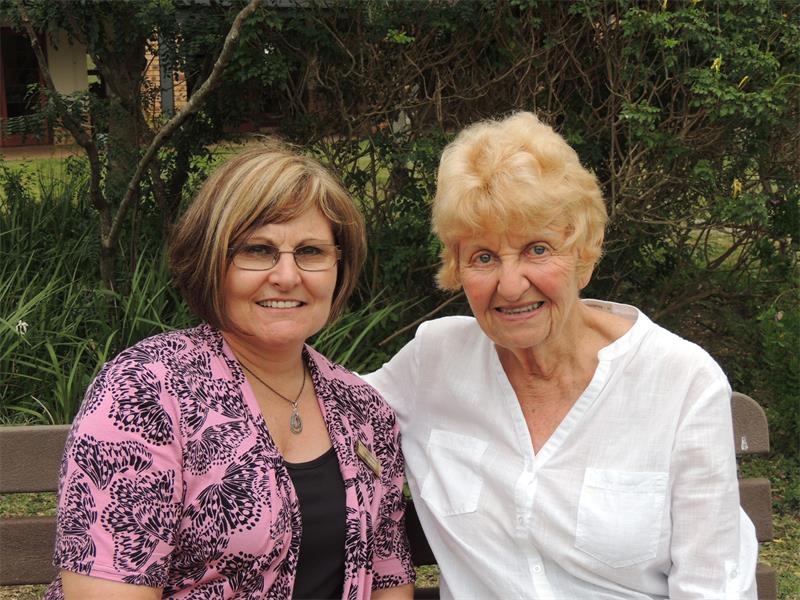
THE hole in the ozone layer was a ray of light in the dark scenario presented by well-known conservationist Jean Senogles in her ‘state of the earth’ address at the recent Tuesday Rostrum lunch.
Jean, an entertaining and amusing speaker, has the knack of simplifying complex science for her listeners. Her talk was based on the Stockholm Resilience Centre’s nine planetary boundaries, within which humans should operate to keep planet earth healthy. Alarmingly, a number of these have already been dramatically overstepped.
To retreat and remain within the boundaries, Jean advocated what she called a global “steady state economy” where sustainability was the keyword, where there was no wastage, where everything was recycled and reused. Would we as humans ever have the personal and political will to achieve this? That is where the hole in the ozone layer, one of the planetary boundaries, came into the picture.
Some years ago, humanity had already crossed this boundary. Jean explained how alarm bells had rung when it was discovered the ozone layer, which protected us from harmful UV rays, was being the depleted, mainly by damaging aerosols and gases. Thanks to global steps taken, the hole in the ozone layer appeared to be closing.
“We have proved that, by facing facts and standing together, we can change things. If we can do this to solve one problem, we can all do our bit to solve the rest,” Jean explained.
She pointed out that the industrial and agricultural use of nitrogen and, to a lesser extent, phosphorus, were causing dangerously high levels of pollution on land and sea. This was one of the boundaries mankind had already crossed. There was also concern about the growing acidity of the sea caused by the over-production of carbon dioxide. Evidence already existed that the shells of molluscs were being weakened.
Jean reminded her listeners all things were connected and that damage to the oceans would affect the whole planet. More concerning, though, was the increased pressure on our dwindling and finite fresh water resources. By 2050 a projected half a billion people would be experiencing water stresses. Jean foresaw water shortages becoming a major issue in South Africa in the future.
While evidence was rapidly growing that we had already transgressed the climate change planetary boundary Jean said it was worrying that many deniers existed who refuted the scientific evidence. Although not quantified, mankind-driven chemical pollution could potentially cause irreversible harm to the planet and all its living organisms. This pollution could cause reduced fertility and genetic damage.
Two boundaries, changes in land use and biodiversity loss, were closely linked. Grasslands, our water reservoirs, were being ploughed up for farmland or transformed into sterile plantations. Other natural systems were being destroyed, to the detriment of organisms that depended on them. Jean said that various natural events had triggered five mass extinctions in the past but that humans were now causing the sixth. While biodiversity loss had not been quantified, we’d certainly overshot that particular planetary boundary.
Perhaps, however, the most alarming aspect of Jean’s talk was the part when she bravely addressed the ‘elephant in the room’, that huge, overriding problem politicians chose to ignore – the exponential, unprecedented, thoroughly alarming modern-day population explosion. In September 2015, the world population was estimated at around 7,1 million – and still growing. We were already exceeding the planet’s ability to feed its people. If we didn’t slow the rates down, the consequences would be too horrible to contemplate.
And yet, the planet’s too abundant yet amazingly resilient and ingenious population might well be her saving. As Jean reminded her listeners. if we’d been bright, committed and determined enough to close the ozone layer hole, we might yet stand together to achieve the steady state of economy the planet so desperately needed.