September 23: On This Day in World History … briefly
Most notable historic snippets or facts extracted from the book ‘On This Day’ first published in 1992 by Octopus Publishing Group Ltd, London, as well as additional supplementary information extracted from Wikipedia.
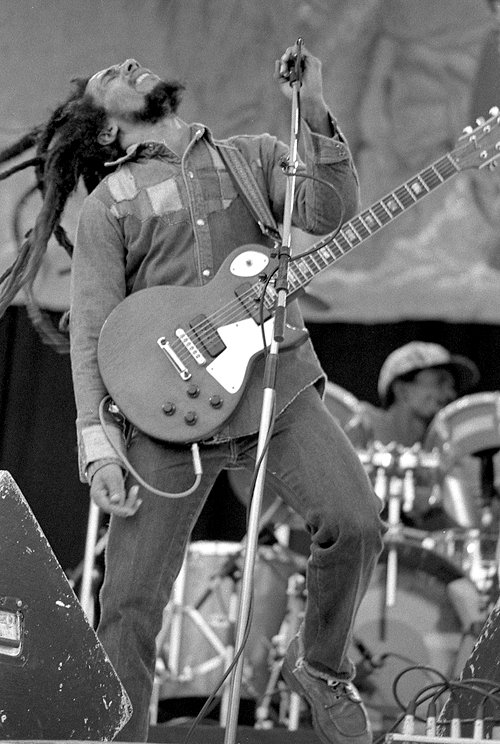
1980: Bob Marley plays the last concert of his life in Pittsburgh, Pennsylvania
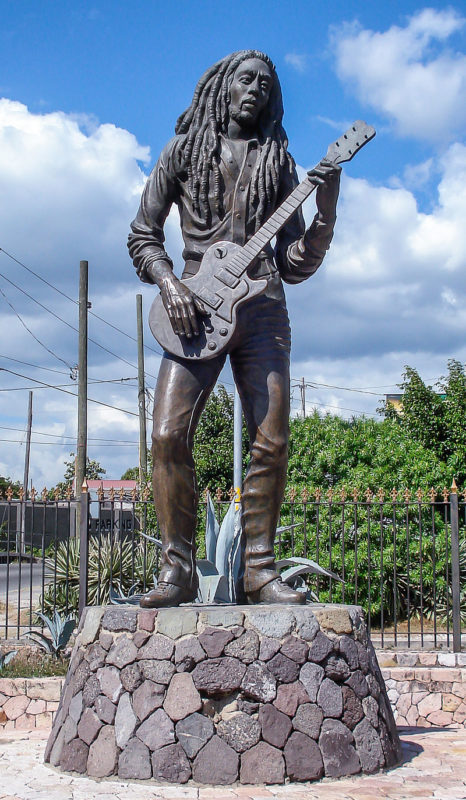
Robert Nesta Marley, (6 February 1945 – 11 May 1981) was a Jamaican singer-songwriter who became an international musical and cultural icon, blending mostly reggae, ska, and rocksteady in his compositions. Starting out in 1963 with the group the Wailers, he forged a distinctive songwriting and vocal style that would later resonate with audiences worldwide. The Wailers would go on to release some of the earliest reggae records with producer Lee ‘Scratch’ Perry.
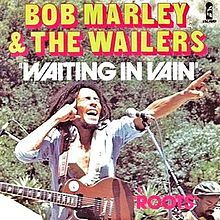
‘Waiting in Vain’ – Bob Marley & The Wailers – Wikipedia
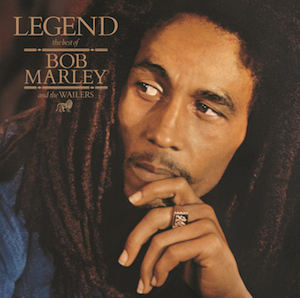
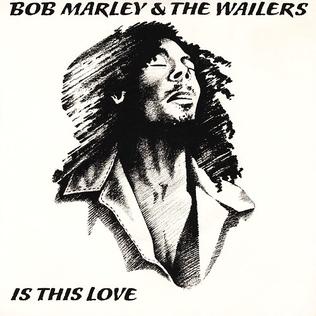
After the Wailers disbanded in 1974, Marley pursued a solo career upon his relocation to England that culminated in the release of the album Exodus in 1977, which established his worldwide reputation and elevated his status as one of the world’s best-selling artists of all time, with sales of more than 75 million records. Exodus stayed on the British album charts for 56 consecutive weeks. It included four UK hit singles: ‘Exodus’, ‘Waiting in Vain’, ‘Jamming’, and ‘One Love’. In 1978, he released the album Kaya, which included the hit singles ‘Is This Love’ and ‘Satisfy My Soul’. The greatest hits album, Legend, was released in 1984, three years after Marley died. It subsequently became the best-selling reggae album of all time.
Greatest hits album ‘Legend’ by Bob Marley and the Wailers – Wikipedia
Diagnosed with acral lentiginous melanoma in 1977, Marley died on 11 May 1981 in Miami at age 36. He was a committed Rastafari who infused his music with a sense of spirituality. He is credited with popularising reggae music around the world and served as a symbol of Jamaican culture and identity. Marley has also evolved into a global symbol and has inspired a significant merchandise industry.
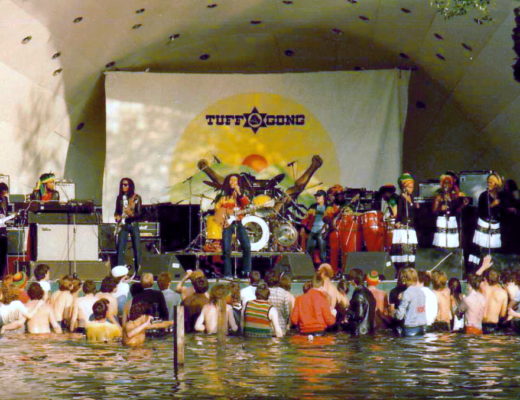
Bob Marley & the Wailers live at Crystal Palace Park in south-east London, during the Uprising Tour – Wikipedia
Cannabis
Marley considered cannabis a healing herb, a ‘sacrament’, and an ‘aid to medication’; he supported the legalisation of the drug. He thought that marijuana use was prevalent in the Bible, reading passages such as Psalms 104:14 as showing approval of its usage. Marley began to use cannabis when he converted to the Rastafari faith from Catholicism in 1966. He was arrested in 1968 after being caught with cannabis, but continued to use marijuana in accordance with his religious beliefs.
Of his marijuana usage, he said, ‘When you smoke herb, herb reveal yourself to you. All the wickedness you do, the herb reveal itself to yourself, your conscience, show up yourself clear, because herb make you meditate. Is only a natural t’ing and it grow like a tree.’
Marley saw marijuana usage as a vital factor in religious growth and connection with Jah, and as a way to philosophise and become wiser
Bob Marley, 1978 single – Wikipedia
In July 1977, Marley was found to have a type of malignant melanoma under the nail of a toe. Contrary to urban legend, this lesion was not primarily caused by an injury during a football match that year, but was instead a symptom of the already-existing cancer. Marley turned down his doctors’ advice to have his toe amputated (which would have hindered his performing career), citing his religious beliefs, and instead the nail and nail bed were removed and a skin graft taken from his thigh to cover the area. Despite his illness, he continued touring and was in the process of scheduling a world tour in 1980.
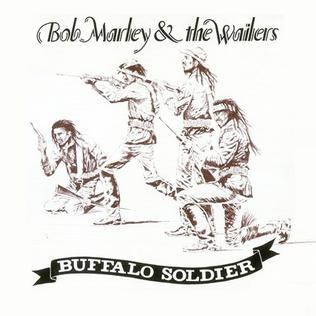
‘Buffalo Soldier’ hit song by Bob Marley & The Wailers – Wikipedia
The album Uprising was released in May 1980. The band completed a major tour of Europe, where it played its biggest concert to 100,000 people in Milan. After the tour Marley went to America, where he performed two shows at Madison Square Garden in New York City as part of the Uprising Tour.
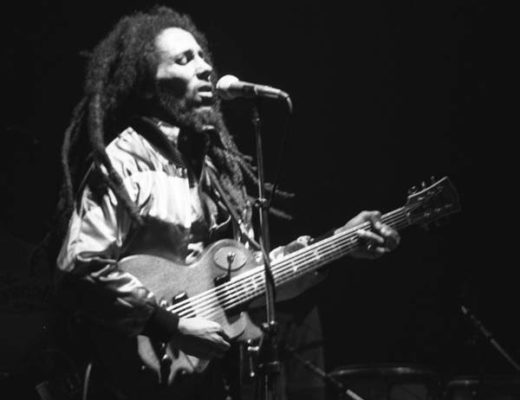
Marley in concert in 1980, Zürich, Switzerland – Wikipedia
Marley’s last concert occurred at the Stanley Theater (now called The Benedum Center For The Performing Arts) in Pittsburgh, Pennsylvania, on 23 September 1980. Just two days earlier he had collapsed during a jogging tour in Central Park and was brought to hospital where he learned that the cancer had spread to his brain. The only known photographs from the show were featured in Kevin Macdonald’s documentary film Marley.
Shortly afterwards, Marley’s health deteriorated as the cancer had spread throughout his body. The rest of the tour was cancelled and Marley sought treatment at the Bavarian clinic of Josef Issels, where he received an alternative cancer treatment called Issels treatment partly based on avoidance of certain foods, drinks, and other substances. After fighting the cancer without success for eight months Marley boarded a plane for his home in Jamaica.
‘Exodus’ by Bob Marley & the Wailers – Wikipedia
While Marley was flying home from Germany to Jamaica, his vital functions worsened. After landing in Miami, Florida, he was taken to the hospital for immediate medical attention. Marley died on 11 May 1981 at Cedars of Lebanon Hospital in Miami (now University of Miami Hospital), aged 36. The spread of melanoma to his lungs and brain caused his death. His final words to his son Ziggy were ‘Money can’t buy life.’
Marley received a state funeral in Jamaica on 21 May 1981, which combined elements of Ethiopian Orthodoxy and Rastafari tradition. He was buried in a chapel near his birthplace with his guitar.
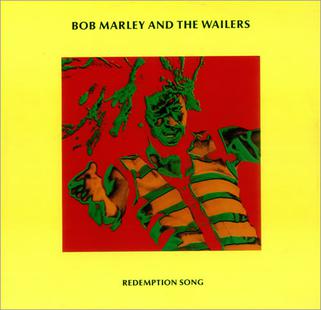
‘Redemption Song’ by Bob Marley & the Wailers’ – Wikipedia
On 21 May 1981, Jamaican Prime Minister Edward Seaga delivered the final funeral eulogy to Marley, declaring:
His voice was an omnipresent cry in our electronic world. His sharp features, majestic looks, and prancing style a vivid etching on the landscape of our minds. Bob Marley was never seen. He was an experience which left an indelible imprint with each encounter. Such a man cannot be erased from the mind. He is part of the collective consciousness of the nation.