September 29: On This Day in World History … briefly
The STS-26 mission launched from Kennedy Space Center, Florida, on 29 September 1988, and landed four days later on 3 October.
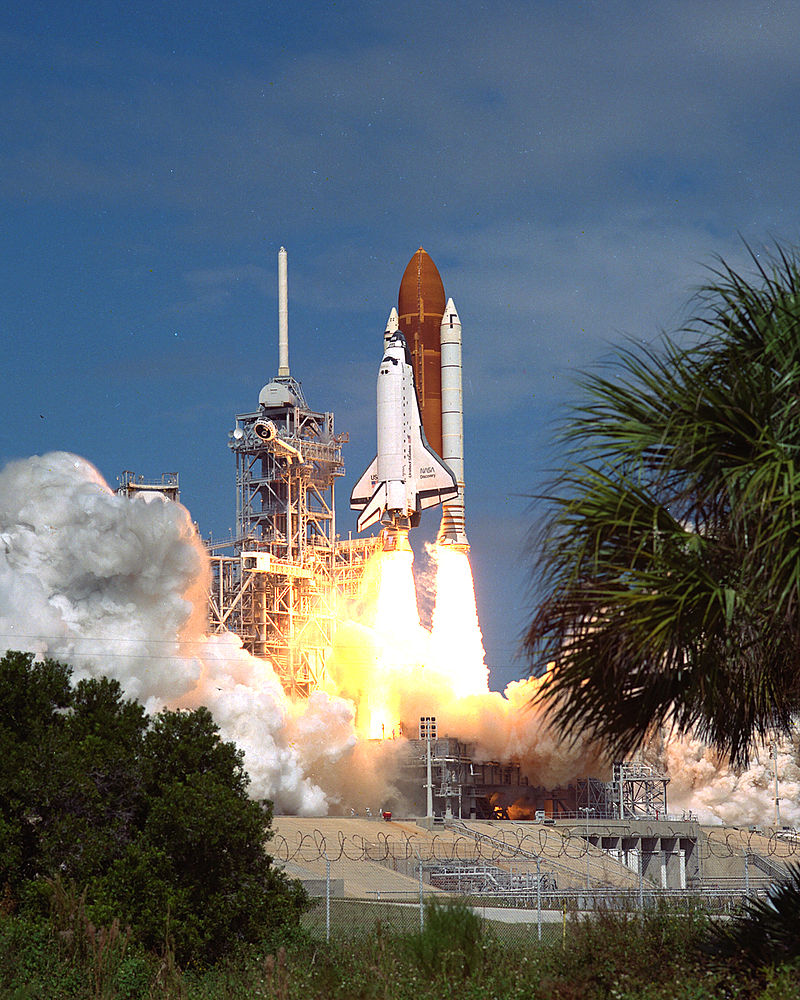
1998: NASA launches STS-26, the return to flight mission, after Space Shuttle Challenger disaster
STS-26 was the 26th NASA Space Shuttle mission and the seventh flight of the orbiter Discovery. STS-26 was declared the ‘Return to Flight’ mission, being the first mission after the Space Shuttle Challenger disaster of 28 January 1986. It was the first mission since STS-9 to use the original STS numbering system, the first to have all its crew members wear pressure suits for launch and landing since STS-4, and the first mission with bailout capacity since STS-4. STS-26 was also the first all-veteran crew mission since Apollo 11, with all of its crew members having flown at least one prior mission.

| Position | Astronaut |
| Commander | Frederick H Hauck Third and last spaceflight |
| Pilot | Richard O Covey Second spaceflight |
| Mission Specialist 1 | John M Lounge Second spaceflight |
| Mission Specialist 2 |
David C Hilmers |
| Mission Specialist 3 | George D Nelson Third and last spaceflight |
The crew roster for STS-26 was based on the original crew assignment for STS-61-F, which would have launched the Ulysses probe from Challenger in 1986. Ulysses was eventually launched on STS-41. Hauck, Lounge and Hilmers were all assigned to that flight, with Roy D Bridges Jr as pilot. Bridges never flew again after the Challenger disaster, but would eventually become the Director of Langley Research Center. Covey was the CAPCOM operator during the STS-51-L launch who uttered the words, ‘Challenger, go at throttle up’, shortly after which the orbiter disintegrated. He also would have been the CAPCOM operator for the cancelled STS-61-F mission during launch and landing.
Damage to thermal protection
Discovery suffered severe damage to its thermal protection tiles in the underwing area. Post-flight analysis showed that the impact of a 12-inch long piece of cork insulation during ascent was the culprit. The origin of the debris was the forward field joint on the right-hand SRB. The damage was such that, during re-entry, the thermal protection tile eroded almost completely.
Most notable historic snippets or facts extracted from the book ‘On This Day’ first published in 1992 by Octopus Publishing Group Ltd, London, as well as additional supplementary information extracted from Wikipedia.
HAVE YOUR SAY
Like our Facebook page, follow us on Twitter and Instagram
For news straight to your phone, add us on BBM 58F3D7A7 or WhatsApp 082 421 6033