November 7: On This Day in World History … briefly
The first day of the Great Lakes Storm of 1913, a massive blizzard that ultimately killed 250 and caused over $5 million (about $118 098 000 in 2013 dollars) damage. Winds reach hurricane force on November 7.
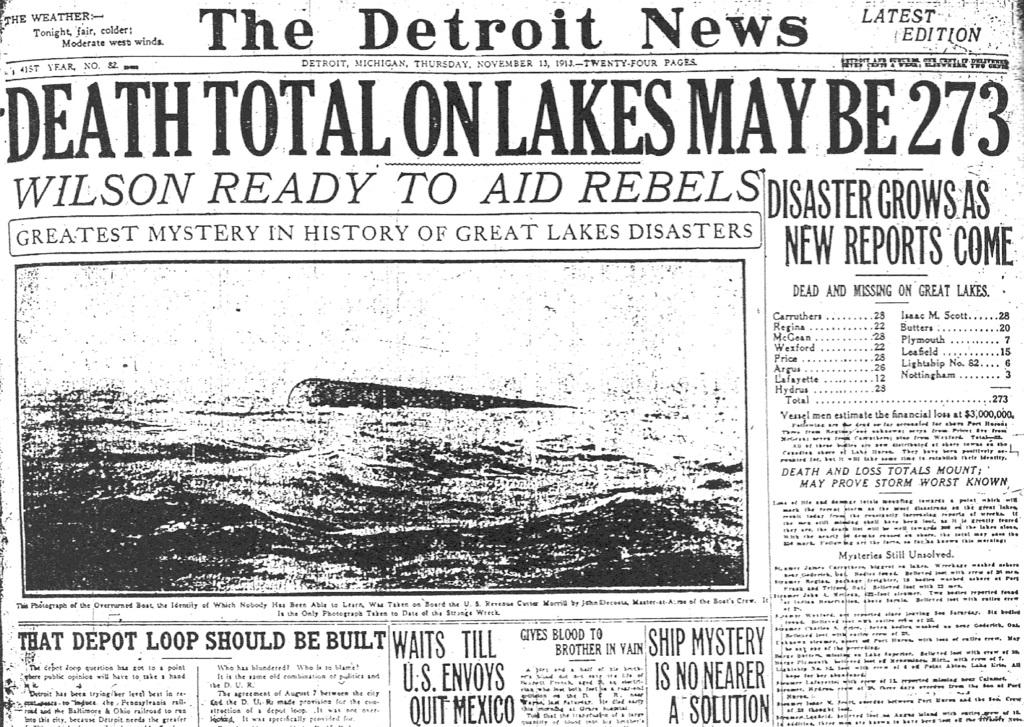
1913: Great Lakes Storm hits
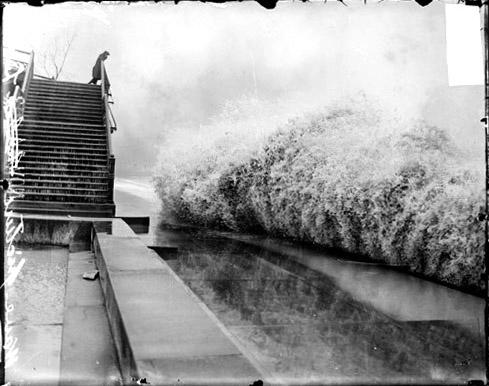
A wave breaking on the shore of Lake Michigan in Chicago while a man watches from a bridge – WikipediaThe Great Lakes Storm of 1913, historically referred to as the ‘Big Blow’, the ‘Freshwater Fury’ or the ‘White Hurricane’ was a blizzard with hurricane-force winds that devastated the Great Lakes Basin in the Midwestern United States and the province of Ontario in Canada from November 7 through November 10, 1913.
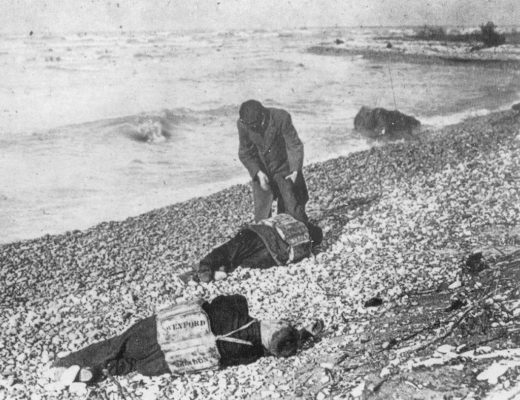
The storm was most powerful on November 9, battering and overturning ships on four of the five Great Lakes, particularly Lake Huron. Deceptive lulls in the storm and the slow pace of weather reports contributed to the storm’s destructiveness.
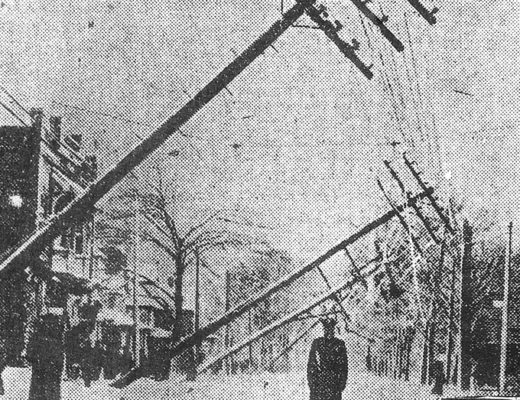
The deadliest and most destructive natural disaster to hit the lakes in recorded history, the Great Lakes Storm killed more than 250 people, destroyed 19 ships, and stranded 19 others. The financial loss in vessels alone was nearly US $5 million (or about $123 805 000 in today’s dollars). This included about $1 million at current value in lost cargo totalling about 68 300 tons, such as coal, iron ore, and grain.
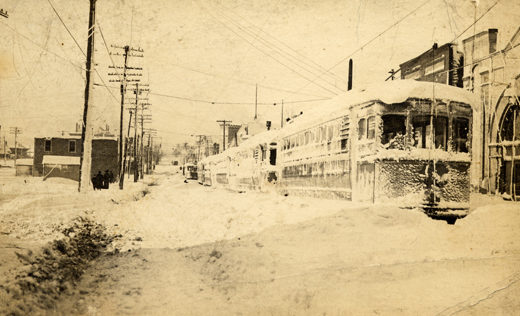
The storm, an extra-tropical cyclone, originated as the convergence of two major storm fronts, fueled by the lakes’ relatively warm waters – a seasonal process called a ‘November gale’. It produced 90 mph (145 km/h) wind gusts, waves over 35 feet (11 m) high, and whiteout snow-squalls.
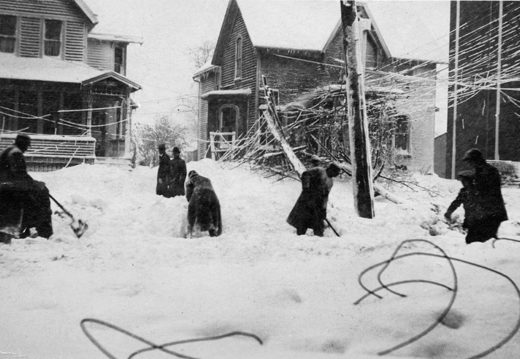
Analysis of the storm and its impact on humans, engineering structures, and the landscape led to better forecasting and faster responses to storm warnings, stronger construction (especially of marine vessels), and improved preparedness.
Most notable historic snippets or facts extracted from the book ‘On This Day’ first published in 1992 by Octopus Publishing Group Ltd, London, as well as additional supplementary information extracted from Wikipedia.
HAVE YOUR SAY
Like our Facebook page, follow us on Twitter and Instagram
For news straight to your phone, add us on WhatsApp 082 421 6033