January 4: On This Day in World History … briefly
Three of his daughters and son, Cornelius Jeremiah Vanderbilt, contested the will on the grounds that their father was of unsound mind and under the influence of his son Billy - and of spiritualists whom he consulted on a regular basis.

1877: Rail tycoon’s $100 million
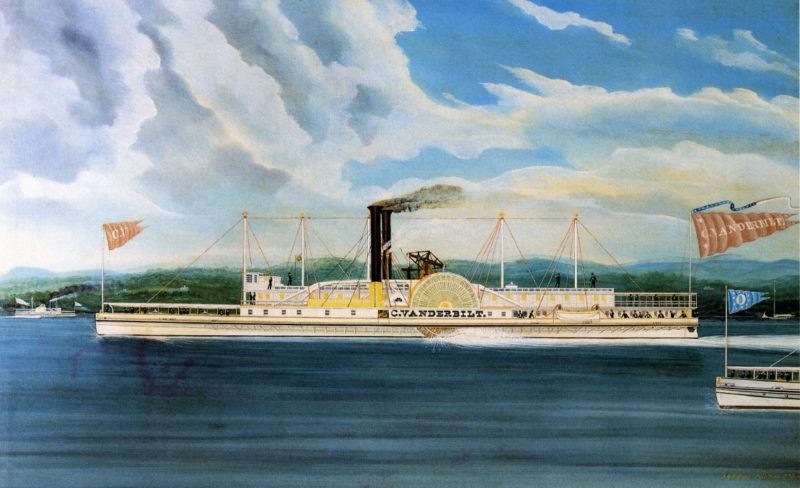
Cornelius Vanderbilt dies in New York aged 83, leaving a fortune estimated at $100 million. Vanderbilt’s life was a classic American enterprise story: When he was 16, he started a ferry service to Staten Island and by the time he was 30, he virtually controlled the Hudson River shipping business – even expanding by undercutting his competitors.
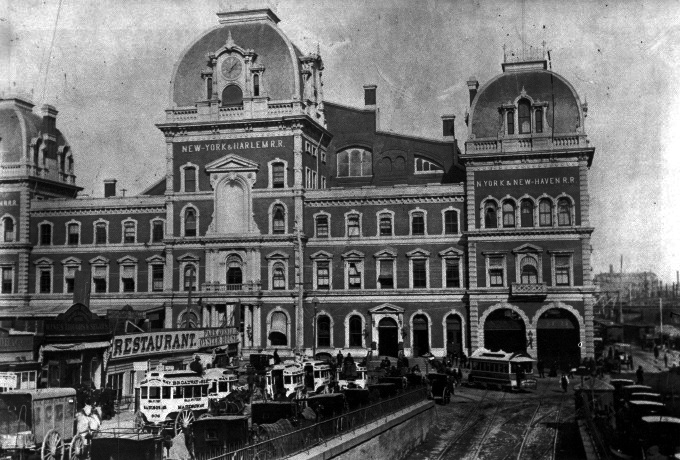
During the gold rush, he opened a fast and cheap steamship service linking New York and California, crossing the isthmus in Nicaragua. In the 1860s, Vanderbilt started buying small railroad holdings and his New York Central Railroad eventually controlled the vital New York to Chicago route.
Cornelius Vanderbilt died on January 4, 1877, at his residence, No. 10 Washington Place, after having been confined to his rooms for about eight months. The immediate cause of his death was exhaustion, brought on by long suffering from a complication of chronic disorders.
At the time of his death, Commodore Vanderbilt had a fortune estimated at $100 million. In his will, he left 95% of his $100 million estate to his son William (Billy) and to William’s four sons ($5 million to Cornelius, and $2 million apiece to William, Frederick, and George). The Commodore said that he believed William was the only heir capable of maintaining the business empire.
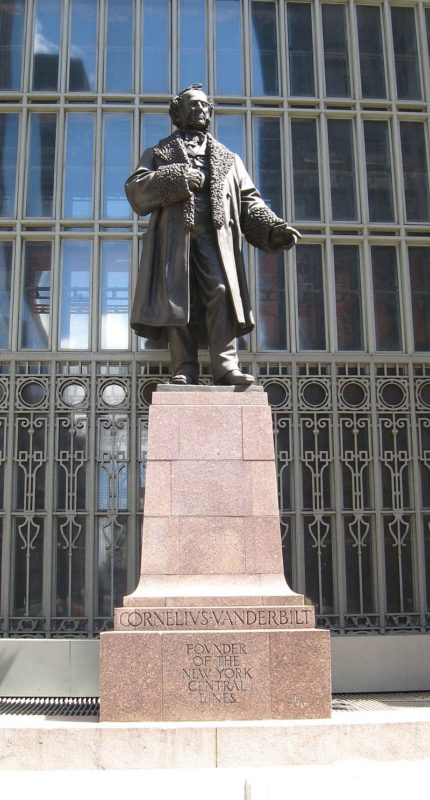
Vanderbilt willed amounts ranging from $250,000 to $500 000 to each of his daughters. His wife received $500 000, their New York City home, and 2 000 shares of common stock in the New York Central Railroad.
To his younger surviving son, Cornelius Jeremiah Vanderbilt, whom he regarded as a wastrel, he left the income from a $200 000 trust fund. The Commodore had lived in relative modesty considering his nearly unlimited means, splurging only on racehorses.
His descendants were the ones who built the Vanderbilt houses that characterise America’s Gilded Age. (Although his daughters and Cornelius received bequests much smaller than those of their brothers, these made them very wealthy by the standards of 1877 and were not subject to inheritance tax.)
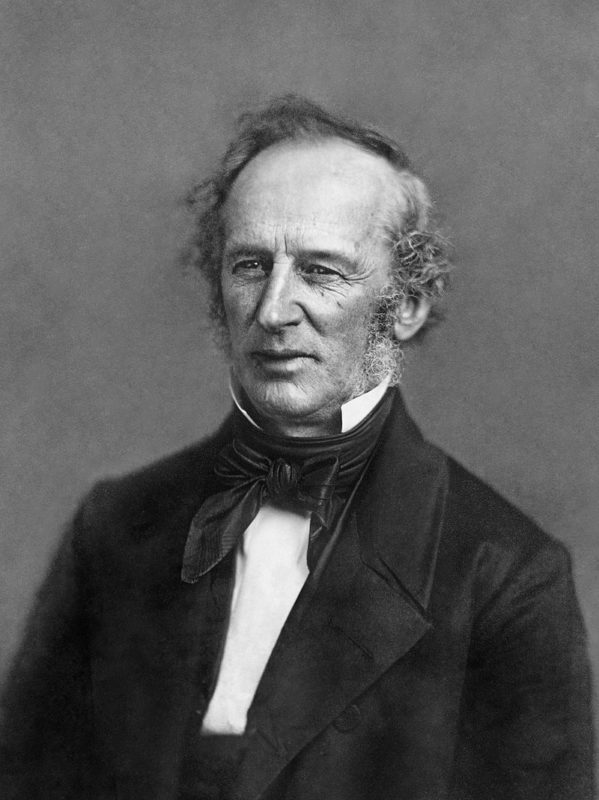
According to The Wealthy 100 by Michael Klepper and Robert Gunther, Vanderbilt would be worth $143 billion in 2007 United States dollars if his total wealth as a share of the nation’s gross domestic product (GDP) in 1877 (the year of his death) were taken and applied in that same proportion in 2007. This would make him the second-wealthiest person in United States history, after Standard Oil co-founder John Davison Rockefeller (1839–1937). Another calculation, from 1998, puts him in third place, after Andrew Carnegie.
In 1999, Cornelius Vanderbilt was inducted into the North America Railway Hall of Fame, recognizing his significant contributions to the railroad industry. He was inducted in the ‘Railway Workers & Builders: North America’ category.
Most notable historic snippets or facts extracted from the book ‘On This Day’ first published in 1992 by Octopus Publishing Group Ltd, London, as well as additional supplementary information extracted from Wikipedia.
HAVE YOUR SAY
Like our Facebook page, follow us on Twitter and Instagram
For news straight to your phone, add us on WhatsApp 082 421 6033