January 10: On This Day in World History … briefly
The Cape of Good Hope is declared a British colony after a British fleet defeated Dutch colonists at the Battle of Blaauwberg and the flag is hoisted at the Fort.
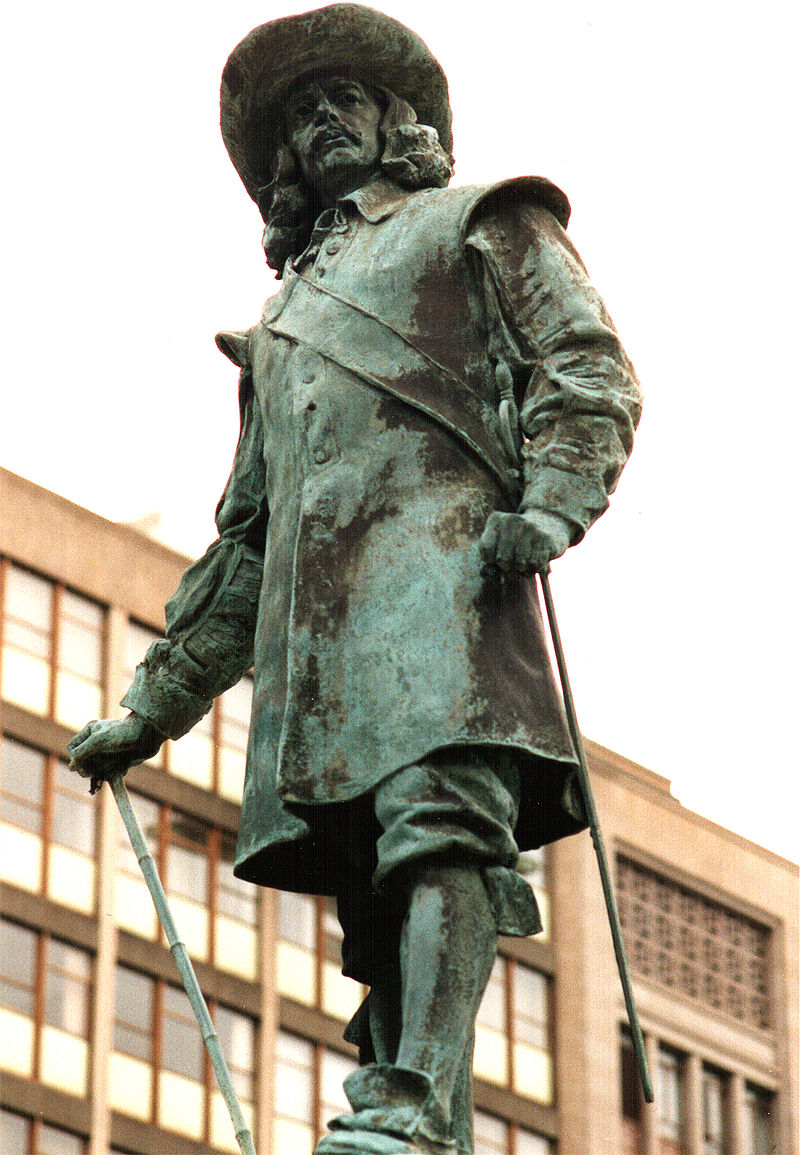
1806: British flag flies over strategic Cape of Good Hope
The Battle of Blaauwberg, also known as the Battle of Cape Town, fought near Cape Town in January 1806, was a small but significant military engagement. Peace was made under the Treaty Tree in Woodstock. It established British rule in South Africa, which was to have many ramifications for the region during the nineteenth and twentieth centuries.
Control of the strategic Cape of Good Hope was a key factor in the European war, as it commanded the route between European powers and their rich Eastern dominions.
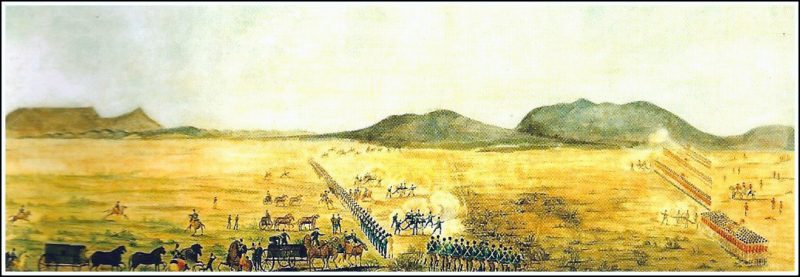
The battle was an incident in Europe’s Napoleonic Wars. At that time, the Cape Colony belonged to the Batavian Republic, a French vassal. Because the sea route around the Cape was important to the British, they decided to seize the colony in order to prevent it—and the sea route—from also coming under French control. A British fleet was dispatched to the Cape in July 1805, to forestall French troopships which Napoleon had sent to reinforce the Cape garrison.
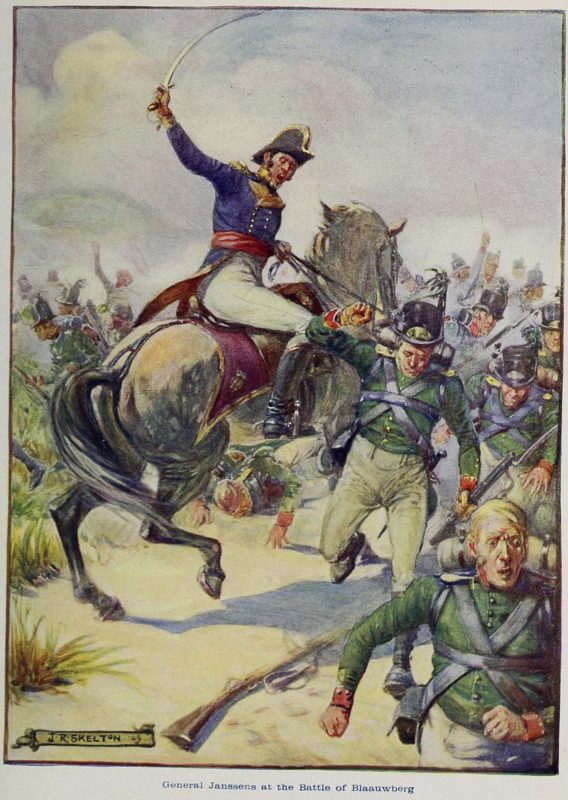
The colony was governed by Lieutenant General Jan Willem Janssens, who was also commander-in-chief of its military forces. The forces were small and of poor quality, and included foreign units hired by the Batavian government. They were backed up by local militia units. The terms of the capitulation were reasonably favourable to the Batavian soldiers and citizens of the Cape. Janssens and the Batavian officials and troops were sent back to the Netherlands in March.
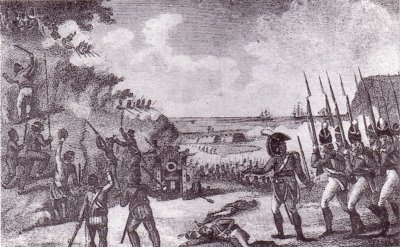
The British forces occupied the Cape until 13 August 1814, when the Netherlands ceded the colony to Britain as a permanent possession. It remained a British colony until it was incorporated into the Union of South Africa on 31 May 1910. British forces reached the outskirts of Cape Town on 9 January. To spare the town and its civilian population from attack, the commandant of Cape Town, Lieutenant-Colonel Hieronymus Casimir von Prophalow, sent out a white flag. He handed over the outer fortifications to Lt Gen Sir David Baird, and terms of surrender were negotiated later in the day.
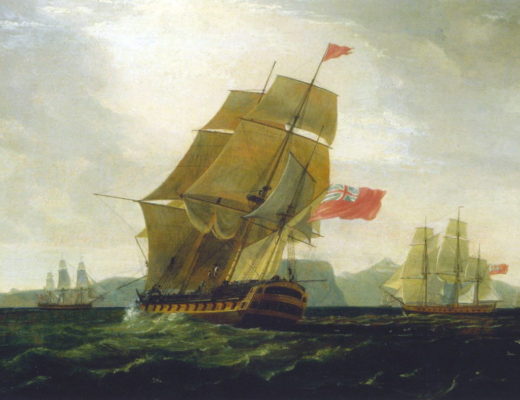
The formal Articles of Capitulation for the town and the Cape Peninsula were signed the following afternoon, January 10, at a cottage in Papendorp (now the suburb of Woodstock) which became known as ‘Treaty Cottage’. Although the cottage has long since been demolished, Treaty Street still commemorates the event. The tree under which they signed remains to this day. A bi-centennial commemoration was held in January 2006.
Most notable historic snippets or facts extracted from the book ‘On This Day’ first published in 1992 by Octopus Publishing Group Ltd, London, as well as additional supplementary information extracted from Wikipedia.
HAVE YOUR SAY
Like our Facebook page, follow us on Twitter and Instagram
For news straight to your phone, add us on WhatsApp 082 421 6033