January 15: On This Day in World History … briefly
Short's unsolved murder and the details surrounding it have had a lasting cultural intrigue, generating various theories and public speculation.
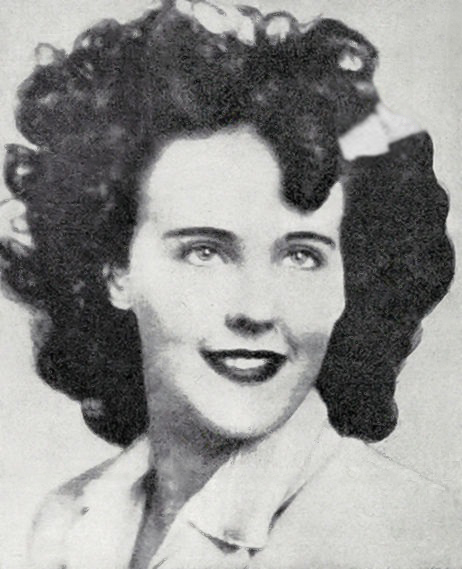
1947: Black Dahlia murder: Dismembered corpse found in Los Angeles
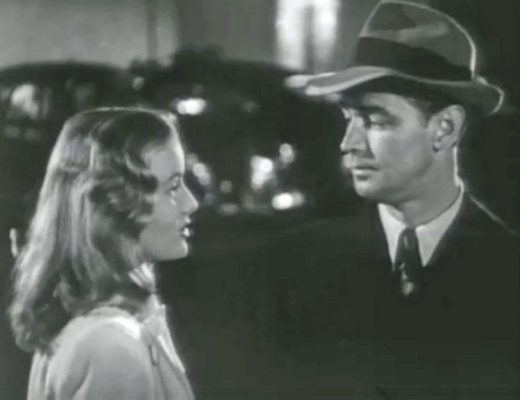
Elizabeth Short (July 29, 1924 – January 14 or 15, 1947) known posthumously as the ‘Black Dahlia‘, was an American woman who was found murdered in the Leimert Park neighborhood of Los Angeles, California. Her case became highly publicised because of the graphic nature of the crime, which included her corpse having been mutilated and bisected at the waist. A native of Boston, Short spent her early life in Massachusetts and Florida before relocating to California where her father lived. It is commonly held that Short was an aspiring actress, though she had no known acting credits or jobs in Los Angeles. She would eventually acquire the nickname ‘Black Dahlia’ posthumously (after the owner of a drugstore in Long Beach, California told reporters that male customers called her that) as newspapers of the period often nicknamed particularly lurid crimes. The term may have originated from a film noir murder mystery ‘The Blue Dahlia’ released in April 1946. After the discovery of her body on January 15, 1947, the Los Angeles Police Department began an extensive investigation that produced over 150 suspects, but yielded no arrests.
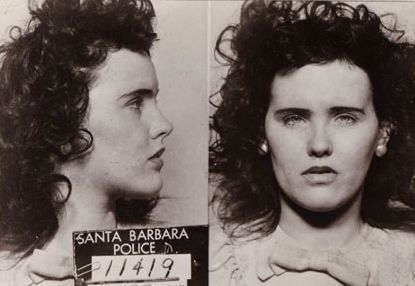
On the morning of January 15, 1947, Short’s naked body was found severed in two pieces on a vacant lot on the west side of South Norton Avenue, midway between Coliseum Street and West 39th Street in Leimert Park, Los Angeles. At the time, the neighbourhood was largely undeveloped. Local resident Betty Bersinger discovered the body at approximately 10am while walking with her three-year-old daughter. Bersinger initially thought she had found a discarded store mannequin. When she realised it was a corpse, she rushed to a nearby house and phoned the police.

Short’s severely mutilated body was completely severed at the waist and drained entirely of blood, leaving its skin a pallid white. Medical examiners determined that she had been dead for around ten hours prior to the discovery, leaving her time of death either sometime during the evening of January 14, or the early morning hours of January 15. The body had obviously been washed by the killer. Short’s face had been slashed from the corners of her mouth to her ears, creating an effect known as the ‘Glasgow smile’. She had several cuts on her thigh and breasts, where entire portions of flesh had been sliced away. The lower half of her body was positioned a foot away from the upper, and her intestines had been tucked neatly beneath her buttocks. The corpse had been ‘posed’, with her hands over her head, her elbows bent at right angles, and her legs spread apart.
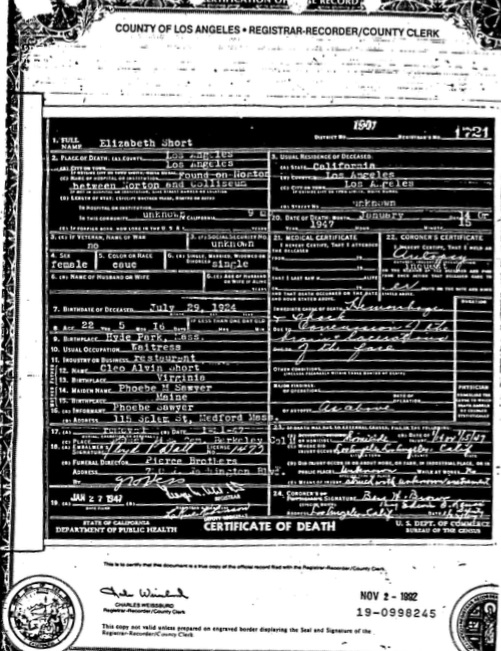
Upon the discovery, a crowd of both passersby and reporters began to gather; Los Angeles Herald-Express reporter Aggie Underwood was among the first to arrive at the scene and took several photos of the corpse and crime scene. Near the body, detectives located a heel print on the ground amid the tire tracks and a cement sack containing watery blood was also found nearby. Her life and death have been the basis of numerous books and films, and her murder is frequently cited as one of the most famous unsolved murders in American history, as well as one of the oldest unsolved cases in Los Angeles County. It has likewise been credited by historians as one of the first major crimes in post-World War II America to capture national attention.
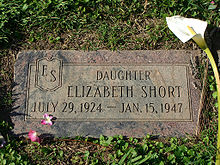
By the spring of 1947, Short’s murder had become a cold case with few new leads. Sergeant Finis Brown, one of the lead detectives on the case, blamed the press for compromising the investigation through reporters’ probing of details and unverified reporting. In September 1949, a grand jury convened to discuss inadequacies in the LAPD’s homicide unit based on their failure to solve numerous murders—especially those of women and children—in the past several years, Short’s being one of them. In the aftermath of the grand jury, further investigation was done on Short’s past, with detectives tracing her movements between Massachusetts, California, and Florida, and also interviewed people who knew her in Texas and New Orleans. However, interviews yielded no useful information in the murder and the case remains unsolved.
Most notable historic snippets or facts extracted from the book ‘On This Day’ first published in 1992 by Octopus Publishing Group Ltd, London, as well as additional supplementary information extracted from Wikipedia.
HAVE YOUR SAY
Like our Facebook page, follow us on Twitter and Instagram
For news straight to your phone, add us on WhatsApp 082 421 6033