January 29: On This Day in World History … briefly
In the first long distance automobile trip, Bertha Benz, supposedly without the knowledge of her husband, on the morning of 5 August 5, 1888, took this vehicle on a 104km (65 miles) trip from Mannheim to Pforzheim to visit her mother, taking her sons Eugen and Richard with her.
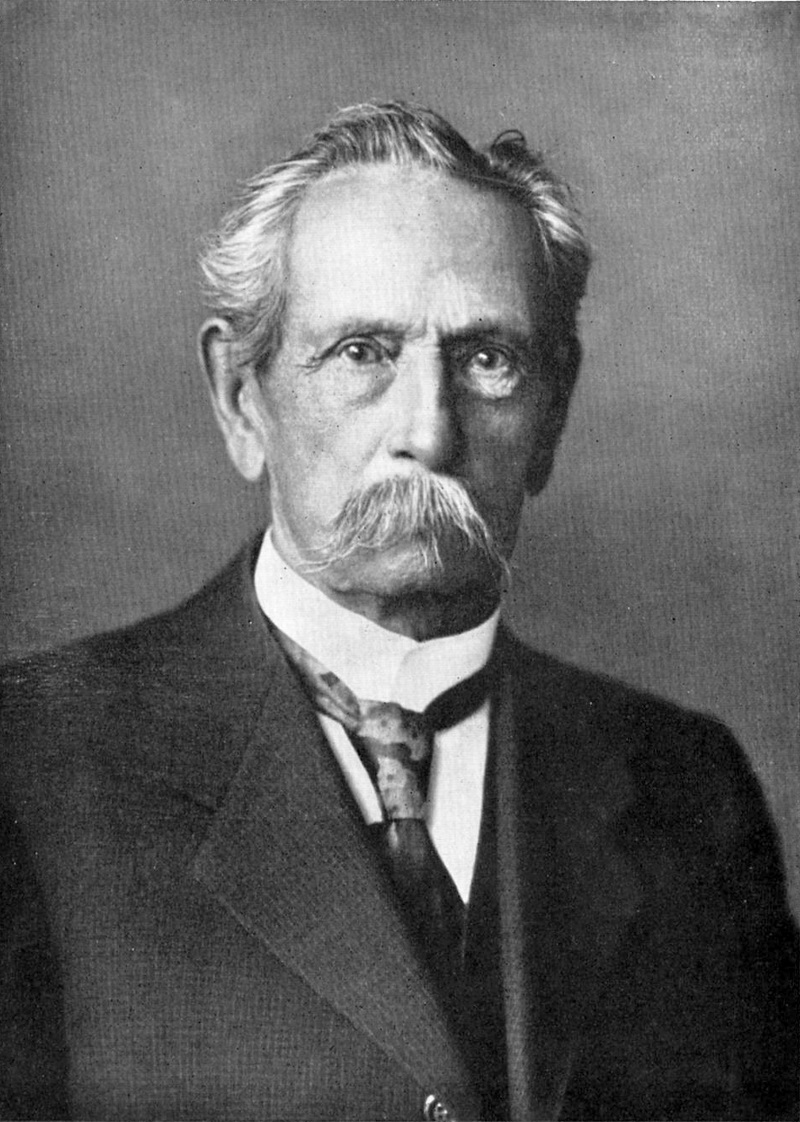
1886: Karl Benz patents first petrol-driven carriage
Karl Benz was born Karl Friedrich Michael Vaillant, on November 25, 1844 to Josephine Vaillant and locomotive driver Johann Georg Benz, whom she married a few months later. According to German law, the child acquired the name ‘Benz’ by legal marriage of his parents Benz and Vaillant. When he was two years old, his father died of pneumonia and his name was changed to Karl Friedrich Benz in remembrance of his father.
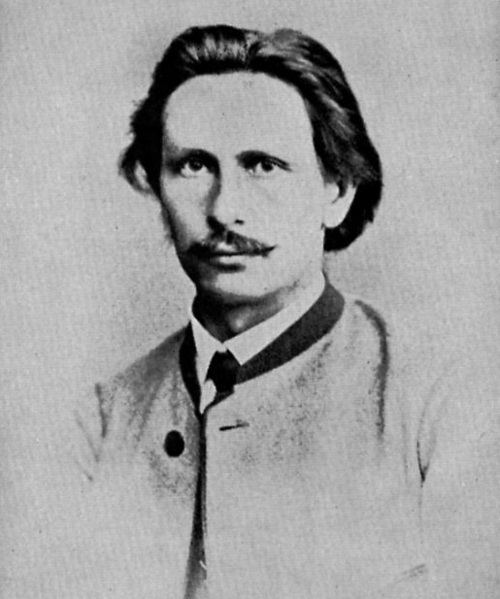
Benz had originally focused his studies on locksmithing, but he eventually followed his father’s steps toward locomotive engineering. At age 15, he passed the entrance exam for mechanical engineering at the University of Karlsruhe, which he subsequently attended. He graduated in 1864 aged 19.
Benz had seven years of professional training in several companies, but did not fit well in any of them. He moved to Mannheim to work as a draftsman and designer in a scales factory. In 1868 he went to Pforzheim to work for a bridge building company Gebrüder Benckiser Eisenwerke und Maschinenfabrik. Finally, he went to Vienna for a short period to work at an iron construction company.
By 1886, German engineers were vying to perfect a horseless carriage driven by petroleum spirit.
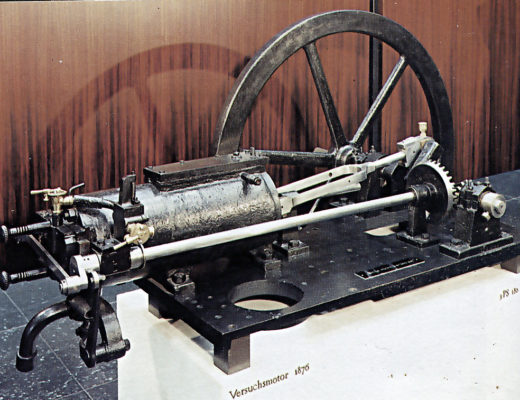
Nikolaus August Otto patented his ‘Silent Otto’ gas engine with four cycles: intake, compression, stroke and exhaust.
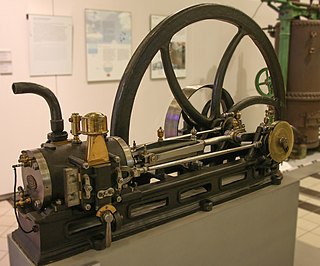
His design was a considerable improvement on Jean Joseph Etienne Lenoir’s noisy two-cycle engine introduced in 1862. But, the new motor needed something to drive and so Karl Benz patented his design for an automobile to be powered by Otto’s engine.
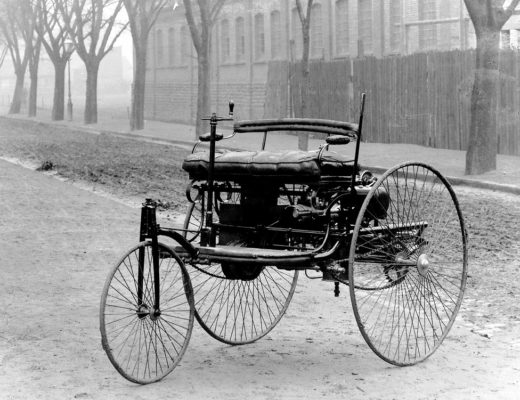
Based on his experience with, and fondness for, bicycles, he used similar technology when he created an automobile. It featured wire wheels (unlike carriages’ wooden ones) with a four-stroke engine of his own design between the rear wheels, with a very advanced coil ignition and evaporative cooling rather than a radiator. Power was transmitted by means of two roller chains to the rear axle. Benz finished his creation in 1885 and named it ‘Benz Patent Motorwagen’.
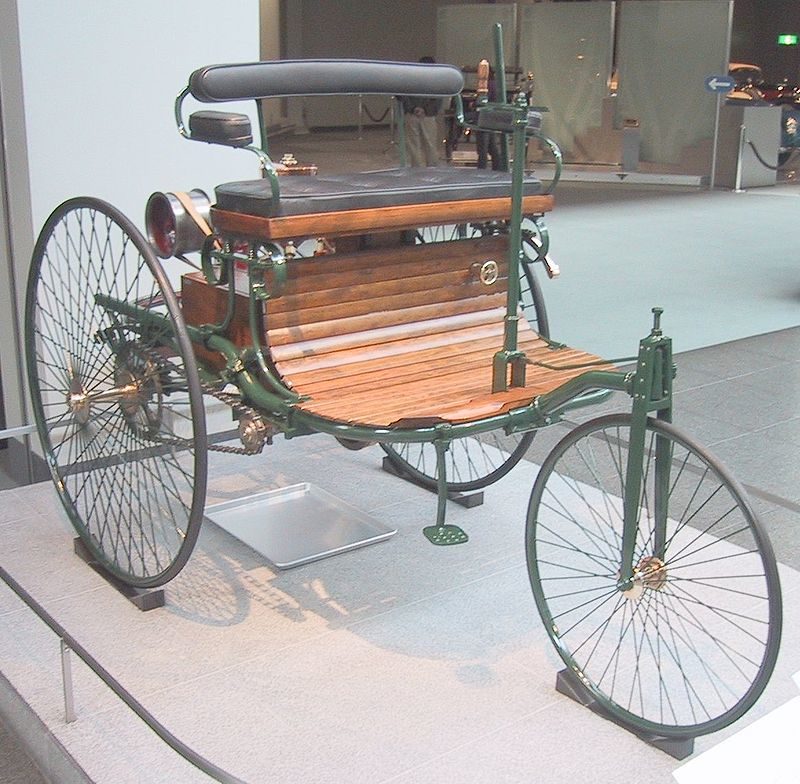
It was the first automobile entirely designed as such to generate its own power – not simply a motorised stage coach or horse carriage, which is why Karl Benz was granted his patent and is regarded as its inventor.
The Motorwagen was patented on January 29, 1886, as DRP-37435: ‘automobile fueled by gas’.
In the meantime, Gottlieb Daimler, a young engineer, was hard at work on a high-speed internal combustion engine.
Most notable historic snippets or facts extracted from the book ‘On This Day’ first published in 1992 by Octopus Publishing Group Ltd, London, as well as additional supplementary information extracted from Wikipedia.
HAVE YOUR SAY
Like our Facebook page, follow us on Twitter and Instagram
For news straight to your phone, add us on WhatsApp 082 421 6033