Serial killers: ‘Son of Sam’ Part II – Death toll mounts
AThe darker side of the human psyche...
Crimes begin
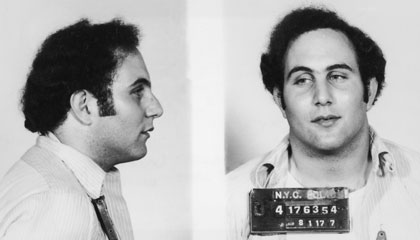
During the mid-1970s, Berkowitz started to commit violent crimes. He bungled the first attempt at murder using a knife, then switched to a handgun and began a lengthy crime spree throughout the New York boroughs of the Bronx, Queens, and Brooklyn. He sought young female victims. He was purportedly most attracted to women with long, dark, wavy hair. All but one of the crime sites involved two victims; he infamously committed some of his attacks while the women sat with boyfriends in parked cars. He exhibited an enduring enjoyment of his activities, often returning to the scenes of his crimes.
Michelle Forman
Berkowitz claimed that he committed his first attack on Christmas Eve, 1975, when he used a hunting knife to stab two women. One alleged victim was never identified by police, but the other was teenager Michelle Forman, whose injuries were serious enough for her to be hospitalised. Berkowitz was not suspected of these crimes, and soon afterward he relocated to an apartment in Yonkers, New York, just north of the New York City border.
Donna Lauria and Jody Valenti
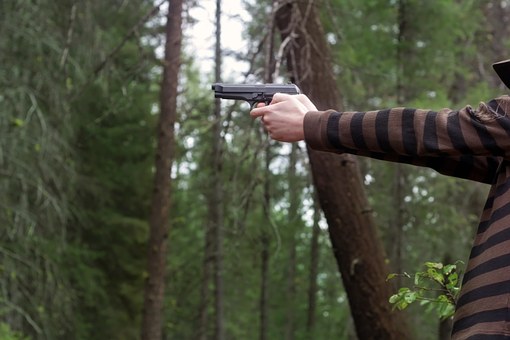
The first shooting attributed to the Son of Sam occurred in the Pelham Bay area of the Bronx. At about 1:10 a.m. on July 29, 1976, Donna Lauria, 18, and her friend Jody Valenti, 19, were sitting in Valenti’s Oldsmobile, discussing their evening at Peachtree’s, a New Rochelle discotheque. Lauria opened the car door to leave and noticed a man quickly approaching the car. Startled and angered by the man’s sudden appearance, she said, “Now what is this …” The man produced a pistol from the paper bag that he carried and crouched. He braced one elbow on his knee, aimed his weapon with both hands and fired. Lauria was struck by one bullet that killed her instantly. Valenti was shot in her thigh and a third bullet missed both women. The shooter turned and walked away quickly.
Valenti survived her injuries and said that she did not recognise the killer. She described him as a white male in his thirties with a fair complexion, about 5ft 9” (1.75m) tall and weighing about 160lb (73kg). His hair was short, dark, and curly in a ‘mod style’. This description was repeated by Lauria’s father, who claimed to have seen a similar man sitting in a yellow compact car parked nearby. Neighbours gave corroborating reports to police that an unfamiliar yellow compact car had been cruising the area for hours before the shooting.
Carl Denaro and Rosemary Keenan
On October 23, 1976, a similar shooting occurred in a secluded residential area of Flushing, Queens, next to Bowne Park. Carl Denaro (20) and Rosemary Keenan (18) were sitting in Keenan’s parked car when the windows suddenly shattered. “I felt the car explode.” Denaro said later. Keenan quickly started the car and sped away for help. The panicked couple did not realise that someone had been shooting at them, even though Denaro was bleeding from a bullet wound to his head. Keenan had only superficial injuries from the broken glass, but Denaro eventually needed a metal plate to replace a portion of his skull. Neither victim saw the attacker.
Police determined that the bullets embedded in Keenan’s car were .44 calibre, but they were so damaged and deformed that they thought it unlikely that they could ever be linked to a particular weapon.

Denaro had shoulder-length hair, and police later speculated that the shooter had mistaken him for a girl. Keenan’s father was a 20-year veteran police detective of the NYPD, causing an intense investigation. As with the Lauria–Valenti shooting, however, there seemed not to be any motive for the shooting, and police made little progress with the case. Many details of the Denaro–Keenan shooting were very similar to the Lauria–Valenti case, but police did not initially associate them, partly because the shootings occurred in different boroughs and were investigated by different local police precincts.
Donna DeMasi and Joanne Lomino
Donna DeMasi, 16, and Joanne Lomino, 18, walked home from a movie soon after midnight on November 27, 1976. They were chatting on the porch of Lomino’s home in Bellerose, Queens, when a man dressed in military fatigues who seemed to be in his early 20s approached them and began to ask directions.
In a high-pitched voice he said, “Can you tell me how to get …” but then quickly produced a revolver. He shot each of the victims once and, as they fell to the ground injured, he fired several more times, striking the apartment building before running away. A neighbour heard the gunshots, rushed out of the apartment building, and saw a blond man rush by gripping a pistol in his left hand. DeMasi had been shot in the neck, but the wound was not life-threatening. Lomino was hit in the back and hospitalised in serious condition; she was ultimately rendered a paraplegic.
Christine Freund and John Diel
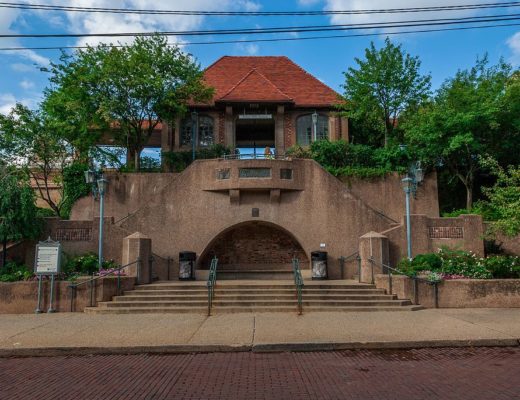
During the early morning of January 30, 1977, Christine Freund (26), and her fiancé John Diel, (30), were sitting in Diel’s car near the Forest Hills LIRR station in Queens, preparing to drive to a dance hall after having seen the movie Rocky. Three gunshots penetrated the car at about 12:40 a.m. In a panic, Diel drove away for help. He suffered minor superficial injuries, but Freund was shot twice and died several hours later at the hospital. Neither victim had seen their attacker(s).
Police made the first public acknowledgment that the Freund–Diel shooting was similar to earlier incidents, and that the crimes might be associated. All the victims had been struck with .44 calibre bullets, and the shootings seemed to target young women with long, dark hair. NYPD sergeant Richard Conlon stated that police were ‘leaning towards a connection in all these cases’. Composite sketches were released of the black-haired Lauria–Valenti shooter and the blond Lomino–DeMasi shooter, and Conlon noted that police were looking for multiple ‘suspects’, not just one.
Virginia Voskerichian
At about 7.30 p.m. on March 8, 1977, Columbia University student Virginia Voskerichian, 19, was walking home from school when she was confronted by an armed man. She lived about a block from where Christine Freund was shot. In a desperate move to defend herself, Voskerichian lifted her textbooks between herself and her killer, but the makeshift shield was penetrated, the bullet striking her head and killing her.
Moments after the shooting, a neighbourhood resident who had heard the gunshots was rounding the corner onto Voskerichian’s street. He nearly collided with a person whom he described as a short, husky boy, 16 to 18 years old and clean-shaven, wearing a sweater and watch cap, who was sprinting away from the crime scene. The neighbour said that the youth pulled the cap over his face and said, “Oh, Jesus!” as he sprinted by. Other neighbours claimed to have seen the ‘teenager’, as well as another person matching Berkowitz’s description, loitering separately in the area for about an hour before the shooting. During the following days, the media repeated police claims that this ‘chubby teenager’ was the suspect. There were no direct witnesses to the Voskerichian murder.

Press and publicity
In a March 10, 1977, press conference, NYPD officials and New York City Mayor Abraham Beame declared that the same .44 Bulldog revolver had fired the shots that killed Lauria and Voskerichian. Official documents were later revealed, however, saying that police strongly suspected that the same .44 Bulldog had been used in the shootings, but that the evidence was actually inconclusive.
The crimes were discussed by the local media virtually every day. Circulation increased dramatically for the New York Post and Daily News, newspapers with graphic crime reporting and commentary. Foreign media featured many of the reports as well, including front page articles of newspapers such as the Vatican’s L’Osservatore Romano, the Hebrew newspaper Maariv, and the Soviet Izvestia.
Don’t miss ‘Son of Sam’ Part III: Crimes continue
Sourced from Wikipedia
HAVE YOUR SAY
Like our Facebook page, follow us on Twitter and Instagram