Serial killers: Son of Sam Part IV – Reign of terror ends
The darker side of the human psyche ...
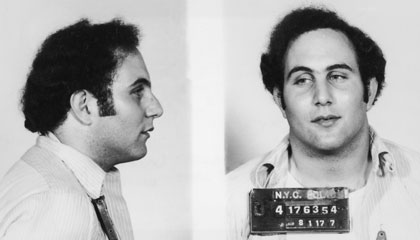
Suspicion and capture
Arrest in Yonkers
Local resident Cacilia Davis was walking her dog at the scene of the Moskowitz and Violante shooting when she saw patrol officer Michael Cataneo ticketing a car that was parked near a fire hydrant. Moments after the traffic police had left, a young man walked past her from the area of the car, and he seemed to study her with some interest. Davis felt concerned because he was wielding in his hand some kind of ‘dark object’. She ran to her home only to hear shots fired behind her in the street. Davis remained silent about this experience for four days until she finally contacted police, who closely checked every car that had been ticketed in the area that night.
Berkowitz’s 1970 four-door yellow Ford Galaxie was among the cars that they investigated. On August 9, 1977, NYPD detective James Justis telephoned Yonkers police to ask them to schedule an interview with Berkowitz. The Yonkers police dispatcher who first took Justis’ call was Wheat Carr, the daughter of Sam Carr and sister of Berkowitz’s alleged cult confederates John and Michael Carr.
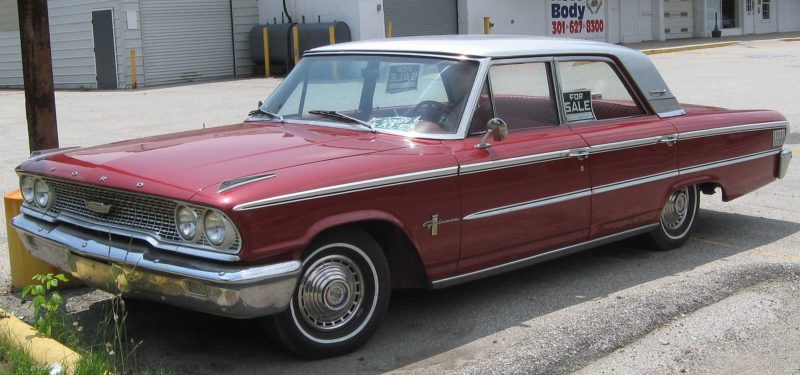
Justis asked the Yonkers police for some help tracking down Berkowitz. According to Mike Novotny—a sergeant at the Yonkers Police Department—the Yonkers police had their own suspicions about Berkowitz in connection with other strange crimes in Yonkers, crimes that they saw referred to in one of the Son of Sam letters. To the shock of the NYPD, they told the New York City detective that Berkowitz might just be the Son of Sam.
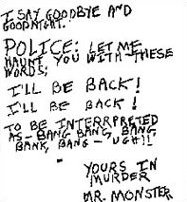
The next day, August 10, 1977, police investigated Berkowitz’s car that was parked on the street outside his apartment building at 35 Pine Street in Yonkers. They saw a rifle in the back seat, searched the car, and found a duffel bag filled with ammunition, maps of the crime scenes, and a threatening letter addressed to Inspector Timothy Dowd of the Omega Task Force. Police decided to wait for Berkowitz to leave the apartment, rather than risk a violent encounter in the building’s narrow hallway; they also waited to obtain a search warrant for the apartment, worried that their search might be challenged in court.
The initial search of the vehicle was based on the rifle that was visible in the back seat, although possession of such a rifle was legal in New York State and required no special permit. The warrant still had not arrived when Berkowitz exited the apartment building at about 10:00 p.m. and entered his car. Detective John Falotico approached the driver’s side of the car. Falotico pointed his gun close to Berkowitz’s temple, while Detective Sargeant William Gardella pointed his gun from the passenger’s side.
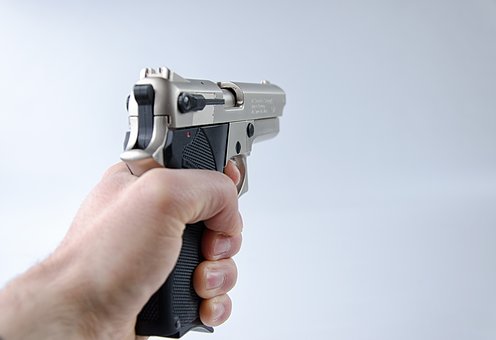
A paper bag containing a .44-calibre Bulldog revolver of the type that was identified in ballistics tests was found next to Berkowitz in the car. As described in ‘Son of Sam’ (1981) by Lawrence D Klausner, Detective Falotico remembered the big, inexplicable smile on the man’s face:
“Now that I’ve got you”, Detective Falotico said to the suspect, “who have I got?”
“You know,” the man said in what the detective remembered was a soft, almost sweet voice.
“No I don’t. You tell me.”
The man turned his head and said, “I’m Sam.”
“You’re Sam? Sam who?”
“Sam. David Berkowitz.”
An alternate version claimed that Berkowitz’ first words were reported to be “Well, you got me. How come it took you such a long time?” Detective John Falotico was officially credited by the New York City Police Department as the arresting officer of the Son of Sam.
Police searched Apartment 7-E and found it in disarray, with satanic graffiti on the walls. They also found diaries that he had kept since he was 21 years old—three stenographer’s notebooks nearly all full wherein Berkowitz meticulously noted hundreds of arsons that he claimed to have set throughout New York City. Some sources allege that this number might be over 1 400. Soon after Berkowitz’s arrest, the address of the building was changed from 35 Pine Street to 42 Pine Street in an attempt to end its notoriety. After the arrest, Berkowitz was briefly held in a Yonkers police station before being transported directly to the 60th Precinct in Coney Island, where the detectives’ task force was located. At about 1am, Mayor Abraham Beame arrived to see the suspect personally.
After a brief and wordless encounter, he announced to the media:
“The people of the City of New York can rest easy because of the fact that the police have captured a man whom they believe to be the Son of Sam.”
Confession
Berkowitz was interrogated for about thirty minutes in the early morning of August 11, 1977. He quickly confessed to the shootings and expressed an interest in pleading guilty. During questioning, Berkowitz claimed that his neighbour’s dog was one of the reasons that he killed, stating that the dog demanded the blood of pretty young girls. He said that the ‘Sam’ mentioned in the first letter was his former neighbour Sam Carr. Berkowitz claimed that Carr’s black labrador retriever Harvey was possessed by an ancient demon and that it issued irresistible commands that Berkowitz must kill people.
A few weeks after his arrest and confession, Berkowitz was permitted to communicate with the press. In a letter to the New York Post dated September 19, 1977, Berkowitz alluded to his original story of demonic possession but closed with a warning that has been interpreted by some investigators as an admission of criminal accomplices: “There are other Sons out there, God help the world.”
Sentencing
Three separate mental health examinations determined that Berkowitz was competent to stand trial. Despite this, defense lawyers advised Berkowitz to enter a plea of not guilty by reason of insanity, but Berkowitz refused. He appeared calm in court on May 8, 1978, as he pleaded guilty to all of the shootings. At his sentencing two weeks later, Berkowitz caused an uproar when he attempted to jump out of a window of the seventh-floor courtroom.
After he was restrained, he repeatedly chanted “Stacy was a whore” and shouted “I’d kill her again. I’d kill them all again.”
The court ordered another psychiatric examination before sentencing could proceed. During the evaluation, Berkowitz drew a sketch of a jailed man surrounded by numerous walls; at the bottom he wrote, ‘I am not well. Not well at all’. Nonetheless, Berkowitz was again found competent to stand trial. On June 12, 1978, Berkowitz was sentenced to 25-years-to-life in prison for each murder, to be served consecutively. He was ordered to serve time in Attica Correctional Facility, an Upstate New York supermax prison. Despite prosecutors’ objections, the terms of Berkowitz’s guilty plea made him eligible for parole in 25 years.

Retraction of claims of possession
Berkowitz declared at a press conference during February 1979 that his previous claims of demonic possession were a hoax. Berkowitz stated in a series of meetings with his special court-appointed psychiatrist David Abrahamsen that he had long contemplated murder to get revenge at a world that he felt had rejected and hurt him.
Prison life
After his arrest, Berkowitz was initially confined to a psychiatric ward in Kings County Hospital where the staff reported that he seemed remarkably untroubled by his new environment. On the day after his sentencing, he was taken first to Sing Sing prison and then to the upstate Clinton Correctional Facility for psychiatric and physical examinations. Two more months were spent at the Central New York Psychiatric Centre in Marcy before his admission to Attica prison. Berkowitz served about a decade in Attica until he was relocated (1990) to Sullivan Correctional Facility in Fallsburg, New York, where he remained for many years until he was transferred to Shawangunk Correctional Facility. Berkowitz described life in Attica as a ‘nightmare’. In 1979, there was an attempt on Berkowitz’s life in which the left side of his neck was slashed from front to back, resulting in a wound that required more than fifty stitches to close. Berkowitz refused to identify his assailant, claiming he was grateful for the attack – it brought a sense of justice or, in Berkowitz’s own words, ‘the punishment I deserve’.
Conversion to born-again Christianity
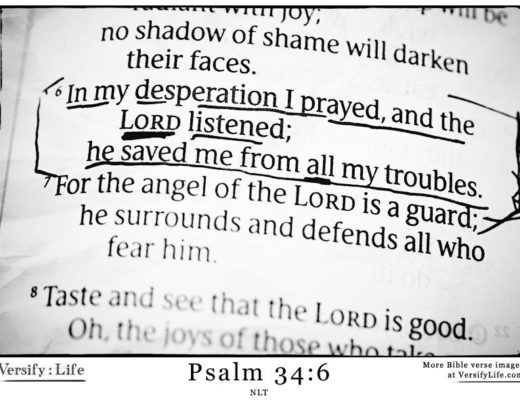
In 1987, Berkowitz became an evangelical Christian in prison. According to his personal testimony, his moment of conversion occurred after reading Psalm 34:6 from a Bible given to him by a fellow inmate. He says he is no longer to be referred to as the ‘Son of Sam’ but the ‘Son of Hope’.
Parole hearings
Before his first parole hearing in 2002, Berkowitz sent a letter to New York Governor George Pataki asking that it be cancelled.
He wrote, “In all honesty, I believe that I deserve to be in prison for the rest of my life. I have, with God’s help, long ago come to terms with my situation and I have accepted my punishment.” Officials at the Sullivan facility duly rejected his case.
Berkowitz is entitled to a parole hearing every two years as mandated by state law, but he has consistently refused to ask for his release, sometimes skipping the hearings altogether. In his 2016 hearing at Shawangunk, Berkowitz stated that while parole was ‘unrealistic’, he felt he had improved himself behind bars, adding: “I feel I am no risk, whatsoever.” His lawyer, Mark Heller, noted that prison staff considered Berkowitz to be a ‘model prisoner’, but commissioners once again denied a parole.
Other activities
Soon after his imprisonment, Berkowitz invited Malachi Martin, an exorcist, to help him compose an autobiography, but the offer was not accepted. During later years, Berkowitz developed his memoirs with assistance from evangelical Christians. His statements were released as an interview video, Son of Hope, during 1998, with a more extensive work released in book form, entitled Son of Hope: The Prison Journals of David Berkowitz (2006). Berkowitz does not receive any royalties or profit from any sales of his works. He has continued to write essays on faith and repentance for Christian websites. His own official website is maintained on his behalf by a church group, since he is not allowed access to a computer. Berkowitz stays involved with prison ministry, and regularly counsels troubled inmates. While in the Sullivan facility, he pursued education and graduated with honours from Sullivan Community College.
In 2002, during the DC sniper attacks, Berkowitz wrote a letter telling the sniper to ‘stop hurting innocent people.’ Berkowitz made his comments in a three-page letter to Rita Cosby, senior Chicago correspondent for Fox News Channel, after Cosby wrote him seeking his comment on the sniper attacks.
During June 2005, Berkowitz sued one of his previous lawyers for the misappropriation of a large number of letters, photographs, and other personal possessions. Hugo Harmatz, a New Jersey attorney, had represented Berkowitz in an earlier legal effort to prevent the National Enquirer from buying one of his letters. Harmatz then self-published his own collection of letters and memorabilia – Dear David (2005) – which he had obtained from Berkowitz during their consultations. Berkowitz stated that he would only drop the lawsuit if the attorney signed over all the money he made to the victims’ families. In October 2006, Berkowitz and Harmatz settled out of court, with Harmatz agreeing to return the disputed items and to donate part of his book profits to the New York State Crime Victims Board.
Satanic cult claims
In 1979, Berkowitz mailed a book about witchcraft to police in North Dakota. He had underlined several passages and written a few marginal notes, including the phrase: ‘Arliss [sic] Perry, Hunted, Stalked and Slain. Followed to Calif. Stanford University.’ The reference was to Arlis Perry, a 19-year-old North Dakota newlywed who had been murdered at Stanford on October 12, 1974. Her death, and the notorious abuse of her corpse in a Christian chapel on campus, was a widely reported case. Berkowitz mentioned the Perry attack in other letters, suggesting that he knew details of it from the perpetrator himself. Local police investigators interviewed him but they ‘now (2004) believe he has nothing of value to offer’. The Arlis Perry case has since been solved.
After his admission to Sullivan prison, Berkowitz began to claim that he had joined a satanic cult in the spring of 1975. In 1993, Berkowitz made these claims known when he announced to the press that he had only killed three of the Son of Sam victims: Donna Lauria, Alexander Esau and Valentina Suriani. In his revised version of the events, Berkowitz said that other shooters were involved and that he fired the gun only in the first attack (Lauria and Valenti). and the sixth (Esau and Suriani). He said that he and several other cult members were involved in every incident by planning the events, providing early surveillance of the victims, and acting as lookouts and drivers at the crime scenes. Berkowitz stated that he could not divulge the names of most of his accomplices without putting his family directly at risk.
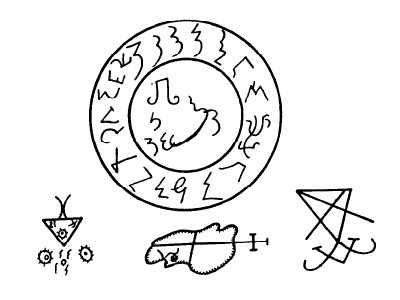
Among Berkowitz’s alleged unnamed associates was a female cult member whom he claims fired the gun at Denaro and Keenan, both of whom survived, Berkowitz said, because the alleged accomplice was unfamiliar with the powerful recoil of a .44 Bulldog. Berkowitz declared that ‘at least five’ cult members were at the scene of the Freund–Diel shooting, but the actual shooter was a prominent cult associate who had been brought in from outside New York with an unspecified motive—a cult member whom he identified only by his nickname, ‘Manson II’. Another unnamed person was the gunman in the Moskowitz–Violante case, a male cult member who had arrived from North Dakota for the occasion, also without explanation.
Berkowitz did name two of the cult members: John and Michael Carr. The two men were sons of the dog-owner Sam Carr and they lived on nearby Warburton Avenue. Both of these other ‘Sons of Sam’ were long dead: John Carr had been killed by a shooting judged a suicide in North Dakota during 1978, and Michael Carr had been in a fatal car accident in 1979. Berkowitz claimed that the actual perpetrator of the DeMasi–Lomino shooting was John Carr, and he added that a Yonkers police officer, also a cult member, was involved in this crime. He claimed that Michael Carr fired the shots at Lupo and Placido.
Case reopened
Journalist John Hockenberry asserts that, even aside from the satanic cult claims, many officials doubted the single-shooter theory, writing, ‘what most don’t know about the Son of Sam case is that from the beginning, not everyone bought the idea that Berkowitz acted alone.’ John Santucci, Queens District Attorney at the time of the killings, and police investigator Mike Novotny both expressed their convictions that Berkowitz had accomplices. NYPD officer Richard Johnson, involved in the original investigations, has opined that unresolved discrepancies in statements from witnesses and surviving victims indicate Berkowitz did not act alone: ‘Why are there three (suspect) cars, five different (suspect) descriptions, different heights, different shapes, different sizes of the perpetrator? Somebody else was there.’
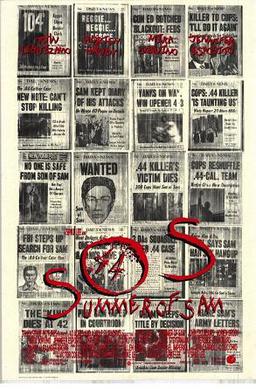
Other contemporaries have voiced their belief in the satanic cult theory including Donna Lauria’s father, and Carl Denaro who stated his opinion that ‘more than one person was involved’ but admitted he could not prove the cult theory. Denaro’s conclusion rests on his criticism of Berkowitz’s statement to police as ‘totally false’. John Diel’s recollection is that he physically bumped into Berkowitz outside the Wine Gallery restaurant as he and Christine Freund departed and walked to his car where the shooting occurred; Berkowitz, in contrast, told police that he passed within a few feet of Diel and Freund shortly before they entered the car. Diel contends he and Freund passed no one on their way to the car and further that the placement of the car parked at the curb would have made it impossible for Berkowitz to have sneaked up on them in the few minutes between their encounter outside the restaurant and the shooting at the car. Diel thus reasons he was shot by someone other than Berkowitz.
Hockenberry’s own report was broadcast by network news and given much exposure by Dateline NBC (2004). In it, he discusses another journalist, Maury Terry, who had begun investigating the Son of Sam shootings before Berkowitz was arrested. Terry published a series of investigative articles in the Gannett newspapers in 1979 which challenged the official explanation of a lone gunman. Vigorously denied by police at the time, Terry’s articles were widely read and discussed; they were later assembled in book form as ‘The Ultimate Evil’ (1987; expanded second edition 1999). Largely impelled by these reports of accomplices and satanic cult activity, the Son of Sam case was reopened by Yonkers police during 1996, but no new charges were filed. Due to a lack of findings, the investigation was eventually suspended but remains open.
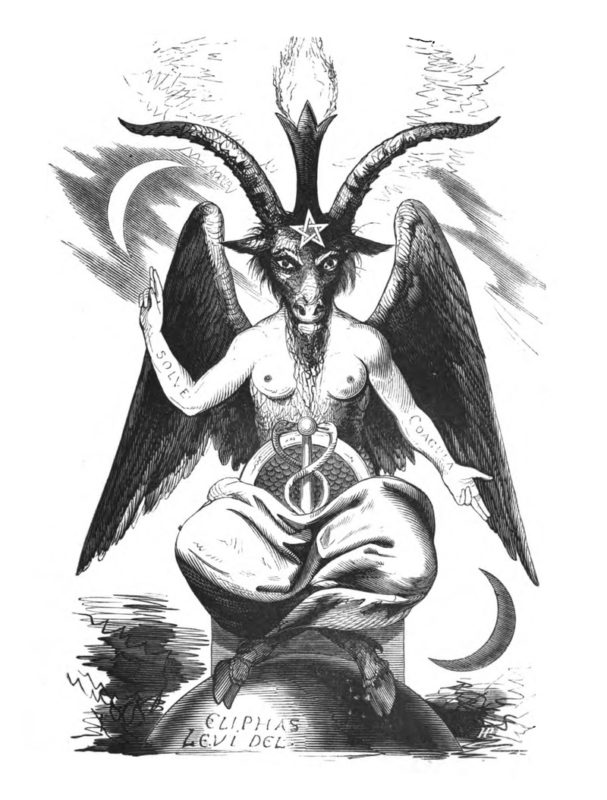
From prison Berkowitz continues to assert and expand upon his claims of demonic possession. He stated in a series of nine videos in 2015 that the ‘voice’ he heard was that of Samhain, a druid devil and the true origin of ‘Son of Sam’. He added that it never was a dog, saying that detail was fabricated by the media.
Skeptics
Berkowitz’s later claims are dismissed by many. Breslin rejected his story of satanic cult accomplices, stating that ‘when they talked to David Berkowitz that night, he recalled everything step by step by step. The guy has 1 000 percent recall and that’s it – He’s the guy and there’s nothing else to look at.’
Skeptics include a former FBI profiler, John E Douglas, who spent hours interviewing Berkowitz. He states that he was convinced Berkowitz acted alone and was an ‘introverted loner, not capable of being involved in group activity’. Dr Harvey Schlossberg, a NYPD psychologist, states in ‘Against The Law’, a documentary about the Son of Sam case, that he believes that the satanic cult claims are nothing but a fantasy concocted by Berkowitz to absolve himself of the crimes. In his book Hunting Humans (2001), Elliott Leyton argued that ‘recent journalistic attempts to abridge—or even deny—Berkowitz’s guilt have lacked all credibility.’
Legacy
Decades after his arrest, the name ‘Son of Sam’ remains widely recognised as that of a notorious serial killer. Many manifestations in popular culture have helped perpetuate this notoriety, while Berkowitz himself continues to express remorse on Christian websites. Neysa Moskowitz, who previously had not hidden her hatred of Berkowitz, wrote him a letter shortly before her own death in 2006, forgiving him for killing her daughter, Stacy.
Sourced from Wikipedia
HAVE YOUR SAY
Like our Facebook page, follow us on Twitter and Instagram