March 18: On This Day in World History … briefly
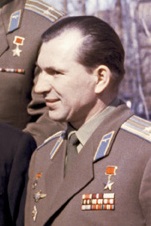
Cosmonaut Alexei Leonov donned a space suit and left the spacecraft while the other cosmonaut of the two-man crew, Pavel Belyayev, remained inside.
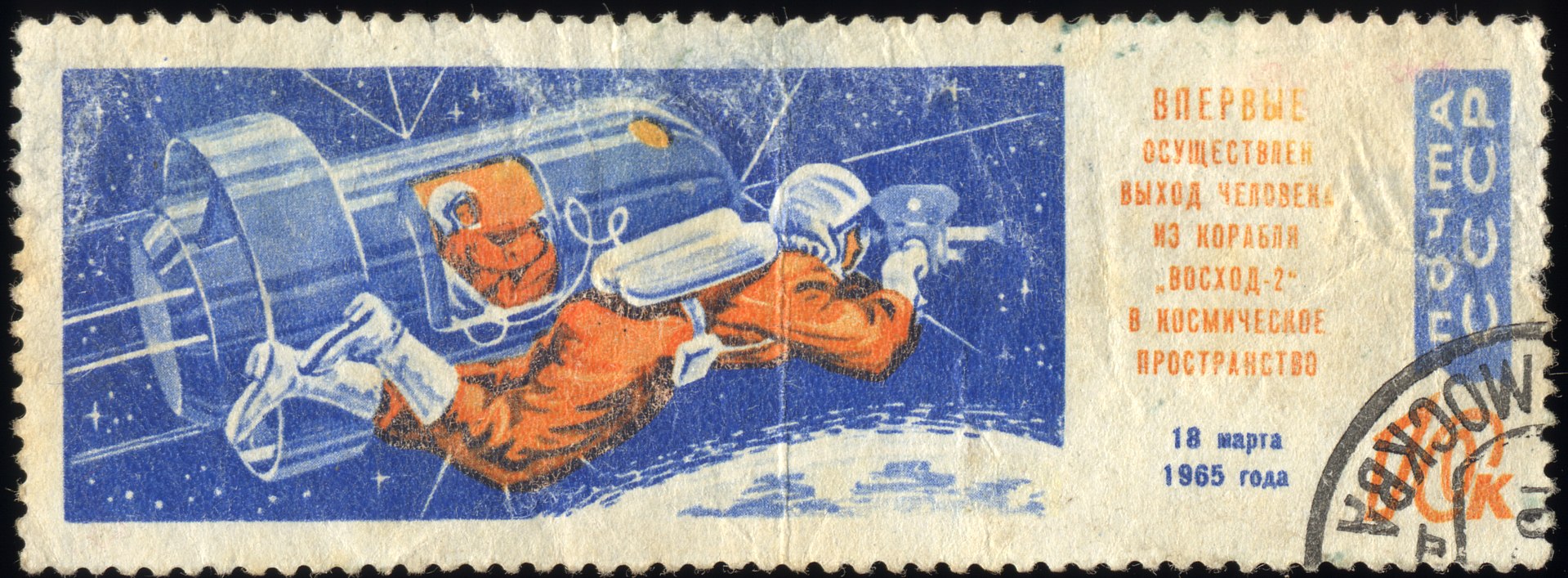
1965: Russian spaceman takes a moonlight stroll
Soviet cosmonaut Eleksei Leonov became the first man to walk in space when he cavorted and somersaulted in orbit hundreds of miles above Earth, secured only by a slender lifeline. As co-pilot of the Soviet Union’s Voskhod II craft alongside fellow astronaut Pavel Belyayev , the-then 31-year old left the aircraft to take the first hand-held film images of the earth during his 12-minute adventure, spinning gracefully above the earth in a bright orange space suit.
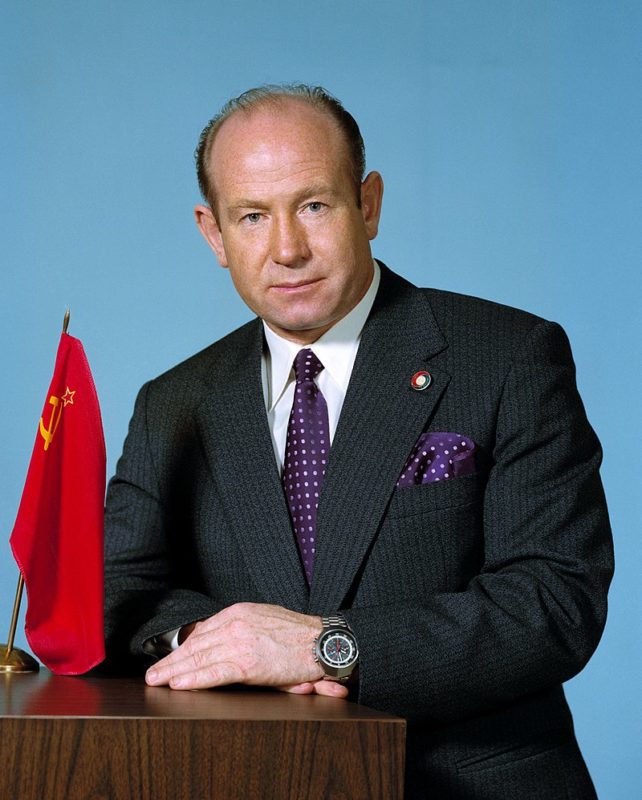
The spacecraft had an inflatable airlock extended in orbit. Though Leonov was able to complete his spacewalk successfully, both that task and the overall mission were plagued with problems. Leonov’s only tasks were to attach a camera to the end of the airlock to record his spacewalk and to photograph the spacecraft. He managed to attach the camera without any problem, but when he tried to use the still camera on his chest, the suit had ballooned and he was unable to reach down to the shutter switch on his leg.
After 12 minutes and 9 seconds outside the Voskhod, Leonov found that his suit had stiffened, due to ballooning out, to the point where he could not re-enter the airlock. He was forced to bleed off some of his suit’s pressure, in order to be able to bend the joints, eventually going below safety limits. Leonov did not report his action on the radio to avoid alarming others, but Soviet state radio and television had earlier stopped their live broadcasts from the spacecraft when the mission experienced difficulties. The two crew members subsequently experienced difficulty in sealing the hatch properly due to thermal distortion caused by Leonov’s lengthy troubles returning to the craft, followed by a troublesome re-entry in which malfunction of the automatic landing system forced the use of its manual backup.
The spacecraft was so cramped that the two cosmonauts, both wearing spacesuits, could not return to their seats to restore the ship’s center of mass for 46 seconds after orienting the ship for reentry and a landing in Perm Krai. The orbital module did not properly disconnect from the landing module, not unlike Vostok 1, causing the spherical return vehicle to spin wildly until the modules disconnected at 100km.
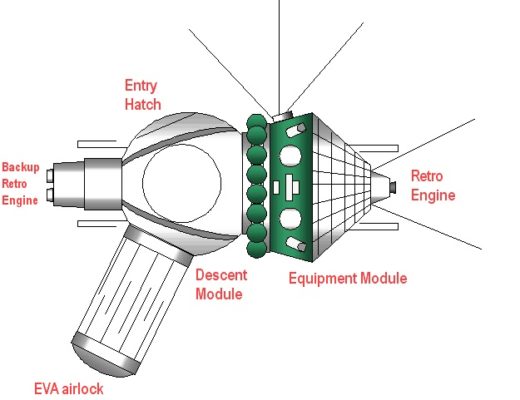
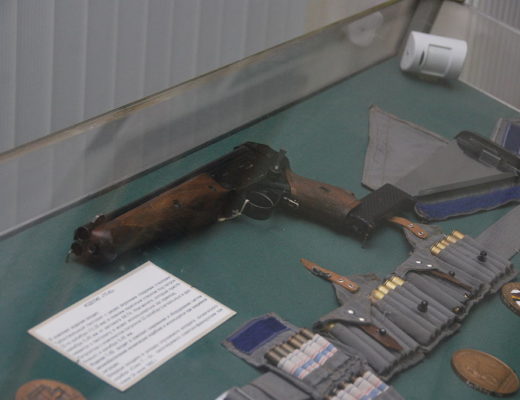
The delay of 46 seconds caused the spacecraft to land 386 km from the intended landing zone, in the inhospitable forests of Upper Kama Upland, somewhere west of Solikamsk. Although flight controllers had no idea where the spacecraft had landed or whether Leonov and Belyayev had survived, the cosmonauts’ families were told that they were resting after having been recovered. The two men were both familiar with the harsh climate and knew that bears and wolves, made aggressive by mating season, lived in the ‘taiga’; the spacecraft carried a pistol and ‘plenty of ammunition’, but the incident later drove the development of a dedicated TP-82 Cosmonaut survival pistol.
Although aircraft quickly located the cosmonauts, the area was so heavily forested that helicopters could not land. Night arrived, the temperature dropped to −5 degrees Celsius (23 degrees Fahrenheit), and the spacecraft’s hatch had been blown open by explosive bolts. Warm clothes and supplies were dropped and the cosmonauts spent a freezing night in the capsule or ‘Sharik’ in Russian. Even worse, the electrical system completely malfunctioned so that the heater would not work, but fans ran at full blast. A rescue party arrived on skis the next day as it was too risky to try an airlift from the site. The advance party chopped wood and built a small log cabin and an enormous fire. After a more comfortable second night in the forest the cosmonauts skied to a waiting helicopter several kilometers away and flew first to Perm, then to Baikonur for their mission debriefing.
Most notable historic snippets or facts extracted from the book ‘On This Day’ first published in 1992 by Octopus Publishing Group Ltd, London, as well as additional supplementary information extracted from Wikipedia.
HAVE YOUR SAY
Like our Facebook page, follow us on Twitter and Instagram