June 3: On This Day in World History … briefly
Immediately after the accident, Deutsche Bahn paid 30 000 Deutsche Marks (about US$19 000) for each fatality to applicable families. At a later time, Deutsche Bahn settled with some victims and stated that it paid an equivalent of more than 30 million US dollars to the families of victims and survivors.
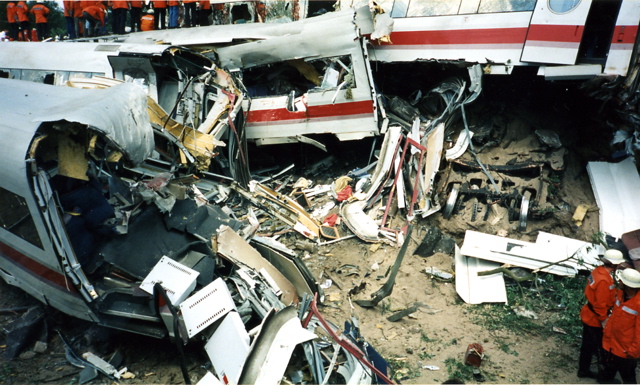
1998: High-speed train derails, killing 101
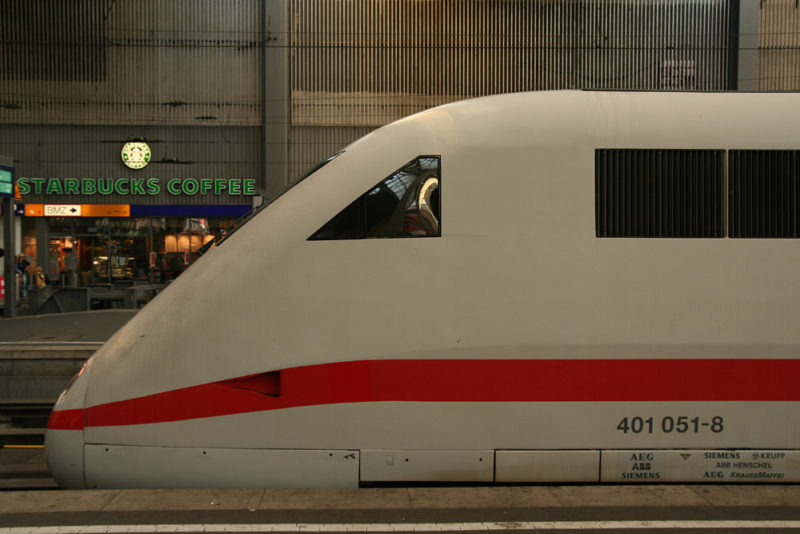
The Eschede derailment occurred on June 3, 1998, near the village of Eschede in the Celle district of Lower Saxony, Germany, when a high-speed train derailed and crashed into a road bridge. 101 people were killed and around 100 were injured. It remains the worst rail disaster in the history of the Federal Republic of Germany and the worst high-speed-rail disaster worldwide. The cause was a single fatigue crack in one wheel that, when it failed, caused the train to derail at a set of points and crash into the pillars of a concrete road bridge, causing it to collapse and crush two coaches. The remaining coaches and rear power car crashed into the wreckage
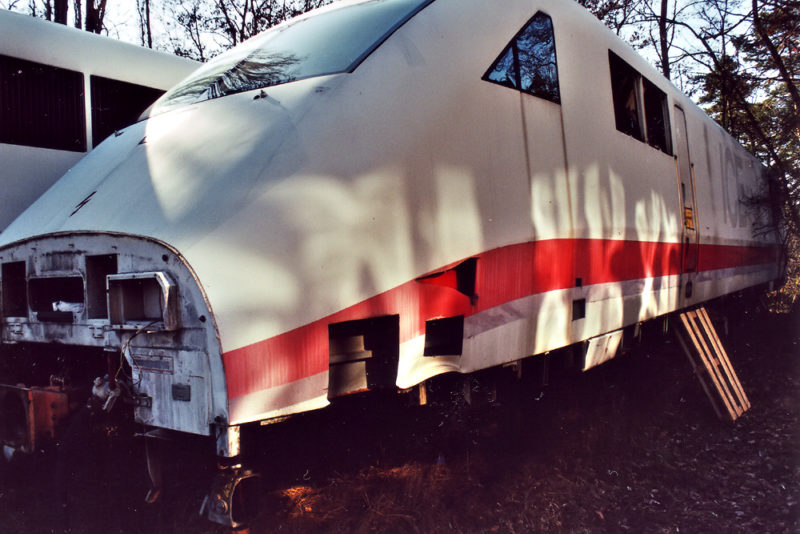
As the train passed over the first of two points, the embedded tyre slammed against the guide rail of the points, pulling it from the railway ties. This guide rail also penetrated the floor of the car, becoming embedded in the vehicle and lifting the axle carriage off the rails. At 10.59 local time (08.59 UTC), one of the now-derailed wheels struck the points lever of the second switch, changing its setting. The rear axles of car number 3 were switched onto a parallel track, and the entire car was thereby thrown into the piers supporting a 300-tonne (300-long-ton; 330-short-ton) roadway overpass, destroying them.
Car number 4, likewise derailed by the violent deviation of car number 3 and still travelling at 200 kilometres per hour (125 mph), passed intact under the bridge and rolled onto the embankment immediately behind it, striking several trees before coming to a stop. Two Deutsche Bahn railway workers who had been working near the bridge were killed instantly when the derailed car crushed them. The breaking of the car couplings caused the automatic emergency brakes to engage and the mostly undamaged first three cars came to a stop.
The front power car and coaches one and two cleared the bridge. Coach three hit the bridge, which began to collapse. Coach four cleared the bridge, moved away from the track, and hit a group of trees. The bridge pieces crushed the rear half of coach five. The restaurant coach, six, was crushed to a 15-centimetre (6 inches) height. With the track now obstructed completely by the collapsed bridge, the remaining cars jackknifed into the rubble in a zig-zag pattern: Cars 7, the service car, the restaurant car, the three first-class cars numbered 10 to 12, and the rear power car all derailed and slammed into the pile.
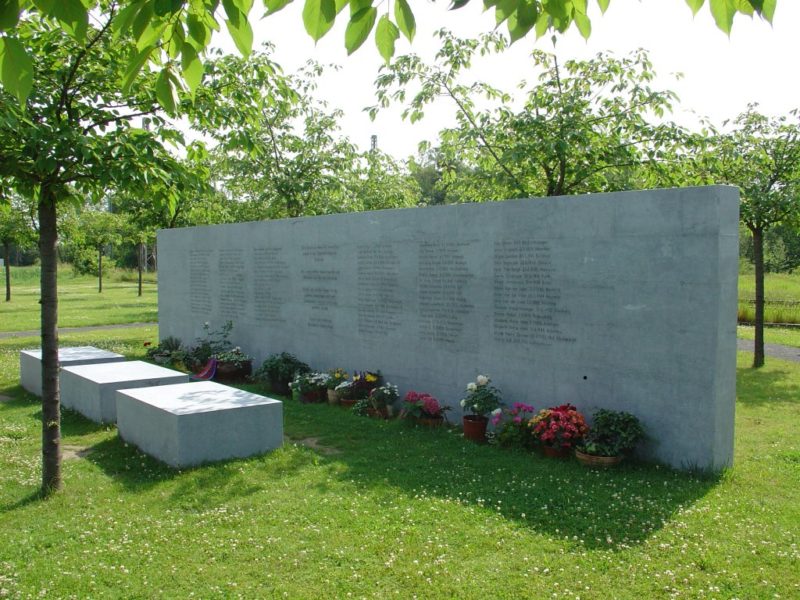
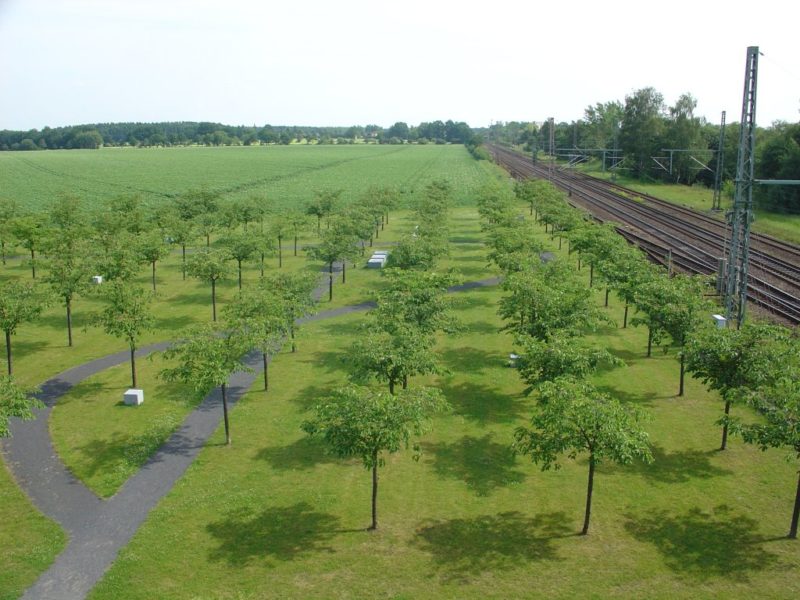
Udo Bauch, a survivor who became disabled by the accident, built his own memorial with his own money. Bauch said that the chapel received 5 000 to 6 000 visitors per year. One year after Bauch’s memorial was built, an official memorial, funded partly by Deutsche Bahn, was established
Most notable historic snippets or facts extracted from the book ‘On This Day’ first published in 1992 by Octopus Publishing Group Ltd, London, as well as additional supplementary information extracted from Wikipedia.
HAVE YOUR SAY
Like our Facebook page, follow us on Twitter and Instagram