September 28: On This Day in World History … briefly
Fleming published his discovery in 1929, in the British Journal of Experimental Pathology, but little attention was paid to his article.
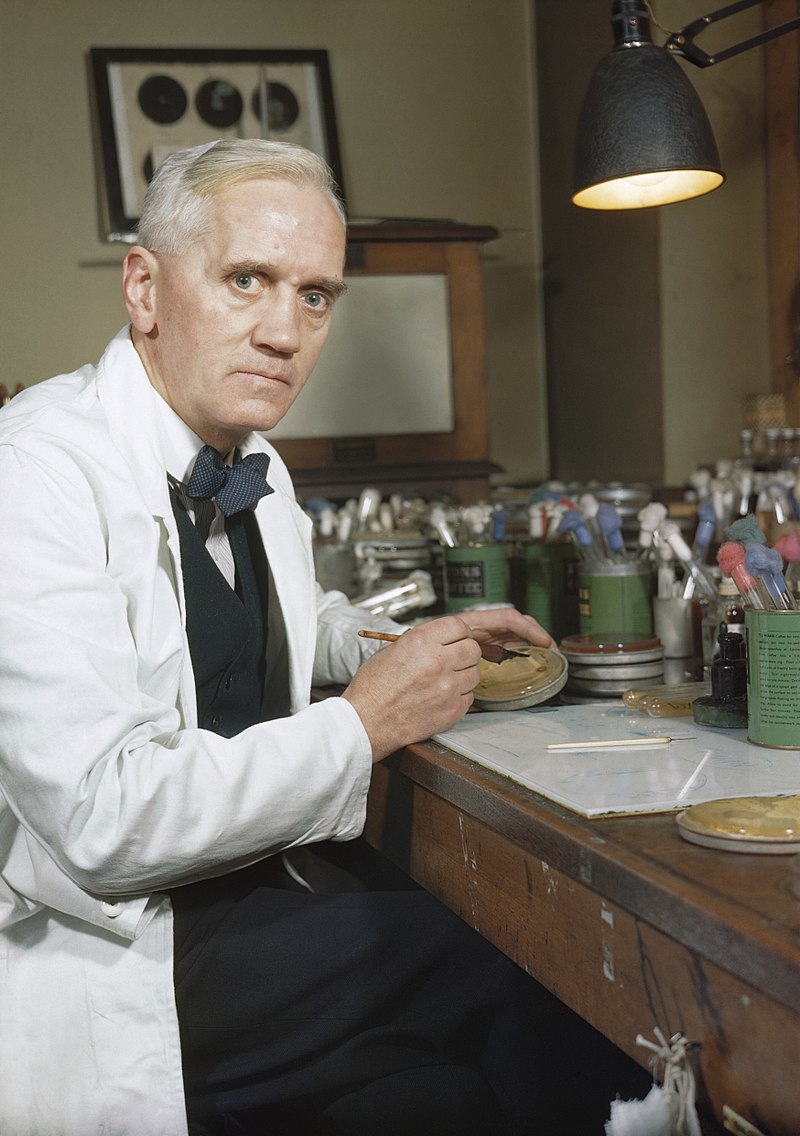
1928: Mouldy old fungus turns out to be Penicillin
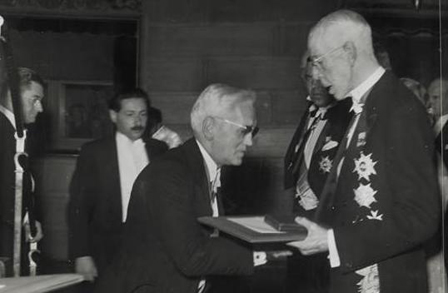
Sir Alexander Fleming (6 August 1881 – 11 March 1955) was a Scottish biologist, physician, microbiologist, and pharmacologist. His best-known discoveries are the enzyme lysozyme in 1923 and the world’s first antibiotic substance benzylpenicillin (Penicillin G) from the mould Penicillium notatum in 1928, for which he shared the Nobel Prize in Physiology or Medicine in 1945 with Howard Florey and Ernst Boris Chain. He wrote many articles on bacteriology, immunology, and chemotherapy. Fleming was knighted for his scientific achievements in 1944. In 1999, he was named in Time magazine’s list of the 100 Most Important People of the 20th century. In 2002, he was chosen in the BBC’s television poll for determining the 100 Greatest Britons, and in 2009, he was also voted third ‘greatest Scot’ in an opinion poll conducted by STV, behind only Robert Burns and William Wallace.
By 1927, Fleming had been investigating the properties of staphylococci. He was already well known from his earlier work, and had developed a reputation as a brilliant researcher, but his laboratory was often untidy. On 3 September 1928, Fleming returned to his laboratory having spent August on holiday with his family. Before leaving, he had stacked all his cultures of staphylococci on a bench in a corner of his laboratory. On returning, Fleming noticed that one culture was contaminated with a fungus, and that the colonies of staphylococci immediately surrounding the fungus had been destroyed, whereas other staphylococci colonies farther away were normal, famously remarking “That’s funny”.
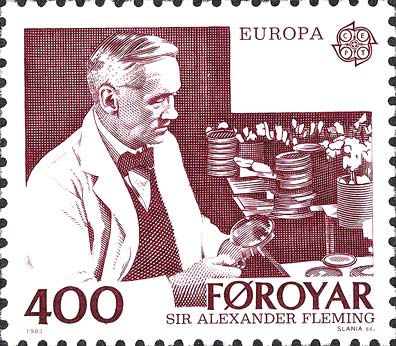
Fleming showed the contaminated culture to his former assistant Merlin Pryce, who reminded him “That’s how you discovered lysozyme.” Fleming grew the mould in a pure culture and found that it produced a substance that killed a number of disease-causing bacteria. He identified the mould as being from the genus ‘Penicillium’, and, after some months of calling it ‘mould juice’, named the substance it released ‘penicillin’ on March 7, 1929. The laboratory in which Fleming discovered and tested penicillin is preserved as the Alexander Fleming Laboratory Museum in St Mary’s Hospital, Paddington.
Most notable historic snippets or facts extracted from the book ‘On This Day’ first published in 1992 by Octopus Publishing Group Ltd, London, as well as additional supplementary information extracted from Wikipedia.
HAVE YOUR SAY
Like the South Coast Herald’s Facebook page, follow us on Twitter and Instagram
To receive our FREE email newsletter, click HERE